CONGRATS! YOU EARNED FREE SHIPPING.

Product Title
1
$0
$0
Subscription Title

Looking kind of empty in here.
We recommend:
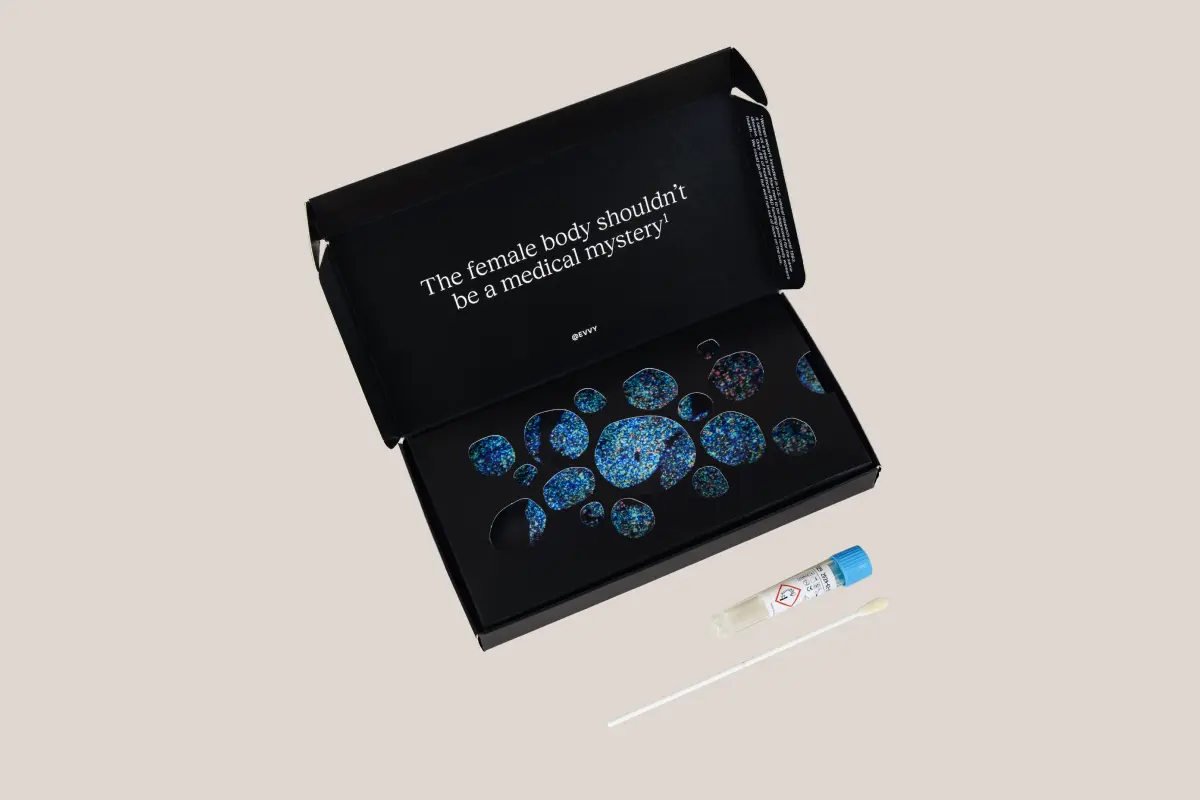
Get advanced insights into symptoms, fertility, and other health outcomes. Prelim results in 1-3 days.

New research from Evvy analyzing 15,000+ BV-diagnosed vaginal microbiomes reveals distinct microbial patterns, showing BV is a spectrum — not a single biological condition.
Words by the Evvy Team
Scientifically edited by Pita Navarro
Medically reviewed by Dr. Kate McLean MD, MPH, FACOG
Bacterial vaginosis (BV) is the most common vaginal infection among reproductive-aged women and remains one of the most recurrent and frustrating conditions in gynecologic care. Although BV is diagnosed using established clinical criteria, mounting evidence suggests that it represents a spectrum of biologically distinct microbial ecosystems rather than a single uniform condition. Patients who receive the same diagnosis may, at the microbiome level, harbor markedly different community structures.
In this analysis, Evvy applied large-scale shotgun metagenomic sequencing and unsupervised clustering to resolve microbial heterogeneity within BV across 15,583 individuals meeting clinical criteria for bacterial vaginitis. These samples were drawn from a broader real-world dataset of more than 100,000 sequenced vaginal microbiomes. The analysis identified multiple reproducible microbial subtypes spanning classical anaerobic overgrowth patterns, biofilm-associated configurations, transitional states, and mixed inflammatory communities.
These subtypes operate within existing diagnostic frameworks while introducing higher-resolution biological context. By rendering microbial heterogeneity measurable, this work establishes a foundation for studying recurrence, persistence, and treatment response within biologically comparable groups. Increasing biological resolution is an essential step toward improving durability of outcomes in BV care.
Biologically, BV reflects disruption of the vaginal microbial ecosystem, typically involving depletion of lactic-acid–producing Lactobacillus species and enrichment of diverse anaerobic taxa such as Gardnerella, Prevotella, Fannyhessea, and Megasphaera. Despite decades of research, BV continues to be defined and managed largely through frameworks developed before high-resolution sequencing was widely available.
Clinically, BV is most commonly diagnosed using Amsel’s criteria or the Nugent scoring system. Amsel’s criteria rely on clinical findings including homogeneous discharge, elevated vaginal pH greater than 4.5, the presence of clue cells on microscopy, and a positive amine test. Nugent scoring quantifies bacterial morphotypes on Gram stain to generate a composite score reflecting Lactobacillus depletion and anaerobic overgrowth. These tools remain clinically useful and widely adopted, yet they do not provide species-level or functional resolution of the vaginal microbiome. As a result, the diagnosis captures the presence of microbial imbalance without resolving the specific ecological configuration underlying it.
Clinical experience reveals substantial variation among patients diagnosed with BV. Symptom profiles differ, recurrence patterns vary, and treatment responses are inconsistent. Some individuals experience rapid recurrence following therapy, while others remain stable for extended periods. These differences suggest underlying biological diversity that is not captured by the current diagnostic category.
When biologically distinct microbial states are grouped under a single diagnosis and analyzed as a homogeneous population, meaningful signals are diluted. Treatment effectiveness appears variable, recurrence seems unpredictable, and research findings often fail to translate into durable improvements. The challenge may not lie in the absence of effective interventions, but in the absence of microbial resolution necessary to interpret outcomes within comparable ecological contexts.

Recurrent symptoms? Get Evvy's at-home vaginal microbiome test, designed by leading OB-GYNs.
Advances in shotgun metagenomic sequencing now enable species- and function-level characterization of vaginal microbial ecosystems at high resolution. When applied to large real-world datasets, these tools allow reproducible discovery of microbial patterns that extend beyond traditional classifications.
The objective of this work was to introduce biological resolution into a diagnosis currently applied across diverse microbial states. Rather than fragmenting the clinical diagnosis of BV, microbial stratification enriches it by identifying coherent ecological configurations within the broader category. These configurations reflect reproducible microbial states that can be studied independently.
Stratification creates analytical clarity. It allows recurrence to be evaluated within defined microbial ecosystems, treatment durability to be compared across comparable biological states, and transition dynamics to be tracked over time. By distinguishing microbial configurations that were previously averaged together, this framework supports more precise research questions and clearer interpretation of outcomes.
Over time, this approach enables the field to move from population-level averages toward biology-aligned analysis. Such alignment is necessary for understanding why recurrence occurs, why durability varies, and where therapeutic mismatches may exist.
In parallel, recent gene-based frameworks have expanded understanding of vaginal microbiome heterogeneity by identifying differences at the subspecies and functional level. These findings suggest that communities with similar species composition may differ in biological behavior based on their gene content. Translating this deeper resolution into clinical relevance requires large, real-world datasets linked to patient context and outcomes. Evvy’s 100,000+ metagenomic samples provide the scale necessary to integrate ecological and gene-level insights as the field advances toward more precise BV care.
Samples were drawn from Evvy’s real-world vaginal microbiome platform. For this analysis, individuals were cohorted based on clinical assignment of bacterial vaginitis. Samples from individuals with additional disease conditions were excluded to reduce confounding, resulting in a final analytic cohort of 15,583 samples. Symptom data were excluded from initial clustering to allow microbial structure to emerge independently of reported phenotype. This approach ensured that the resulting subtypes reflected ecological configurations rather than symptom-driven categories.
Vaginal microbiome profiles were generated using shotgun metagenomic sequencing. Taxonomic abundance matrices were constructed following production-level processing, and taxa were filtered based on prevalence and variance thresholds to retain informative features. Because microbiome data are compositional, relative abundance values were transformed using centered log-ratio transformation prior to clustering.
Unsupervised clustering was performed using HDBSCAN, allowing microbial groupings to emerge without pre-specifying the number of clusters. Cluster robustness was assessed across multiple distance metrics, and ecological coherence was evaluated through enrichment and fold-change analysis of dominant taxa. Low-dimensional visualization using UMAP facilitated interpretation of microbial pattern separation. Identified clusters were aligned with established Community State Types to contextualize findings within existing ecological frameworks.
Unsupervised modeling revealed multiple reproducible microbial subtypes among individuals meeting clinical criteria for BV. These subtypes represent distinct ecological states observed within BV rather than separate disease entities. Each reflects a coherent microbial configuration with characteristic dominant taxa and community architecture.
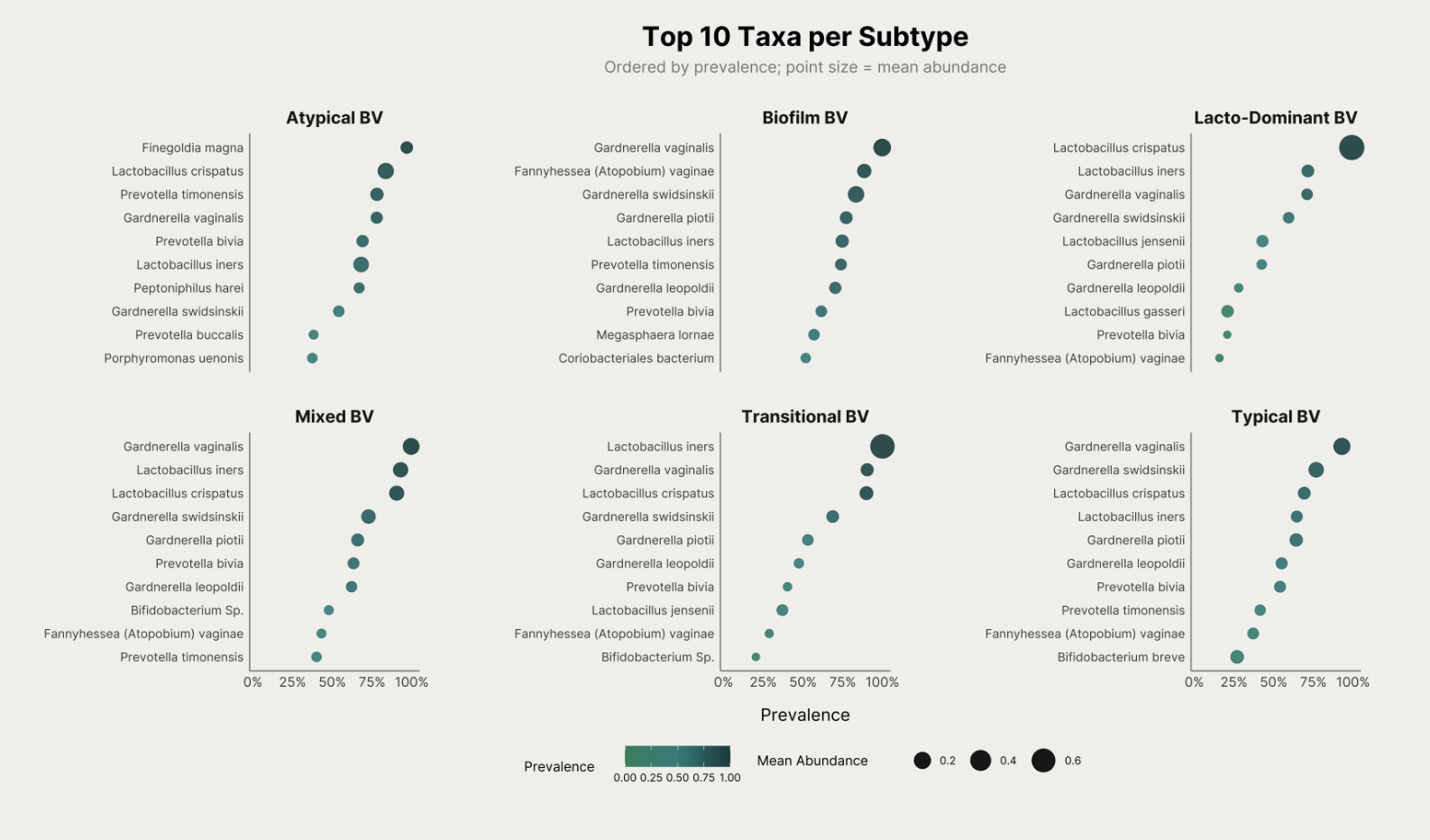
Figure 1 reveals the diversity of microbial compositions across BV Subtypes, emphasizing that BV is not a one-size-fits-all condition but rather a spectrum of microbial imbalances. Gardnerella vaginalis dominates multiple subtypes, signifying its pivotal role in BV, but its varying abundance across subtypes shows the complexity of the condition. Unique taxa like Finegoldia magna and Megasphaera lornae mark Atypical and Biofilm BV, respectively, while Lactobacillus crispatus are more prevalent in healthier states, such as Lacto-Dominant BV. These findings highlight the need for advanced microbial profiling to more accurately diagnose and treat BV, moving beyond broad categories to target the distinct microbial communities underlying each subtype.
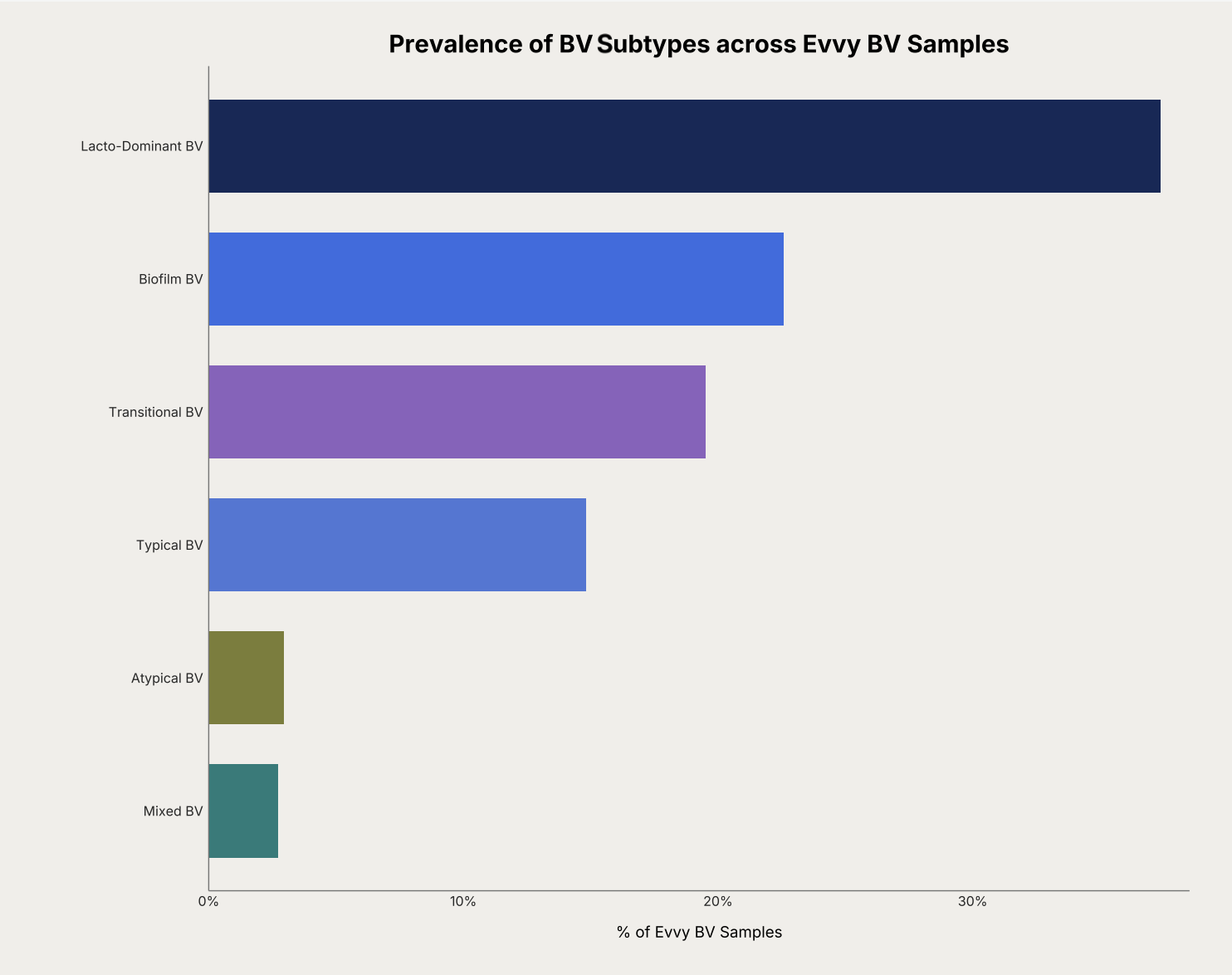
Figure 2 showcases the prevalence of BV Subtypes found in Evvy data. While Typical BV represents only a portion of cases, we see substantial representation of Biofilm, Transitional, Lacto-Dominant, Mixed, and Atypical subtypes — meaning many individuals meeting clinical BV criteria don’t fit the traditional definition. Standard diagnostic tests are largely calibrated to detect what’s common in Typical BV, which may overlook this broader biological diversity and help explain variability in recurrence and treatment response.
Improving outcomes in bacterial vaginosis requires moving beyond population-level averages toward precision care. When distinct BV-associated microbial states are grouped together, treatment effectiveness appears inconsistent, recurrence remains poorly explained, and learning is diluted across incompatible populations.
Microbial stratification provides the foundation for resolving this problem by enabling outcomes to be evaluated within defined biological contexts. Rather than asking whether an intervention “works” for BV broadly, stratification allows recurrence, persistence, and response patterns to be studied within specific microbial states.
Within a stratified framework, it becomes possible to identify which interventions are associated with durable improvement in particular ecological contexts, which states are more prone to recurrence or transition, and where existing care pathways are mismatched to underlying biology. As longitudinal data accumulate, this framework may support improved risk prediction and more targeted development of therapeutic strategies.
This analysis is observational and descriptive, focused on resolving microbial structure within BV rather than establishing causal relationships between subtypes and clinical outcomes. Associations between microbial configurations, symptom burden, recurrence, and treatment response require validation in prospective and longitudinal studies. Early analysis shows concrete differences in how symptoms manifest across different subtypes, as seen below in Figure 3.
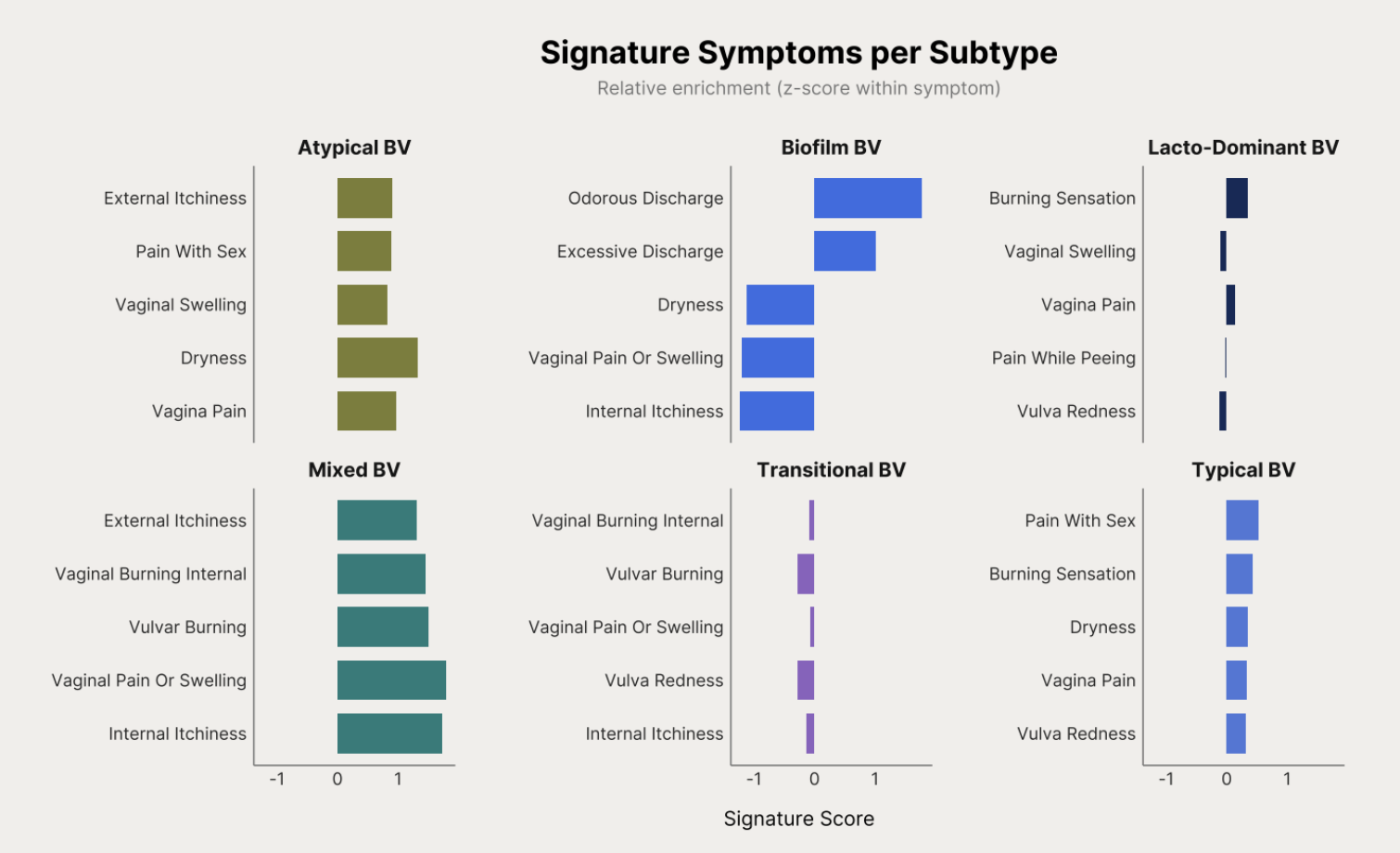
Figure 3 highlights the signature symptoms most commonly associated with different BV Subtypes, where higher signature scores (z-scores) indicate symptoms that are more characteristic of each subtype. Atypical BV is most strongly associated with external itching, pain with sex, and vaginal swelling. Biofilm BV stands out with highly significant symptoms like odorous and excessive discharge, both of which are less commonly seen in other subtypes. Lacto-Dominant BV is primarily characterized by burning sensations, vaginal swelling, and pain while peeing, indicating a less severe but still noticeable set of symptoms. Mixed BV shows a complex pattern with a combination of vaginal burning (internal and external), vaginal pain or swelling, and internal itching, pointing to a more heterogeneous symptom profile. Transitional BV shows signs of both irritation and discomfort, including vaginal burning and swelling, as well as vulvar redness, suggesting a condition in flux between healthier and more disrupted microbiome states. Lastly, Typical BV is most associated with pain during sex, burning sensations, and dryness, which aligns with the more classical symptoms traditionally associated with BV. These findings demonstrate the varied symptomatology across BV Subtypes, supporting the need for more tailored diagnostic and therapeutic approaches.
Future research will focus on further integrating symptom data, tracking subtype transitions over time, and evaluating treatment durability within defined microbial states. Understanding how these ecological configurations evolve, and how they relate to inflammatory markers and host response, will be critical for translating microbial resolution into improved clinical outcomes.
High-resolution metagenomics, applied to large-scale real-world data, reveals that BV-associated microbiomes form reproducible ecological states rather than a single uniform pattern.
Across medicine, progress has accelerated when biological diversity within common conditions became measurable. In oncology and other fields, recognizing that seemingly similar diagnoses contained distinct molecular subtypes reshaped research design, improved risk stratification, and ultimately transformed outcomes. The central insight was straightforward: complexity, once measurable, becomes actionable.
BV represents a meaningful opportunity to apply that same level of rigor in women’s health. It is highly prevalent, frequently recurrent, and still evaluated using tools that predate species-level microbial characterization. Millions of women experience recurrence, variability in treatment durability, and uncertainty around long-term implications. When a condition affects so many and persists so often, increasing biological clarity becomes essential.
By resolving BV into reproducible microbial states, recurrence patterns, transition dynamics, and treatment durability can be studied within biologically comparable populations. As understanding deepens, this resolution may also illuminate how specific microbial ecosystems relate to inflammatory burden and reproductive outcomes, including fertility-related endpoints. Greater precision at the microbial level creates the opportunity for more informed risk assessment and more durable therapeutic progress.
Advancing biological resolution in BV care reflects a broader commitment to bringing precision medicine into women’s health at scale. For the millions affected each year, a deeper understanding offers a path toward more predictable care, longer-lasting relief, and stronger reproductive confidence.
Resources