CONGRATS! YOU EARNED FREE SHIPPING.

Product Title
1
$0
$0
Subscription Title

Looking kind of empty in here.
We recommend:
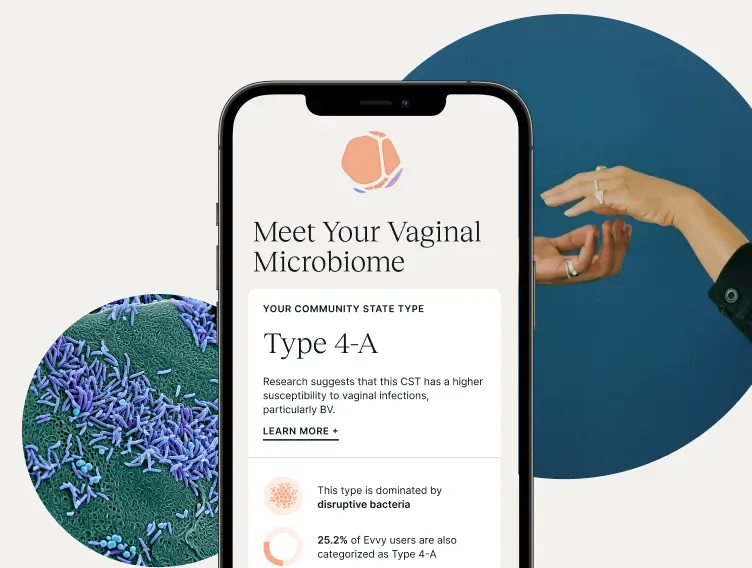
Get advanced insights into symptoms, fertility, and other health outcomes. Prelim results in 1-3 days.

Getting a yeast infection during, before, or after your period? Learn why hormones and pH shifts trigger them and how to treat and prevent them.
Words by Olivia Cassano
Scientifically edited by Dr. Krystal Thomas-White, PhD
Medically reviewed by Dr. Sameena Rahman, MD
Do yeast infections always seem to pop up right around your period? Well, you're not alone. Many people with periods experience this frustrating pattern, and understanding why it happens can help you manage and prevent cyclical yeast infections.
Let's dive into why you might be getting a yeast infection during your period and what you can do about it.
A vaginal yeast infection, also known as vaginal candidiasis, is a common fungal infection caused by an overgrowth of the Candida fungus in the vagina. Most yeast infections are caused by a yeast called Candida albicans, specifically.
While yeast is naturally present in the vagina, it usually exists in balance with other bacteria, namely, healthy bacteria like Lactobacillus. However, when this normal balance is disrupted, yeast can grow excessively, leading to a yeast infection. Periods are one of the most common reasons why your vaginal flora may be disrupted (more on that below).
Yeast infection symptoms often include:
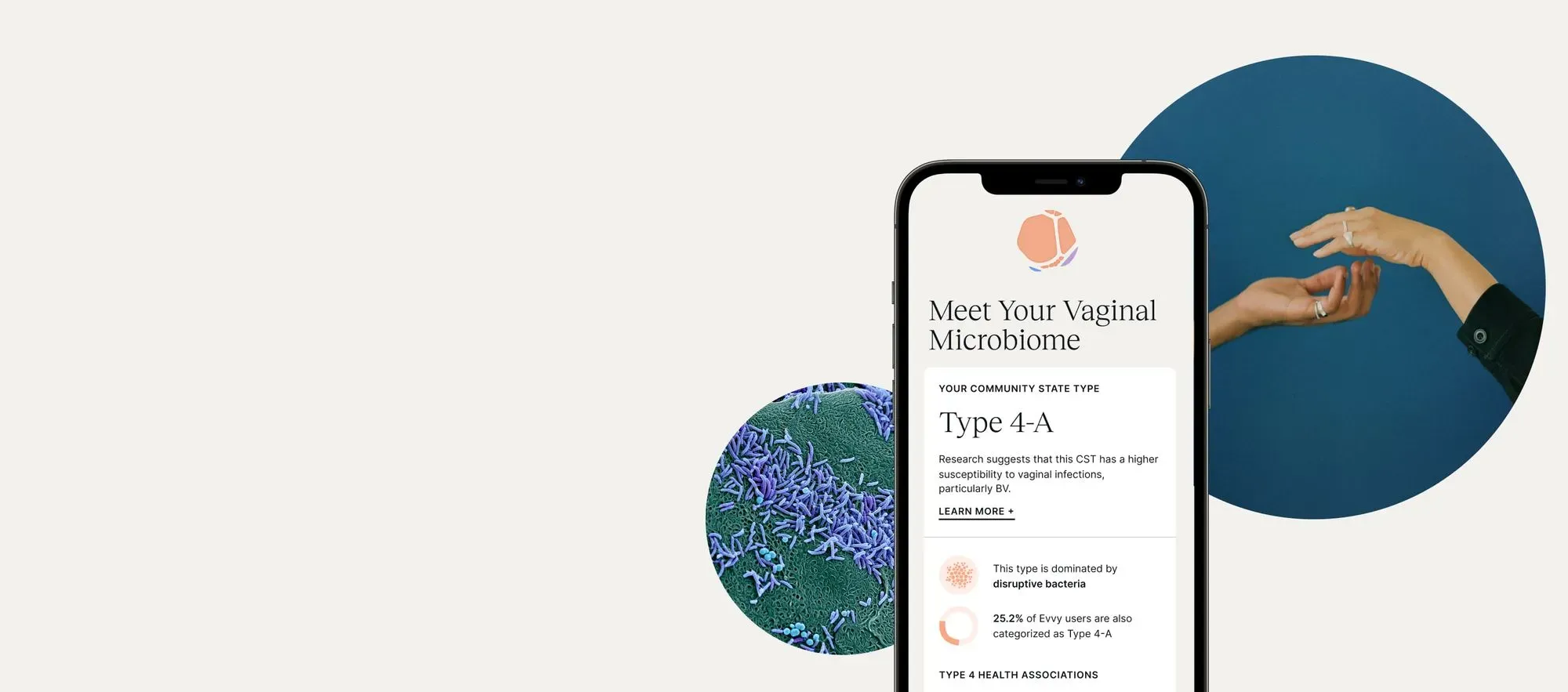
Recurrent symptoms? Get Evvy's at-home vaginal microbiome test, designed by leading OB-GYNs.
You might experience yeast infections before, during, or after your period due to hormonal changes, fluctuations in vaginal pH, and shifting bacterial levels. These factors can create a perfect environment for yeast to grow.
This doesn't mean you're guaranteed to get a yeast infection every time you get your period, just that the changes happening inside your body (and vagina) at that time can become the perfect storm for Candida overgrowth. Other risk factors for yeast infections include:
If you tend to notice yeast infection symptoms in the days leading up to your period, it's not a coincidence. During the luteal phase (the second half of your cycle, after ovulation), estrogen rises and then drops sharply right before your period begins. This pre-period estrogen dip lowers the amount of glycogen available in your vaginal tissue, a nutrient source Lactobacillus relies on, which can reduce protective bacteria levels just as Candida is poised to take advantage.
At the same time, vaginal pH can start to shift in the days before bleeding even starts, as hormone levels fluctuate in preparation for your period. This means the perfect environment for yeast overgrowth often begins before you actually see blood, which is why some people swear their yeast infections always strike right on schedule each month.
If you notice a consistent pattern of symptoms within the same pre-period window each cycle, it's worth tracking alongside your cycle to confirm the timing, as this can help your provider tailor treatment or suggest preventive options, such as starting an antifungal proactively before symptoms typically begin.
For others, symptoms of a yeast infection show up or linger after their period ends rather than before or during. This happens because it takes time for your vaginal pH to fully normalize once bleeding stops. Even after your period ends, residual changes in pH and lower Lactobacillus levels can persist for a few days, leaving a window where Candida can still take hold or continue growing if it started during your period.
It's worth distinguishing a lingering yeast infection from simple post-period irritation. Irritation from pads, tampons, or just general moisture during your period typically fades within a day or two once you're no longer bleeding and tends to involve mild redness or chafing without thick discharge. A true yeast infection, on the other hand, usually comes with persistent vaginal itching, thick white vaginal discharge, and a burning sensation that doesn't improve on its own and may worsen over the following days.
If your symptoms haven't started improving within a couple of days after your period ends, or if they match the more classic signs above, it's worth treating with an antifungal rather than waiting it out.
The good news is that your period won’t make it harder to treat yeast infections. And if you do get a yeast infection while you’re on your period, you can treat it just as you would at any other point of your cycle.
For mild yeast infections, your healthcare provider may prescribe a short course of vaginal antifungal medication in the form of a cream, ointment, or vaginal suppository. These medications often end in “-azole,” such as terconazole or miconazole. Alternatively, you may be given a single dose of the oral medication fluconazole.
For more severe or recurrent yeast infections, your doctor may recommend a longer course of treatment or different types of antifungal medications.
If the initial treatment doesn't work, or if your yeast infection isn't caused by Candida albicans, your doctor may suggest other medicines such as boric acid, nystatin, or flucytosine, which can be taken as a vaginal suppository. Despite what you may have read online, there's no evidence that home remedies like tea tree oil, coconut oil, or probiotic supplements can treat yeast infections.
While you can't fully prevent the hormonal shifts that come with your cycle, a few habits can lower your risk of a yeast infection showing up before, during, or after your period:
If you get a yeast infection during your period, you can treat it just like you would at any other point of your cycle: with antifungals. These can be purchased over the counter or prescribed by your healthcare provider.
No, having your period will not "flush out" a yeast infection. A mild yeast infection might (rarely) clear up on its own, but most of the time, you will need to take antifungal medications to treat the infection.
While menstrual pads themselves don't directly cause yeast infections, they can create conditions that promote the growth of yeast if you don't change them frequently enough. Wearing pads for extended periods can increase moisture and warmth in the vaginal area, creating an ideal environment for yeast to thrive. That said, they're perfectly safe to use, and it's unlikely that they'll trigger a yeast infection unless you wear a pad for too long and you're very, very, very prone to them.
No, tampons themselves don't directly cause yeast infections, but leaving one in for too long can create a warm, moist environment that makes yeast overgrowth more likely. Tampons are generally fine to use during a yeast infection, but if you're prone to recurring infections, it's worth changing them on schedule (every 4 to 8 hours) and avoiding scented varieties, which can further irritate the vaginal area.
A yeast infection during your period looks much the same as it would at any other time: thick, white, cottage cheese-like discharge, itching, and irritation around the vulva. It can sometimes be harder to notice changes in discharge against the backdrop of menstrual blood, so itching, burning, and soreness are often the more reliable signs to watch for during your period.
Your period doesn't directly cause a yeast infection, but it creates conditions that make you more likely to develop one. Hormonal shifts, a temporary rise in vaginal pH from menstrual blood, and lower protective bacteria levels all combine to make your vagina more hospitable to Candida overgrowth around your period, whether that's in the days before, during, or just after.
Yes, it's possible. If you already have a yeast infection going into your period, the added pH shift from menstrual blood can make symptoms feel more intense or take slightly longer to clear, even with treatment. On top of that, friction from pads or tampons can aggravate already-sensitive, irritated skin, making itching and discomfort feel worse than they otherwise would.