CONGRATS! YOU EARNED FREE SHIPPING.

Product Title
1
$0
$0
Subscription Title

Looking kind of empty in here.
We recommend:

Get advanced insights into symptoms, fertility, and other health outcomes. Prelim results in 1-3 days.

Can probiotics help with BV? Learn which strains have the best evidence, how to use them safely, and how Evvy's oral and vaginal probiotics support recovery.
Words by Olivia Cassano
Scientifically edited by Dr. Krystal Thomas-White, PhD
Medically reviewed by Dr. Kate McLean MD, MPH, FACOG
If you've ever finished a round of antibiotics for bacterial vaginosis (BV), felt relief, and then watched it come back a few weeks later, we feel you. BV is the most common vaginal infection in people of reproductive age, and recurrence is one of the most frustrating things about it.
It's no wonder so many people are starting to ask about probiotics. Can they help prevent BV from coming back? Do they actually do anything, or is it just another wellness trend with a lot of empty promises? And what's the difference between popping an oral probiotic and using a vaginal one?
One thing to know upfront is that probiotics aren't a replacement for antibiotic treatment. But used alongside it, they can support vaginal health and potentially reduce the risk of BV recurrence.
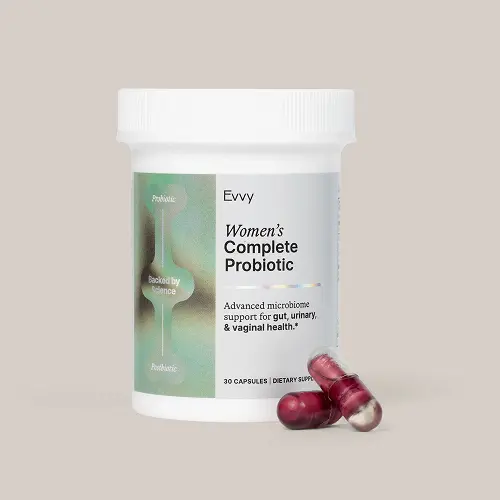
Below, we break down how probiotics work in the context of BV, which strains have the strongest evidence, and how Evvy Women's Complete Probiotic and Vaginal Probiotic Suppositories can fit into a broader care plan to manage BV.
BV is a form of vaginal dysbiosis, which is a disruption of the normal bacterial ecosystem in the vagina. It's not a single condition with a single cause, but a spectrum of microbial states. That's part of why it can look so different from person to person, and why the same treatment doesn't always work for everyone. New research from Evvy, analyzing over 100,000 vaginal microbiome samples, has confirmed that BV encompasses distinct microbial subtypes, which may eventually reshape how it's diagnosed and treated.
Common symptoms of BV include:
Most people with BV have no symptoms at all, which is one reason testing matters.

Recurrent symptoms? Get Evvy's at-home vaginal microbiome test, designed by leading OB-GYNs.
A healthy vaginal microbiome is dominated by Lactobacilli, a group of beneficial bacteria that act as the vagina's first line of defense. They produce lactic acid by fermenting glycogen (a sugar), which helps keep vaginal pH low (typically 3.8–4.5). This acidic environment makes it hard for harmful bacteria to thrive.
Lactobacilli also produce hydrogen peroxide and bacteriocins, natural antimicrobials that further crowd out pathogens. A Lactobacillus-dominant microbiome is a resilient microbiome, one that can weather disruptions from sex, hormonal shifts, antibiotics, and stress without tipping into imbalance.
In BV, the Lactobacilli population declines (sometimes significantly), and anaerobic bacteria such as Gardnerella vaginalis, Prevotella, and Atopobium vaginae take over. These bacteria raise vaginal pH (typically above 4.5), produce the compounds responsible for the characteristic fishy odor, and trigger inflammation.
Some BV-associated bacteria, particularly Gardnerella, can form biofilms on the vaginal wall. These sticky protective layers make them harder to eradicate with antibiotics and contribute to recurrence. Restoring Lactobacillus dominance isn't just about resolving symptoms; it's about rebuilding the conditions that maintain a stable vaginal environment in the long term.
Probiotics are live microorganisms that, when taken in adequate amounts (and in the right context), can support microbial balance. In the case of BV, the idea is that introducing beneficial bacteria through probiotic supplements may help re-establish the Lactobacillus-dominant environment that BV disrupts.
It's important to set expectations, though. Probiotics for BV aren’t a treatment in themselves. Symptomatic BV requires prescription antibiotics (typically metronidazole or clindamycin). Probiotics come in as an adjunct used alongside or after antibiotic treatment to support recovery, stabilize the microbiome, and potentially reduce the likelihood of recurrence.
There are two main routes: oral probiotics, which travel through the digestive tract and may influence the vaginal microbiome via the gut-vagina axis; and vaginal probiotics, delivered directly to the vagina via suppositories or capsules. Both have a rationale and clinical data, though the evidence base is still growing (more on that below).
Not all Lactobacillus strains behave in the same manner when it comes to vaginal health. The most studied and clinically relevant species include:
When choosing a probiotic for vaginal health, strain specificity matters. Generic probiotic supplements marketed for "gut health" may not contain the strains most relevant to the vaginal microbiome. Sometimes, even the ones marketed for vaginal health don’t!
The evidence for probiotics and BV has grown considerably in recent years, and it's more encouraging than you'd think.
Probiotics appear to produce measurable changes in the vaginal environment, such as lowering pH, increasing Lactobacillus dominance, reducing inflammatory markers, and improving the scores clinicians use to diagnose BV (Nugent scores and Amsel criteria). Multiple randomized controlled trials and meta-analyses have also found that adding Lactobacillus-based probiotics to antibiotic treatment improves BV cure rates compared to antibiotics alone.
Some studies suggest that certain probiotic strains, when used on their own, can perform better than a placebo. Some of these studies show that the cure rates for mild or asymptomatic BV are similar to those achieved with metronidazole. However, this research remains limited, and results may vary. For people with symptomatic BV, antibiotics are still the necessary first step. But growing evidence supports using probiotics as a helpful addition.
Vaginally administered probiotics have shown particularly consistent results. One study found that vaginal L. crispatus use after metronidazole treatment reduced the risk of BV recurrence by 34% over 12 weeks. It's worth noting that strain choice matters. Some strains perform better in certain populations, and efficacy can vary by ethnicity due to differences in baseline vaginal microbiome composition.
On recurrence specifically — one of the most frustrating parts of BV — the evidence is promising. A 2022 systematic review and meta-analysis found that probiotics were associated with a 45% lower risk of BV recurrence, with a meaningful absolute risk reduction for people who used them consistently after treatment. That's not a guarantee, and results do vary across studies, but it's a significant signal that probiotics can be a valuable part of a longer-term prevention strategy.
Probiotics aren't a magic fix, and they work best as part of a broader approach that includes prescription treatment for active infections, good lifestyle habits (like practicing safe sex and not douching), and consistent long-term use. But the science supporting their role (particularly for recovery and recurrence prevention) is growing.
When choosing a probiotic for BV, two key questions come up: which strains should it contain, and should you go oral or vaginal? The honest answer is that both routes have a role to play, and for many people dealing with recurrent BV, using both together makes the most sense.
Not all probiotics are worth your money, especially if vaginal health is your goal. Here's what to look for:
Here's how Evvy's two probiotic options compare:

Evvy Women's Complete Probiotic is a daily oral capsule designed to support your gut, urinary, and vaginal microbiomes — all at once. Research shows these three microbiomes are deeply interconnected, each capable of influencing the others' balance and resilience. Disruptions in one can ripple into another, which is why Evvy formulated a probiotic that supports all three together rather than treating them in isolation.
It contains clinically studied strains, including L. crispatus, L. reuteri RC-14, L. rhamnosus GR-1, L. acidophilus, and L. plantarum, plus postbiotics and vitamins D3 and E to support gut barrier integrity and immunity. A patented dual-capsule design ensures live bacteria reach the gut intact. It's a great option for ongoing, proactive support, particularly for people who want one supplement that covers multiple bases.
Evvy's Vaginal Probiotic Suppositories deliver protective Lactobacillus bacteria directly to the vagina to naturally restore pH balance and reduce symptoms like abnormal odor and discharge. They also contain lactoferrin, a natural antimicrobial that helps control unwanted bacteria and yeast. They're perfect as monthly maintenance to keep your vaginal microbiome stable, or as a targeted reset after the kind of disruptions that can tip things off balance, like sex, your period, a course of antibiotics, or anything else that tends to throw your flora off.
If you're experiencing BV symptoms like unusual discharge, odor, or discomfort, the first step is to get a proper diagnosis and start prescription treatment.
Probiotics come in before, during, and after antibiotic treatment to help support and stabilize your microbiome. Think of them less as a cure and more as part of a longer-term strategy for keeping BV from returning.
Starting a probiotic at the same time as antibiotics is a common question. Some providers recommend waiting until you've completed your antibiotic course to start (or restart) a probiotic, since antibiotics can reduce the survival of probiotic bacteria. Others suggest starting immediately after the course ends. If you're using vaginal probiotic suppositories alongside vaginal antibiotic gel, it's worth checking the timing with your provider.
Some studies have found that adding probiotics to antibiotic treatment (rather than after) can be beneficial, particularly for reducing recurrence. The research here is still evolving, so the best approach is to follow your clinician's guidance based on your specific situation. What the evidence consistently supports is using probiotics during the recovery window after antibiotic treatment, when your microbiome is most vulnerable to re-dysbiosis.
If you take an Evvy Vaginal Microbiome Test, a licensed provider will review your results and create a custom plan with clear next steps, including exactly how to incorporate probiotics into your care. And if you're eligible, you can access both prescription treatment and probiotics for maintenance directly through Evvy, all in one place. Everything is designed by a provider based on your specific microbiome results, so there's no guesswork about what to take or when.
There’s no universal answer, mainly because research on the optimal duration for probiotics is still lacking. However, most evidence suggests that using probiotics for a longer period can help reduce the risk of recurrence.
Typically, trials have looked at probiotic courses lasting anywhere from 1 to 3 months after antibiotic treatment, and some guidelines even suggest ongoing daily use for those who are prone to recurrent BV.
Like with all dietary supplements, the key to benefiting from probiotics is consistency. They work best when taken regularly over time to help keep your microbiome balanced, rather than just as a quick fix after each infection. For people dealing with recurrent BV, consistent daily use (especially of an oral probiotic like Evvy Women's Complete Probiotic) will be more effective than intermittent use.
Probiotics are generally safe and well-tolerated for most people. But it's important to be clear about what they can and can't do, and to understand when they're not sufficient on their own.
If you have BV symptoms, you should see a doctor or take an Evvy test, because symptomatic BV requires prescription antibiotics. Leaving BV untreated or relying solely on probiotics or home remedies to resolve it can allow the infection to worsen, and untreated BV is associated with a higher risk of sexually transmitted infections (STIs), cancer progression, and fertility issues.
If BV keeps coming back even after you've finished a full course of antibiotics, that's a sign to dig deeper rather than just repeating the same treatment. Recurrent BV can have several drivers, such as biofilm-forming bacteria that are hard to eradicate, mixed microbial patterns, or even reinfection from a partner. And sometimes, the bacteria causing your BV are resistant to the antibiotic you've been prescribed, which means it was never going to clear things up properly in the first place.
That's part of the reason why testing matters so much. Evvy's Vaginal Microbiome Test identifies exactly which bacteria are present in your vaginal microbiome, giving you and your provider the information you need to choose the most effective treatment, rather than going through rounds of trial and error.
For most people, oral and vaginal probiotics are safe with minimal side effects. Some people experience mild digestive upset (like bloating or gas) when starting an oral probiotic, which usually settles within a few days.
When it comes to vaginal probiotics, ingredients matter. Fragrances, essential oils, and harsh additives might seem harmless, but inside the vagina, they can disrupt the delicate pH balance, trigger irritation, and make the very symptoms you're trying to resolve worse. A good vaginal probiotic should do one thing: deliver beneficial bacteria without introducing anything that could cause problems. Evvy's suppositories are formulated with minimal ingredients and contain no artificial additives, fragrances, or essential oils.
If you're pregnant or breastfeeding, it's worth checking in with your provider before starting any probiotic, just to make sure it's the right fit for your situation. The same goes if you're immunocompromised or taking specific medications.
If BV is a one-off, your provider can treat it with antibiotics, and you may not need to do anything beyond completing the course. But if BV keeps coming back, or if you're looking to proactively support your vaginal health after treatment, it's worth raising probiotics as part of that conversation.
Specifically, consider talking to your provider if:
A provider can also help you rule out other infections, such as yeast infections or trichomoniasis, that can look similar to BV but require completely different treatments. If you want more insight into what's actually happening in your vaginal microbiome before that conversation, Evvy's at-home Vaginal Microbiome Test can give you and your provider a detailed, data-backed starting point.
The strains with the most clinical evidence for vaginal health are Lactobacillus crispatus, Lactobacillus rhamnosus GR-1, and Lactobacillus reuteri RC-14. L. crispatus is particularly associated with microbiome stability and low BV risk; GR-1 and RC-14 have been studied extensively as adjuncts to BV treatment. Evvy Women's Complete Probiotic contains all of these strains (plus L. acidophilus and L. plantarum) in a daily oral capsule designed specifically for women's interconnected microbiomes, which research shows can influence one another, so supporting all three together makes sense. Evvy's Vaginal Probiotic Suppositories deliver L. crispatus, GR-1, and RC-14 directly to the vaginal environment, along with lactoferrin for added antimicrobial support, and are free of fragrances, essential oils, and artificial additives that could cause irritation. Used together, they offer dual-route coverage — systemic support through the oral route and targeted local support through the vaginal route.
No, and it's important to be clear on this. If you have symptomatic BV, you need prescription antibiotics. Probiotics aren’t strong enough to clear an active infection on their own, and some BV is caused by antibiotic-resistant bacteria, which means getting the right diagnosis and the right treatment matters more than most people realize. Delaying or skipping treatment carries real health risks. Probiotics genuinely come into their own by supporting your microbiome during and after antibiotic treatment and reducing the likelihood of BV returning. Think of them as recovery and prevention tools, not as primary treatments.
This is a really common question, but it's worth reframing: probiotics don't clear BV, antibiotics do. Probiotics support the conditions that help your microbiome recover and stay stable after treatment. Most studies have used probiotic courses of 30 days or more after antibiotic treatment, and ongoing daily use is often recommended for people prone to recurrent BV. There's no set number of days after which symptoms will resolve from probiotics alone. If you're still experiencing symptoms after finishing a course of antibiotics, get in touch with your provider. It’s worth testing to check whether the right bacteria were targeted in the first place.
Both have evidence behind them, and they work in different ways. Vaginal suppositories deliver Lactobacillus directly to the site of imbalance, which can help restore local pH and bacterial balance more quickly. Oral probiotics work systemically. Some strains have been shown to reach the vagina after oral administration, and they also support the gut and urinary microbiomes, which are more connected to vaginal health than most people realize. For targeted support after a specific disruption, vaginal suppositories may have an edge. For consistent, long-term maintenance, oral probiotics offer broader benefits. For people dealing with recurrent BV, combining both routes is likely the most effective approach.
Potentially, yes, and this is where the evidence is most encouraging. A 2022 systematic review and meta-analysis found that probiotics were associated with a 45% lower risk of BV recurrence, a meaningful finding for anyone stuck in the cycle of recurrent infections. Consistent, long-term use appears to matter more than short bursts after each infection, which is why Evvy Women's Complete Probiotic is designed for daily use. That said, probiotics work best as part of a wider prevention strategy alongside testing to understand your specific microbiome, addressing any triggers (including treating sexual partners where relevant), and working with a clinician if recurrence is a pattern for you.