CONGRATS! YOU EARNED FREE SHIPPING.

Product Title
1
$0
$0
Subscription Title

Looking kind of empty in here.
We recommend:
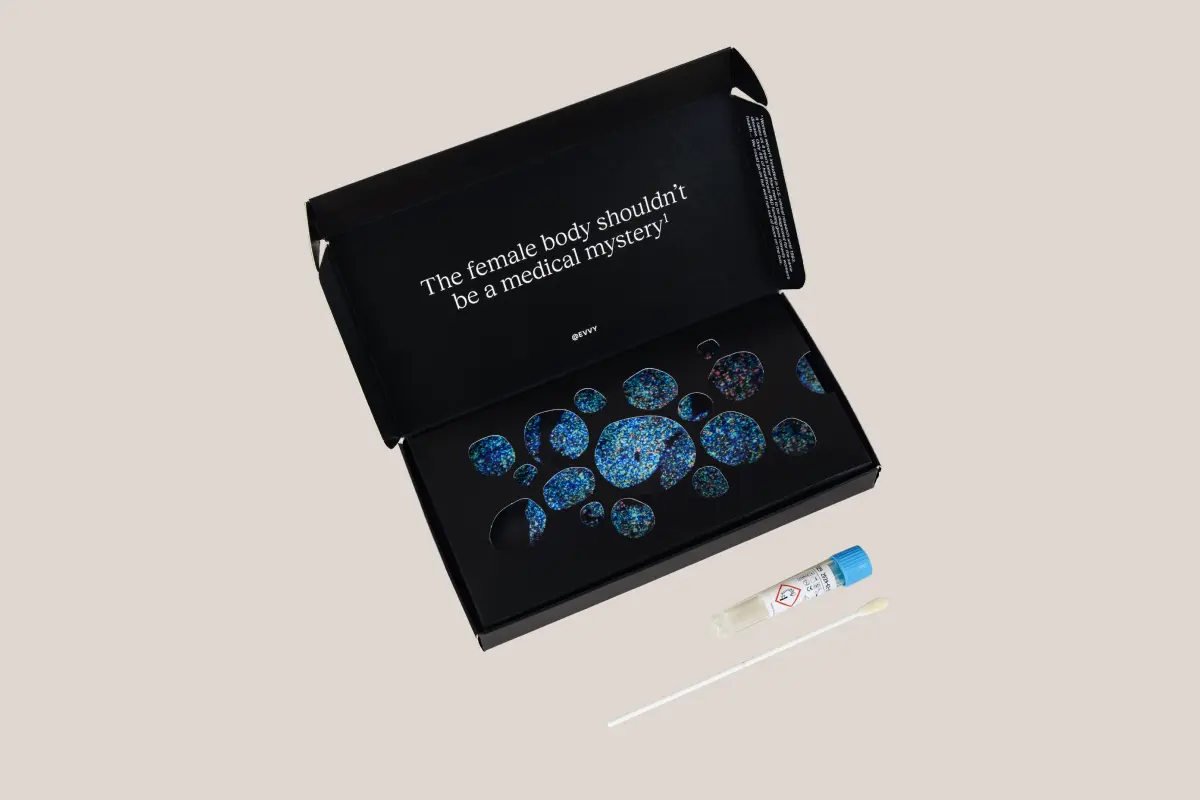
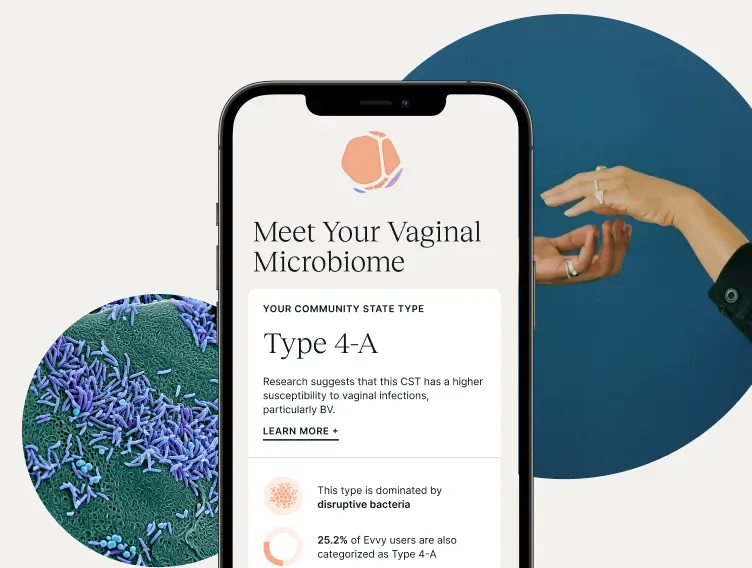
Get advanced insights into symptoms, fertility, and other health outcomes. Prelim results in 1-3 days.
.avif)
Accuracy varies by test type. pH strips are limited, while PCR and metagenomic tests like Evvy offer more accuracy. Here's what to know before you test.
Words by Olivia Cassano
Scientifically edited by Dr. Krystal Thomas-White, PhD
Medically reviewed by Dr. Kate McLean MD, MPH, FACOG
If you've ever Googled your symptoms trying to figure out whether you have bacterial vaginosis (BV), you already know how confusing it can be. The fishy odor, thin gray vaginal discharge, and vaginal irritation associated with bacterial vaginosis can also point to other conditions, including yeast infections and sexually transmitted infections (STIs) like trichomoniasis. Symptoms alone aren't enough to know for sure, which is why testing matters.
The good news is that you don't always have to visit a clinic to get answers. At-home bacterial vaginosis tests have come a long way, but accuracy still varies a lot depending on the type of test you use. pH strip tests can flag that something might be off, but they can't confirm bacterial vaginosis. PCR-based tests are more precise, directly identifying specific BV-associated bacteria. And tests like Evvy's Vaginal Microbiome Test, which use advanced metagenomic sequencing, go even further, mapping your entire vaginal microbiome rather than searching for just one or two organisms.
So before you test, it's worth understanding what each test actually measures, and what that means for how much you can trust the result.
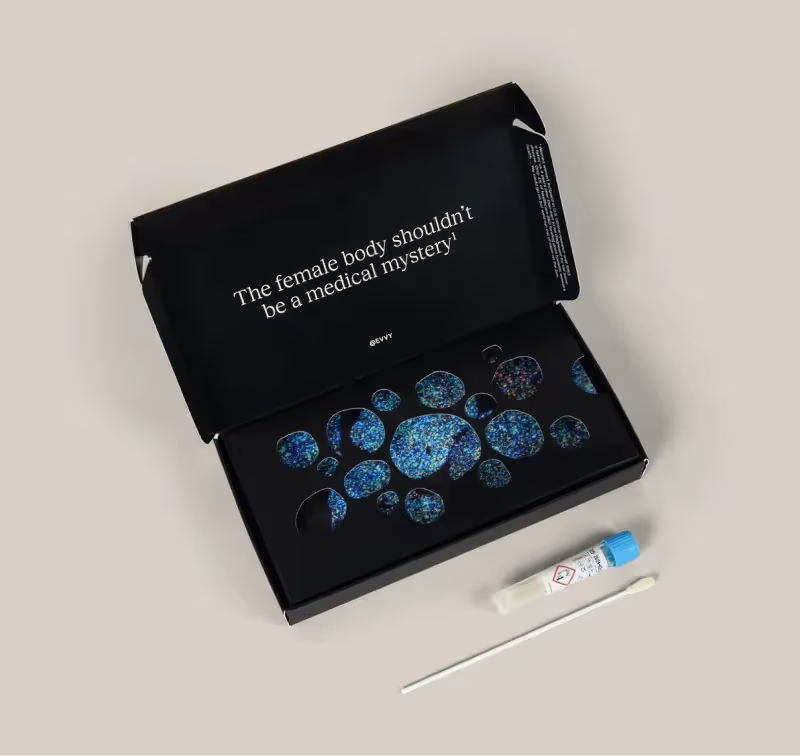
Recurrent symptoms? Get Evvy's at-home vaginal microbiome test, designed by leading OB-GYNs.
At-home BV tests generally fall into a few categories, each with different technology behind them. The type of test you choose will shape how useful and actionable your results are. There are two primary categories of at-home tests for bacterial vaginosis: vaginal pH kits and mail-in lab kits.
Vaginal pH tests are the simplest and most widely available option. You insert a vaginal swab into your vagina to collect a sample of vaginal fluid, then press it against the pH paper included in the kit. Wait for the strip to change color, then compare it to the provided color chart. A healthy vagina has a pH of 3.8 to 4.5, which is slightly acidic, while a pH above 4.5 is considered high and may indicate bacterial vaginosis.
The issue is that pH is an indirect proxy. Several things can elevate vaginal pH beyond BV, including your period or recent sexual activity. pH strips can indicate that your vaginal pH may be elevated, but they can't tell you what's causing it, how severe the imbalance is, or whether the specific bacteria associated with BV are present. Think of them as a very rough screening tool, not a diagnostic one.
In the context of vaginal infections, polymerase chain reaction (PCR) tests work by targeting specific bacterial or fungal DNA and amplifying it, which means they can detect even very small amounts of a particular microbe with high precision. That makes PCR significantly more accurate than pH-only testing in identifying specific BV-associated bacteria, such as Gardnerella species.
Because PCR directly detects specific organisms rather than inferring their presence from chemical shifts, it offers much higher sensitivity and specificity than symptom-based or pH-only approaches. That said, PCR has real limitations when it comes to BV.
Unlike infections caused by a single pathogen, bacterial vaginosis is a syndrome driven by mixed bacterial patterns — several different species can be involved, and their relative balance matters as much as whether any one of them is present.
A PCR test can only report on the targets it's designed to detect, so if it's not looking at the right organisms, the result may be misleading. Results can also be difficult to interpret if the sample is suboptimal or comes back indeterminate.
Evvy's Vaginal Microbiome Test uses metagenomic sequencing, a more comprehensive technology than PCR that can accurately detect and categorize all bacteria and fungi present in a sample. While PCR homes in on specific targets, metagenomics sequences all the DNA present, which means it can discover microbes that weren't explicitly being searched for, including ones that might be missed by traditional testing.
This matters for bacterial vaginosis because the condition isn't caused by a single bacterium — it's an ecosystem-level disruption in which protective Lactobacillus bacteria are outcompeted by a range of BV-associated species. Metagenomics gives you a complete picture of that whole community, rather than a snapshot of one or two organisms.
Evvy's Vaginal Microbiome Test has a sensitivity of 93% and specificity of 90%, meaning it's exceptionally good at both detecting BV-associated bacteria when they're present and avoiding false positives when they're not. In the real world, Evvy's diagnostic predictions align with physician assessments 99% of the time across more than 35,000 samples. And while standard testing misses around half of symptomatic patients, 90% of Evvy users get a clear answer on what's actually causing their symptoms.
Those results are backed by real scientific scrutiny — Evvy's test has been published in the peer-reviewed journal Diagnostics and independently validated by CLIA, CAP, and CLEP, making it the only vaginal microbiome test in the world to meet all three standards.
Part of what makes it so comprehensive is how it handles organisms like Gardnerella. Scientists have identified at least 6 distinct species since 2019, with more yet to be named, and PCR testing typically only tests for one or two of them. Because Evvy sequences the whole genome rather than targeting specific markers, it can pick up all of them, giving you a much more complete picture of what's actually going on.
Every Evvy test result is also reviewed by a healthcare provider before you get it. This means that a provider has assessed your results and can diagnose you with BV if appropriate. If you want to go a step further, Evvy's Expanded PCR Panel add-on can also screen for four STIs, including trichomoniasis, which causes symptoms that closely mirror BV and is frequently misdiagnosed. Results from the PCR panel come back in just 1 to 3 days, while the full metagenomic results are returned in 7 to 10 days.
It depends heavily on the test type. pH-only strips are a screening tool at best. Because elevated pH can have multiple causes, a positive result doesn't confirm BV, and a normal result doesn't rule it out. They're useful for prompting further investigation, not for making clinical decisions.
PCR-based testing performs considerably better than pH strips. By detecting BV-associated bacteria directly at the species level, PCR tests offer meaningful diagnostic accuracy, though they're limited to the organisms they're designed to detect. If a test is only looking for certain BV-associated bacteria, like Gardnerella, but not others — including less common species or antibiotic-resistant strains — it may miss the true cause of your symptoms entirely. This is particularly relevant for recurrent or treatment-resistant BV, where less typical organisms are more likely to be involved.
Self-collected swabs used in lab-based testing have shown strong performance in research. One study found a sensitivity of around 88.5% and a specificity of around 95.8% for BV when samples were self-collected, suggesting that self-collection can be a valid alternative to provider collection when instructions are followed carefully. A separate study found that self-testing for BV gives results similar to those from a clinician's test, supporting the idea that people can collect samples at home.
In a clinical setting, diagnosis usually involves more than just a lab test. A doctor will typically perform a pelvic exam to look for physical signs of BV (things like unusual vaginal discharge color or texture) and may also use the Amsel criteria, a set of four clinical indicators that includes vaginal pH, the presence of clue cells under a microscope, and a characteristic fishy odor when a solution is applied to the vaginal fluid sample. This combination of physical examination and lab analysis is what makes clinical diagnosis so thorough. Because a provider reviews every result before it reaches you, Evvy's Vaginal Microbiome Test has a clinical layer of interpretation built into the process, which is something most at-home tests don't offer.
Even the best test can be undermined by how and when it's used. A few key factors affect the reliability of your results.
When you test matters. Your period can temporarily raise vaginal pH, which can skew pH strip results. Having sex within 48 hours of testing, using vaginal products like lubricants or douches, or applying vaginal medications can all affect your microbiome composition and potentially interfere with results. Taking antibiotics or antifungals before testing can also suppress the bacteria that the test is trying to detect.
For the most accurate results, it's generally recommended to test when you're not on your period, to avoid vaginal intercourse and vaginal products for 48 hours beforehand, and to check the specific pre-test instructions that come with your kit.
The accuracy of at-home bacterial vaginosis tests depends heavily on proper sample collection and timing, among other factors. It's important to insert the swab deeply enough, rotate it thoroughly, and avoid touching other surfaces to keep your sample nice and clean. If there's not enough material or if the sample isn't stored or shipped properly, it might make it difficult for the lab to find what they're looking for.
Evvy's at-home kit comes with clear, step-by-step instructions and everything you need to collect your sample correctly. If you follow the instructions carefully, self-collection has been shown to perform on par with clinician-collected samples.
Yes, you can test negative for BV and still have it, and this is more likely with simpler test types. At-home pH kits measure only one of the four factors required for a clinical diagnosis, leading to a higher rate of false results, particularly when pH elevation is subtle or temporarily masked by other factors.
Even with PCR testing, a negative result doesn't always tell the whole story. PCR is highly sensitive for the specific bacteria it targets, but BV can involve a range of species, and if the primary organism driving your infection isn't one the test is looking for, it could be missed. Bacterial load is another factor: some tests aren't sensitive enough to detect bacteria at low levels, so an early or mild infection could return a negative result even when something is genuinely off.
Metagenomics-based testing, like Evvy's, is the most comprehensive option available precisely because it screens the entire microbial community rather than a limited panel of organisms. That said, no test is perfect, and any ongoing or persistent symptoms should always be discussed with a healthcare provider, regardless of your at-home results.
Yes. Simpler tests like pH strips are particularly prone to false negatives because they measure an indirect marker rather than directly detecting BV-associated bacteria. Even PCR tests may miss BV if the specific bacteria being tested for aren't the dominant species in your case. If your symptoms persist despite a negative result, it's worth testing with a more comprehensive method or speaking with a provider.
With BV, vaginal pH is typically higher than normal (usually above 4.5). A healthy vaginal environment tends to be slightly acidic, largely maintained by Lactobacillus bacteria. When BV-associated bacteria overgrow and displace Lactobacillus, this acidic environment shifts, and pH rises. That said, elevated pH alone is not enough to diagnose BV, as other conditions can also raise pH, which is why more specific testing is needed.
The most reliable way to confirm BV at home is with a lab-based microbiome test that directly detects BV-associated bacteria, rather than inferring their presence from pH alone. Evvy's Vaginal Microbiome Test uses metagenomic sequencing to map your full vaginal microbiome, and the results are reviewed by a provider before being returned. This means your results are assessed clinically, and a BV diagnosis can be made where appropriate, without you needing to visit a clinic.
BV is more often linked to low estrogen states. Estrogen supports the growth of Lactobacillus bacteria by stimulating the production of glycogen in vaginal epithelial cells, which Lactobacillus uses as a fuel source. Low estrogen (as seen during perimenopause, postmenopause, postpartum, or during certain phases of the menstrual cycle) is associated with a less protective microbiome. High estrogen on its own is not a recognized cause of BV, though broader hormonal fluctuations can influence microbiome composition. If you're noticing recurring BV alongside hormonal changes, it's worth discussing with your provider.