CONGRATS! YOU EARNED FREE SHIPPING.

Product Title
1
$0
$0
Subscription Title

Looking kind of empty in here.
We recommend:
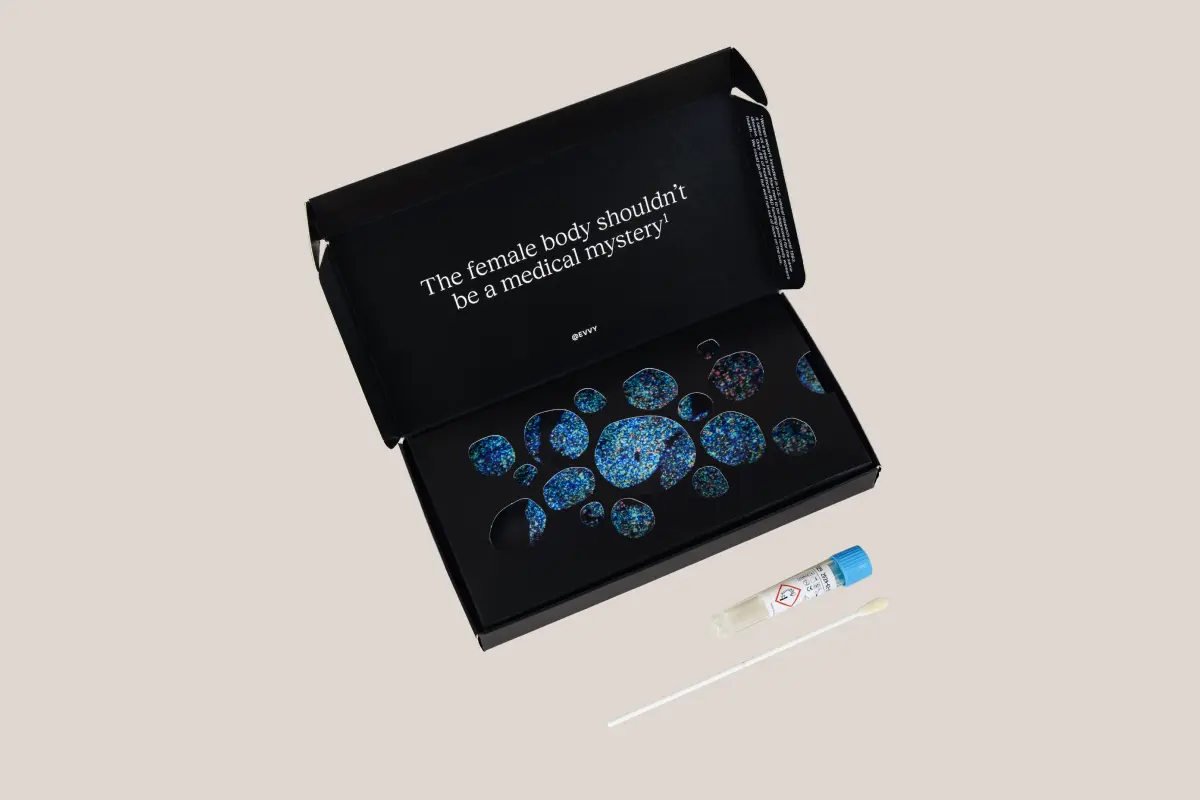
Get advanced insights into symptoms, fertility, and other health outcomes. Prelim results in 1-3 days.
.avif)
Can your underwear really cause a yeast infection? Here's what the research says, and what's actually behind recurring infections.
Words by Olivia Cassano
Scientifically edited by Dr. Krystal Thomas-White, PhD
Medically reviewed by Dr. Kate McLean MD, MPH, FACOG
There's a lot of advice out there about how underwear is linked to yeast infections (vaginal candidiasis). Wear cotton underwear, ditch synthetics, never wear a thong, go commando at night. Some of it is worth taking on board, but your underwear is rarely the real reason you're getting yeast infections. Before you overhaul your entire underwear drawer, it's worth knowing what the science actually says. Keep reading to learn more.
Yeast infections are caused by an overgrowth of Candida, a type of fungus that lives naturally in and around the vagina. Most of the time, the healthy bacteria in your vaginal microbiome (primarily Lactobacillus) keep Candida in check. When that balance tips, Candida can multiply and cause symptoms.
What does any of this have to do with underwear? Candida thrives in warm, moist environments. Anything that raises the temperature and moisture levels around your vulva can create more favorable conditions for it. That's why you often hear the advice to wear breathable underwear and avoid tight, synthetic fabrics.
Several observational studies have found a link between tight-fitting underwear and higher rates of vulvovaginal candidiasis. The idea is that garments that reduce airflow trap heat and moisture, which can nudge conditions in Candida's favor. One large study that compared brief and thong wearers found that it wasn't the style of underwear that predicted yeast infections, but rather the fabric (specifically, whether or not it was cotton).
So underwear can be a contributing factor to yeast infections. But "contributing factor" is very different from "cause." You can wear synthetic underwear all your life and never get a yeast infection from it. And most people who get recurrent yeast infections are dealing with something much more fundamental than their choice of fabric.

Recurrent symptoms? Get Evvy's at-home vaginal microbiome test, designed by leading OB-GYNs.
This is probably the most clear-cut clothing-related risk factor. Staying in wet swimwear or sweaty gym clothes for an extended time after you're done swimming or exercising genuinely does create a warm, damp environment that's more hospitable to Candida. It's not guaranteed to cause an infection, but it's a reasonable and easy risk to avoid. If you’ve just gone for a swim or dip in the pool, get changed as soon as you can.
For the same reason, if you're prone to yeast infections, sitting around in damp underwear after a workout is worth avoiding. It's less about what the underwear is made of and more about how long it stays wet against your skin.
Non-breathable fabrics like nylon and spandex don't absorb moisture well and can trap heat against the vulva. A few studies have flagged tight synthetic clothing — including tight pants and tights, not just underwear — as a potential contributing factor to vaginitis, but there aren’t any studies that have looked at this specifically, so we don’t know if the fabric is causing the infections. Underlying factors like your vaginal microbiome composition, sexual activity, and antibiotic use are almost certainly doing a lot of the heavy lifting.
The most telltale sign of a yeast infection in your underwear is thick, clumpy, white discharge, often described as resembling cottage cheese. It doesn't usually have a strong smell, though you might notice a mild, slightly yeasty odor.
That said, it's easy to jump to conclusions. If you get to the end of a long day and notice white, clumpy discharge in your underwear, it's worth pausing before assuming the worst. Normal vaginal discharge (the kind that's clear or white, thin or slightly stretchy) can dry out and oxidize over the course of a day, which can make it look thicker and more substantial than it actually was. Depending on where you are in your menstrual cycle, you may also simply be producing more discharge than usual.
This is why getting familiar with your own discharge patterns across the month is so useful. The more you know what's normal for you at different cycle stages, the easier it is to recognize when something genuinely seems off.
If you're seeing thick white discharge alongside vaginal itching, irritation, or a burning sensation, a yeast infection is a more likely culprit. But because these symptoms can overlap with other conditions, testing is the only way to know for sure.
Candida can survive on fabric, so it's worth thinking about how you launder underwear if you've had a yeast infection. You don't need to throw anything away, but a hot wash is a good idea.
If you're getting recurrent infections, replacing older underwear (especially anything with worn-out fabric that retains more moisture) is reasonable, but it won't resolve the underlying cause.
If you've already switched to cotton, you change out of wet clothes promptly, and you're still getting recurrent yeast infections, then your underwear is not the problem. Here's what's more likely:
No test can determine whether your yeast infection was caused by your underwear. You might suspect it by process of elimination, but the reality is that it’s pretty hard to pinpoint the exact trigger. What you can do is test to confirm whether your symptoms are actually a yeast infection at all, because vaginal itching, unusual discharge, and irritation are symptoms of several different conditions, including bacterial vaginosis (BV) and other infections, and they're easy to confuse.
A standard at-home yeast infection test will typically check your vaginal pH or look for signs of yeast under a microscope. These can tell you whether Candida is present, but they don't tell you which strain, how much of it there is, or what else might be going on in your microbiome.
Evvy's Vaginal Microbiome Test goes further. It uses metagenomic sequencing to identify every organism in your vaginal microbiome, including all Candida species and strains, as well as the Lactobacillus species (or lack thereof) that help keep Candida in check. If you're getting recurrent yeast infections, that level of detail matters, because some Candida strains are resistant to the antifungals most commonly prescribed for yeast infections. Knowing exactly which strain you're dealing with means your provider can choose a treatment that's actually targeted to it, rather than defaulting to something that may not work. Eligible Evvy users can access custom prescription treatment through an Evvy-affiliated provider, based directly on their results.
None of these will cure a yeast infection on their own, but if you're looking to create the best possible conditions for your vaginal microbiome, these habits are worth building:
If wearing underwear seems to trigger yeast infections, it's more likely about the fabric or fit than the underwear itself. Non-cotton or tight-fitting styles can trap heat and moisture around the vulva, creating conditions that favor Candida. Try switching to underwear with a 100% cotton gusset and a less restrictive fit. If infections continue, the cause is almost certainly something else, like microbiome imbalance, hormone shifts, or antibiotic use, rather than your underwear.
Not necessarily. Washing at 140°F with a fragrance-free detergent is typically enough to eliminate Candida from fabric. If your underwear is old, worn, or made from fabric that retains moisture easily, replacing it is reasonable, but don't expect that to stop recurrent infections on its own.
It’s a good idea to change your underwear once or twice a day during an active yeast infection, especially if you're experiencing discharge. Fresh, dry underwear helps keep your vulva clean and dry, reducing the warm, moist environment that Candida thrives in.
It can help with comfort, and it does allow your vaginal area to air out overnight. There's no strong clinical evidence that going commando at night directly speeds up recovery, but it's unlikely to hurt, and if it makes you more comfortable, it's worth doing.
A wet bathing suit alone is unlikely to cause a yeast infection in someone whose vaginal microbiome is balanced. But prolonged time in wet swimwear does create a warm, damp environment that can support Candida growth — so it's a risk factor, particularly if you're already susceptible. Change out of your swimsuit as soon as you're done swimming, and don't sit around in it for hours. If you're getting yeast infections after swimming regularly, it's worth looking at your overall microbiome health rather than just your swimwear habits.