CONGRATS! YOU EARNED FREE SHIPPING.

Product Title
1
$0
$0
Subscription Title

Looking kind of empty in here.
We recommend:
Get advanced insights into symptoms, fertility, and other health outcomes. Prelim results in 1-3 days.

Brown discharge before your period, mid-cycle, or with no period at all — here's what's normal, what's not, and when it's worth testing.
Words by Olivia Cassano
Scientifically edited by Dr. Krystal Thomas-White, PhD
Medically reviewed by Dr. Kate McLean MD, MPH, FACOG
Brown discharge can feel alarming, but it’s usually just old menstrual blood leaving your body more slowly than fresh blood does. You'll usually see it right before or after your period, or sometimes around ovulation.
When it shows up on its own, it's usually harmless, but brown vaginal discharge can also be a sign of infection, a hormonal shift, or — less commonly — something more serious. The color itself doesn't tell you which scenario you're dealing with, but the context can: when it occurs in your menstrual cycle, how long it lasts, and whether you’re experiencing other symptoms, like an unpleasant smell, vaginal itching, or pelvic pain.
Below, we go through the most common reasons for brown discharge at each stage of your cycle, plus how to tell the difference between normal spotting and something worth seeing your provider for.
Fresh blood is red because it contains the protein hemoglobin, which is rich in iron. When iron is exposed to air for a while, it oxidizes — a process similar to how a cut apple turns brown — and the color shifts from red to brown or even dark, coffee-ground-like specks.
This is why brown discharge tends to show up at the "edges" of your period. At the very start, bleeding can be lighter for some people, so the blood moves more slowly and has more time to oxidize before it leaves the body. The same thing happens at the tail end, when flow is winding down, and what's left is old blood that's had extra time to be exposed to oxygen.
The color alone isn't a diagnosis, though. What matters more is the pattern. Does it show up at a predictable point in your cycle, or does it seem random? Is it a small amount over a day or two, or does it stretch on for a week or more? Is there any smell, itching, or discomfort with it?
Brown discharge from old blood is typically light, doesn't smell strong, and isn't accompanied by other symptoms. If yours doesn't fit that description, it's worth digging into the more specific causes below.
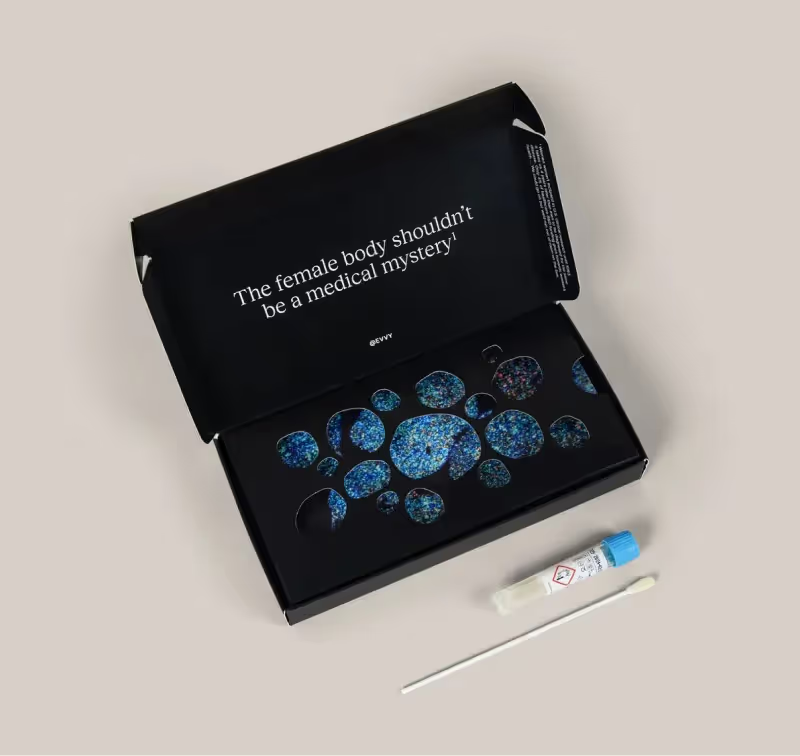
Recurrent symptoms? Get Evvy's at-home vaginal microbiome test, designed by leading OB-GYNs.
Light brown spotting for a day or two before your period starts is common. As your uterine lining begins to shed, the first bit of blood released is often little and slow-moving, giving it time to oxidize before it leaves your body. The same thing happens in reverse at the tail end of your period, when flow is winding down and only small amounts of blood remain.
A few days of brown spotting immediately before or after your period is normal and not usually something to worry about. If it consistently happens for longer than that, or if it's heavy enough to need a pad or tampon rather than light spotting, it's worth mentioning to a provider or OB-GYN.
Hormonal birth control can also change this pattern. Spotting between periods, or longer stretches of brown discharge before your period arrives, is a known side effect of the birth control pills, hormonal IUDs, implants, and other hormonal methods — especially in the first few months of use, or if you've recently switched types. This kind of spotting usually settles down as your body adjusts, but if it persists for several cycles, it's worth a check-in with your provider.
Some people notice light brown discharge around ovulation, which typically happens about two weeks before your period, in the middle of your cycle. This is usually linked to the hormonal shift that happens as an egg is released. A small, temporary drop in estrogen can cause a bit of the uterine lining to shed, resulting in light spotting that turns brown as it exits.
Ovulation spotting usually lasts only a day or two and is very light — think a few streaks on toilet paper rather than anything you'd need a pad for. It may also come with other signs of ovulation, like a change in cervical mucus (which often becomes clear and stretchy around this time) and mild one-sided pelvic twinges.
If mid-cycle spotting happens every month around the same time, it's likely just your body's normal hormonal rhythm. If it's new, heavier than usual, or paired with abdominal pain, it's worth tracking and mentioning to a provider — particularly if you're also dealing with irregular cycles more broadly.
Brown discharge with no period in sight (meaning it's not near the start or end of your expected cycle) can happen for a few reasons:
In rare cases, brown discharge can point to something more serious, like a missed miscarriage (when a pregnancy has stopped developing but hasn't yet passed from the body), an ectopic pregnancy (when a fertilized egg implants outside the uterus, most often in a fallopian tube, which can become a medical emergency), or a gynecological cancer such as uterine or cervical cancer. These causes are rare, and brown discharge is overwhelmingly benign — but if you're in any doubt, especially if you're pregnant, it's worth reaching out to a provider.
Not all brown discharge is hormone-related. Vaginal infections can also be a cause, and may be mistaken for "just spotting" because the color overlaps with what old blood looks like.
BV happens when the balance of bacteria in your vagina shifts, with less-protective bacteria overtaking the Lactobacilli that normally keep things balanced. This imbalance can cause discharge that's thin, gray, or brown-tinged, often with a distinct fishy odor that's more noticeable after sex or during your period.
The tricky part is that infection-related discharge can look a lot like normal spotting at a glance. What sets it apart is usually the smell, texture, or other unusual symptoms — itching, burning, irritation, or discomfort when you pee or have sex. If your brown discharge comes with any of these, it's more likely to be infection-related than hormonal.
Symptoms alone can only tell you so much, since BV, STIs, and other imbalances often overlap in how they present. An Evvy Vaginal Microbiome Test uses metagenomic sequencing to identify the exact bacteria and yeast present in your vaginal microbiome, so you get a clear answer on what's actually going on rather than guessing between possible causes. If an infection is responsible for brown discharge, testing also helps guide the right treatment, rather than a one-size-fits-all approach that may not target the specific bacteria causing problems.
Brown discharge is caused by oxidized blood that's taken longer than usual to leave the body. It commonly shows up around the start or end of your period, during ovulation, or as a side effect of hormonal birth control. Less commonly, it can be linked to pregnancy, stress, perimenopause, or a vaginal infection.
Yes. High or chronic stress can disrupt the hormones that regulate your cycle, sometimes delaying ovulation or your period and causing breakthrough bleeding that appears brown instead of a full flow.
This can happen for several reasons, including hormonal birth control, early pregnancy, perimenopause, stress, or a vaginal infection like BV. If there's no clear explanation and it persists, it's worth getting tested to rule out an infection or talking to a provider.
It can be an early sign for some people, sometimes linked to implantation bleeding, but brown discharge alone isn't a reliable pregnancy indicator. A home pregnancy test is the most accurate way to check whether you're pregnant.
Certain sexually transmitted diseases (STDs), including chlamydia and gonorrhea, can cause abnormal or discolored discharge, sometimes brown-tinged, particularly if they've caused irritation or light bleeding. If you're sexually active and notice unusual discharge alongside pain, foul odor, or bleeding between periods or after sex, it's worth getting tested.
“Normal” is subjective, but in general, 1 to 3 days of brown spotting at the start or end of your period is typical. Brown discharge that lasts significantly longer, is heavy, or shows up outside of your expected cycle window is worth paying closer attention to.
Yes, for a few reasons. Some hormonal methods make your period much lighter than usual, and that lighter flow can take longer to make its way out of the cervix and vaginal canal — giving it time to oxidize and turn brown before it exits. Others cause a fake period (a withdrawal bleed rather than a true period), which can show up as brown spotting instead of the bright red flow you might expect. Either pattern is common in the first few months of trying a new birth control method or after a missed dose.
Yes, it can, but usually only if inflammation from the infection has caused some mild bleeding, and that blood mixes with vaginal fluid. On its own, BV typically presents as thin, white or grey discharge with a fishy odor that's more noticeable after sex or during your period, rather than brown. If you're experiencing brown discharge alongside that odor, it's worth taking an Evvy Vaginal Microbiome Test to confirm.
Brown discharge generally isn’t a cause for concern when it's light, brief, and close to your period or ovulation. It's worth checking in with a provider or testing if it lasts longer than a few days, shows up with a strong odor, itching, or pain, has no clear pattern, or you have any reason to suspect that you’re pregnant.
If it's hormonal (linked to your period, ovulation, or birth control), it typically resolves on its own and doesn't need treatment. If it's caused by an infection like BV, treatment depends on identifying the specific bacteria involved, which is where Evvy's Vaginal Microbiome Test can help you and your provider choose the right approach rather than guessing. If an infection turns out to be the culprit, eligible users can access prescription treatment tailored to their test results through an Evvy-affiliated provider.