CONGRATS! YOU EARNED FREE SHIPPING.

Product Title
1
$0
$0
Subscription Title

Looking kind of empty in here.
We recommend:
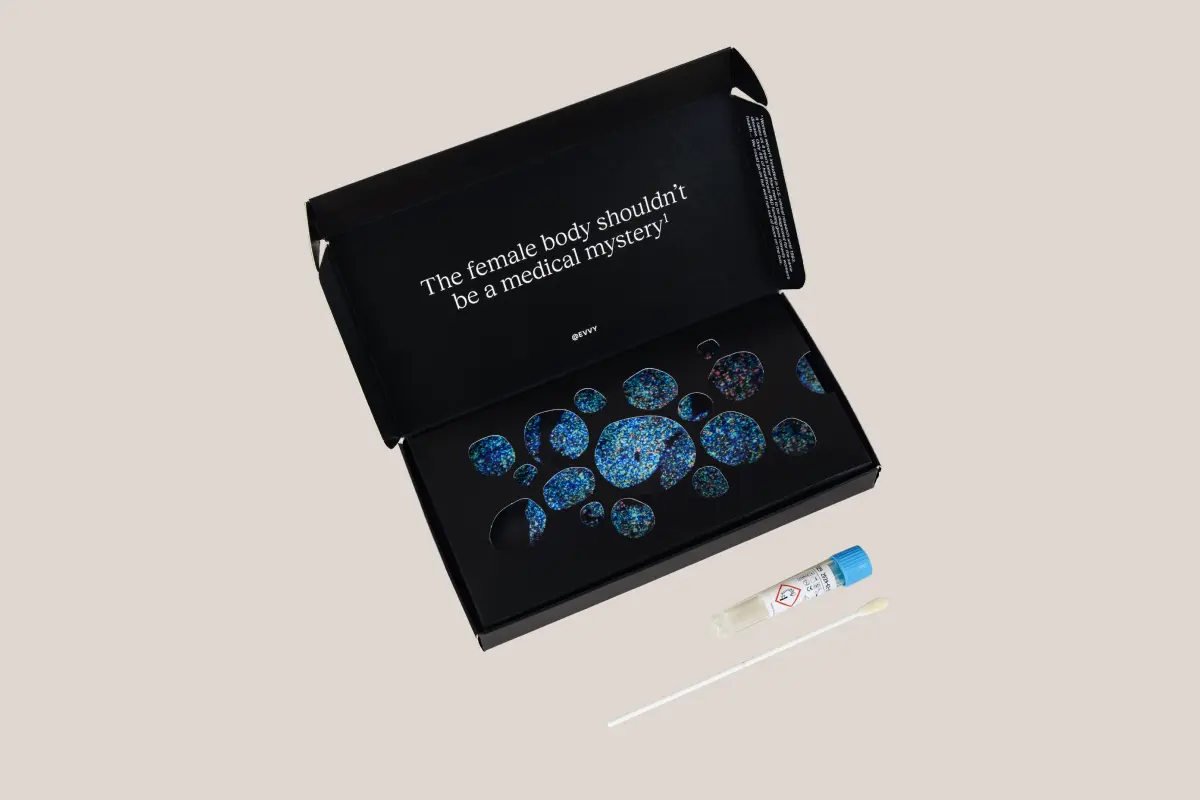
Get advanced insights into symptoms, fertility, and other health outcomes. Prelim results in 1-3 days.

Learn how to test for a UTI at home or in a lab, compare options, and understand your results to get the right treatment faster.
Words by Olivia Cassano
Scientifically edited by Dr. Krystal Thomas-White, PhD
Medically reviewed by Dr. Kate McLean MD, MPH, FACOG
If you’ve ever had a urinary tract infection (UTI), you probably recognize the symptoms right away: burning when you pee, urgency, and that constant feeling of needing to go. But there’s a catch, because symptoms alone don’t always tell the full story. Conditions like bacterial vaginosis (BV), yeast infections, and even some sexually transmitted infections (STIs) like chlamydia can mimic UTI symptoms. That’s why testing matters, even when you feel “sure” you know what’s going on.
Getting the right test can help confirm whether bacteria are actually present in your urinary tract, identify the specific cause, and guide effective treatment. Without testing, you risk taking the wrong medication, delaying relief, or contributing to antibiotic resistance.
In this guide, we’ll walk you through everything you need to know about UTI testing, from at-home dipsticks to advanced lab diagnostics, so you can choose the right option for your situation. We’ll also explain how to interpret your results and when to seek medical care. If you’re looking for a more comprehensive, at-home option, you can also learn more about Evvy’s UTI+ Test, which uses PCR technology to detect a wider range of pathogens.
If you suspect you have a UTI, testing is the best way to confirm. While some people may recognize the early signs, it’s important not to rely solely on symptoms. Common signs that warrant testing include:
If the infection reaches your kidneys, you may also have fever, chills, nausea, or back pain. You should seek care immediately if you experience any of these symptoms.
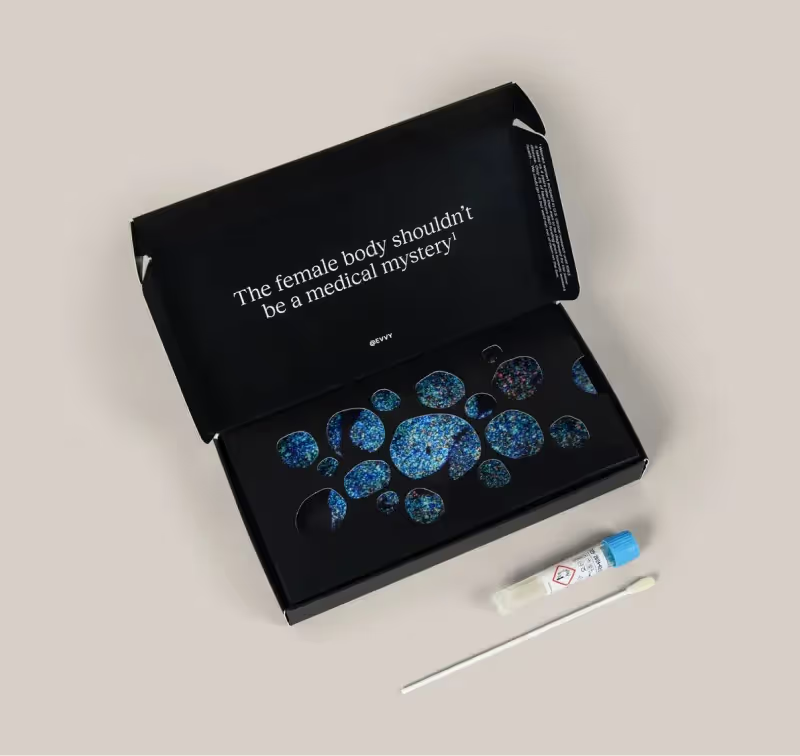
Recurrent symptoms? Get Evvy's at-home vaginal microbiome test, designed by leading OB-GYNs.
There are several ways to test for a UTI, ranging from quick at-home screening tools to more advanced lab-based diagnostics. Each option varies in accuracy, speed, and the type of information it provides.
Some tests look for general signs of an infection, while others can pinpoint the specific bacteria causing the infection and even suggest which antibiotics might work best for you. Knowing the differences between these tests can really help you choose the most suitable option, especially if you’ve been dealing with frequent or ongoing symptoms.
PCR (polymerase chain reaction) testing is one of the most advanced methods for detecting UTIs. Unlike traditional tests that rely on growing bacteria in a lab, PCR works by identifying the genetic material (DNA) of pathogens. This allows it to detect a much broader range of bacteria, including those that are difficult or slow to grow in standard cultures.
One of the biggest advantages of PCR testing is its sensitivity. It can detect low levels of bacteria that other methods might miss, which is especially helpful for people with recurring or chronic UTIs. In addition, PCR tests can detect antibiotic resistance genes, providing you and your healthcare provider with valuable insight into which treatments are most likely to work.
Evvy’s UTI+ Test lets you access that technology from the comfort of your own home. With a simple urine sample, you can get a detailed analysis of potential pathogens and resistance markers without needing an in-office visit. This makes it a great option for anyone who wants a deeper understanding of their urinary health, particularly if standard tests haven’t provided clear answers.

At-home dipstick tests are one of the most accessible ways to check for a possible UTI. These over-the-counter test strips are dipped into a urine sample and change color based on the presence of certain markers. The most common markers include:
Results typically appear within 1 to 2 minutes, making dipsticks a fast and convenient option. However, they come with limitations. Not all UTI-causing bacteria produce nitrites, which can lead to false negatives. On the flip side, factors like dehydration, contamination, or even vaginal discharge can cause false positives.
Other factors that may affect accuracy include vitamin C intake, certain medications, and your period. Timing also matters, because you need to follow the instructions carefully and read the results within the recommended window.
While dipsticks can be a useful first step, a positive result usually still requires confirmation from a healthcare provider before starting antibiotics.
A clinical urinalysis is a more comprehensive test performed in a healthcare setting. Urinalysis involves examining urine for white blood cells, red blood cells, or bacteria under a microscope.
This test provides more detailed information than a dipstick. In some cases, a provider may begin treatment based solely on symptoms, especially if they are classic and severe. However, urinalysis helps confirm the diagnosis and rule out other potential causes. Urinalysis is typically processed quickly, with results available the same day.
Urine culture is one of the most reliable ways to confirm a UTI and identify the exact cause. In this test, a urine sample is sent to a lab and placed in conditions that allow any bacteria present to grow and multiply. Over the next 24–48 hours, lab technicians monitor the sample for bacterial growth. If bacteria are detected, the lab can identify the specific type and perform antibiotic sensitivity testing to determine which medications are most likely to be effective. If a UTI is suspected, a urine culture may take 1 to 3 days for results to determine the most effective antibiotic.
Cultures are strongly recommended for men, pregnant women, or individuals with diabetes when a UTI is suspected. That said, there are a few downsides to a culture test. One of the main challenges is the time it takes — because bacteria need some time to grow, results typically come back in 24-48 hours, and sometimes even longer. This can delay making any treatment adjustments.
Additionally, standard culture methods can miss up to 50–70% of pathogens, especially those caused by slow-growing bacteria or those present in smaller amounts. In these instances, there’s a chance a true UTI could be incorrectly reported as negative.
In most cases, UTIs can be diagnosed with simple urine tests, such as dipsticks, urinalysis, urine culture, or PCR. Most of the time, these simple tests can give you the answers you need. However, if an infection is severe, keeps recurring, or doesn’t respond to typical treatments, doctors might suggest additional tests to get a clearer picture and rule out complications.
In these cases, a full blood count and kidney function tests (which check things like creatinine and electrolytes) can tell you how your body is responding to the infection. For more serious situations, doctors might look into lactate levels or blood cultures to see if the infection has spread into the bloodstream.
If someone has a stubborn infection that doesn’t respond to standard antibiotic treatments, extended antibiotic susceptibility testing can help identify the best medication.
To dive deeper into potential underlying issues, your healthcare provider might use imaging tests, such as an ultrasound, CT scan, or MRI, for recurrent or complicated urinary tract infections.
For people with chronic UTIs who may have bladder dysfunction, urodynamic testing can provide insights into how well the bladder and urethra are functioning. In certain cases, a more specialized approach may be necessary. A cystoscopy involves inserting a small camera into the bladder to examine it for abnormalities such as stones, strictures, tumors, or signs of chronic inflammation.
These tests are typically reserved for situations where UTIs keep coming back, don’t improve with treatment, or occur in higher-risk groups, including men, children, pregnant people, or those with existing health conditions like diabetes or kidney disease. They are also important when there are indications of more serious issues, such as a kidney infection or sepsis, where prompt and thorough evaluation is essential.
Testing for a UTI at home with Evvy is designed to be simple, accurate, and convenient. Here’s how the process works:
It's a good idea to get tested as soon as you notice any symptoms, like burning when you pee, a frequent or urgent need to go, strong-smelling or cloudy urine, or discomfort in your lower abdomen. Untreated UTIs can last several days to a few weeks, and the symptoms can worsen over time — so it's a good idea to get tested ASAP.
When you test, using your first morning urine is often recommended because it tends to be more concentrated, which helps spot infection markers. However, if you're feeling urgent symptoms, don't hesitate to test right away (it's better than putting it off).
Also, if you’re on your period, it can sometimes affect test results since blood might interfere with certain tests, particularly dipsticks. Do your best to avoid getting menstrual blood into your sample. But remember, if your symptoms are severe, it's important to get tested regardless. Just keep in mind that interpreting the results might be a bit tricky.
Understanding your test results depends on the type of test. Positive results for leukocytes or nitrites on dipstick tests may indicate an infection, but they do not guarantee one. Keep in mind that false positives and negatives can occur, so it’s important to consider the symptoms alongside the results.
For cultures, results usually show bacterial counts. A high concentration of a single type of bacteria often confirms a urinary tract infection. Labs may also provide information on how bacteria respond to antibiotics, which can guide your treatment.
If you're using PCR-based tests, you’re in for a more detailed insight. These tests can detect multiple organisms, including some that cultures might miss, and they can also highlight any antibiotic resistance. This can be especially useful in more complicated or recurring cases.
Just remember, no test is perfect. A positive result doesn’t always mean you need to jump into treatment, and a negative result doesn’t automatically rule out an infection. It’s really important to consider the clinical context and your symptoms as they play a key role in understanding what’s going on.
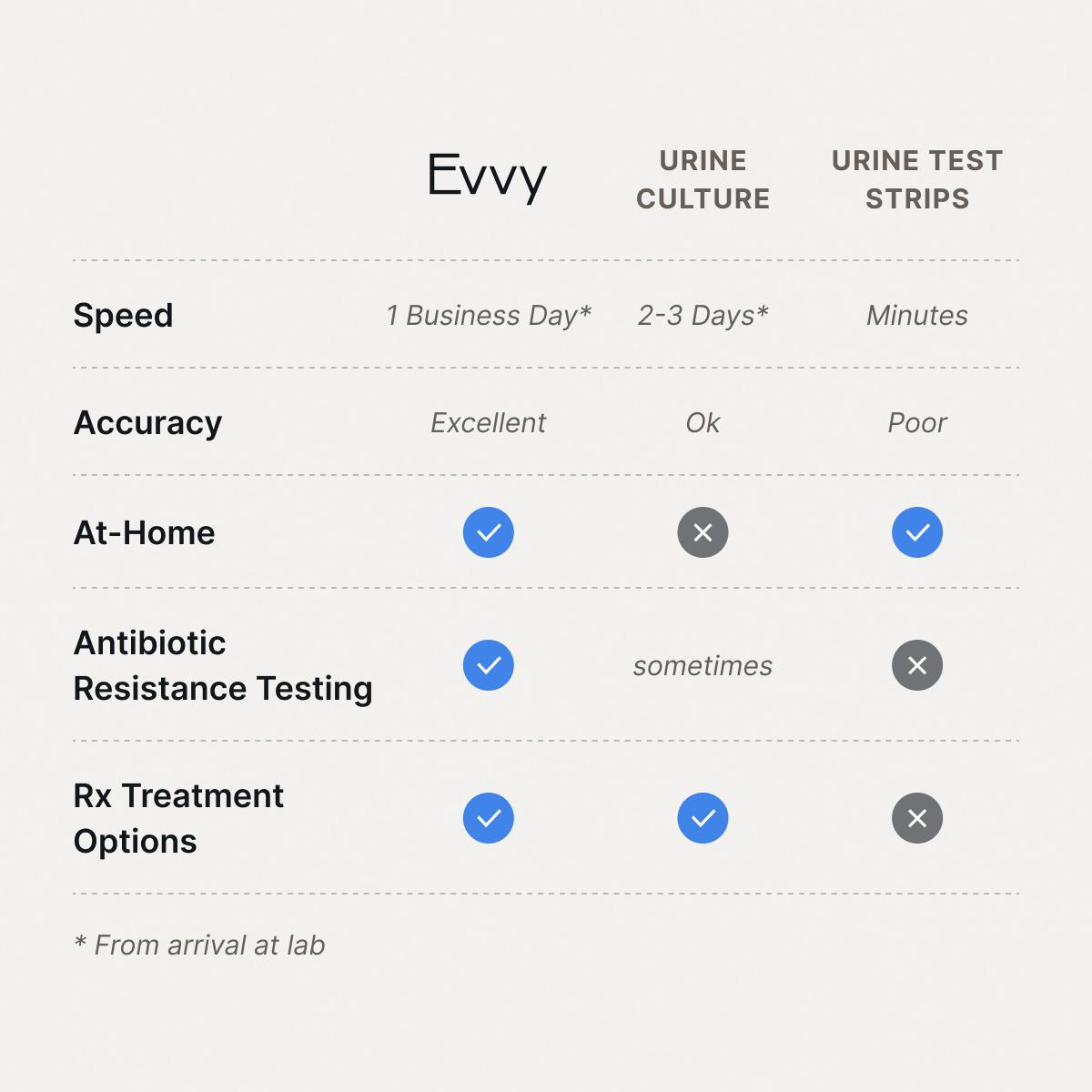
Turnaround time varies depending on the type of test:
Evvy’s UTI+ Test provides results within 1 business day of the lab receiving your sample, combining speed with comprehensive analysis.
While at-home testing can be helpful, there are situations where medical care is essential.
You should seek care immediately if you’re not feeling well and have a fever, chills, severe pain in your side or back, nausea, or vomiting. Also, if you see blood in your urine or have trouble passing urine, don’t hesitate to get checked out right away.
You should also see a doctor if your symptoms are moderate, getting worse, or not improving after a day or two. This is especially important if it’s your first time dealing with a urinary tract infection or if you frequently get infections.
Certain groups, such as pregnant individuals, men, children, older adults, and those with underlying health conditions or weakened immune systems, should always seek medical care rather than just relying on home testing alone.
For healthy, non-pregnant adult women with very mild symptoms, home testing can be a reasonable first step. However, if your symptoms stick around, make sure to follow up with a healthcare professional! Your health matters, so don’t hesitate to reach out!
Choosing the best test depends on your symptoms, medical history, and the complexity of your situation. Many doctors consider a culture test the go-to test since it can pinpoint exactly which bacteria are causing the infection and which antibiotics will be effective. However, it’s worth noting that it may sometimes miss certain infections or take a bit longer to get results. On the other hand, PCR-based testing offers a more thorough and sensitive approach. It can detect a wider variety of organisms and even identify antibiotic resistance genes. This can be particularly beneficial for those dealing with recurring, persistent, or hard-to-treat urinary tract infections.
You can test at home using over-the-counter dipstick tests or more advanced at-home test kits. Dipsticks are quick and easy, providing results in minutes by detecting markers such as leukocytes and nitrites. However, they’re best used as a screening tool. For more detailed insights, at-home PCR tests like Evvy’s UTI+ Test analyze your sample in a lab to identify specific bacteria and resistance markers, offering a deeper understanding of what’s causing your symptoms.
Diagnosing a UTI typically involves reviewing symptoms and performing a urinalysis to detect white blood cells and bacteria. If needed, they may order a culture to grow, identify the bacteria, and determine which antibiotics will be most effective. Uncomplicated UTIs in healthy women may require only clinical history and a dipstick for diagnosis without a culture.
Yes, you can test during your period, but it may affect the accuracy of your results. Blood contamination can interfere with dipstick readings and lab analysis, sometimes leading to false positives. However, if you’re symptomatic, test anyway!
Results vary depending on the type of test used. Dipstick tests look for markers like leukocytes (inflammation), nitrites (bacterial activity), and blood. Urinalysis provides a broader view of infection indicators, while culture identifies specific bacteria and their quantity. PCR tests go a step further by detecting bacterial DNA and antibiotic resistance genes. Regardless of the method, results should always be interpreted in the context of your symptoms and medical history.
Turnaround time depends on the test type. Dipstick tests provide results within minutes, while urinalysis is often completed the same day. Cultures typically take 1 to 3 days because they require time for bacteria to grow. PCR-based tests are faster once the sample reaches the lab, often delivering results within about 24 hours. Evvy’s UTI+ Test, for example, provides results within 1 business day after arriving at the lab.
Yes, it's totally possible to get a negative test result even when you have a urinary tract infection. Some bacteria don’t show up on dipsticks, and regular cultures might miss low levels of bacteria or those that are a bit trickier to grow. Factors such as timing, recent antibiotic use, and how the sample is collected can also affect the results. If you're still experiencing symptoms despite a negative test, it might be a good idea to seek further evaluation or consider more sensitive testing options.
Not necessarily. For mild, uncomplicated UTIs (especially if you’ve had them before), doctors may treat based on symptoms alone. However, cultures are strongly recommended for recurrent UTIs, severe symptoms, or infections that don’t respond to initial treatment. In these cases, identifying the exact bacteria and their antibiotic sensitivities can help ensure more effective, targeted care.