CONGRATS! YOU EARNED FREE SHIPPING.

Product Title
1
$0
$0
Subscription Title

Looking kind of empty in here.
We recommend:
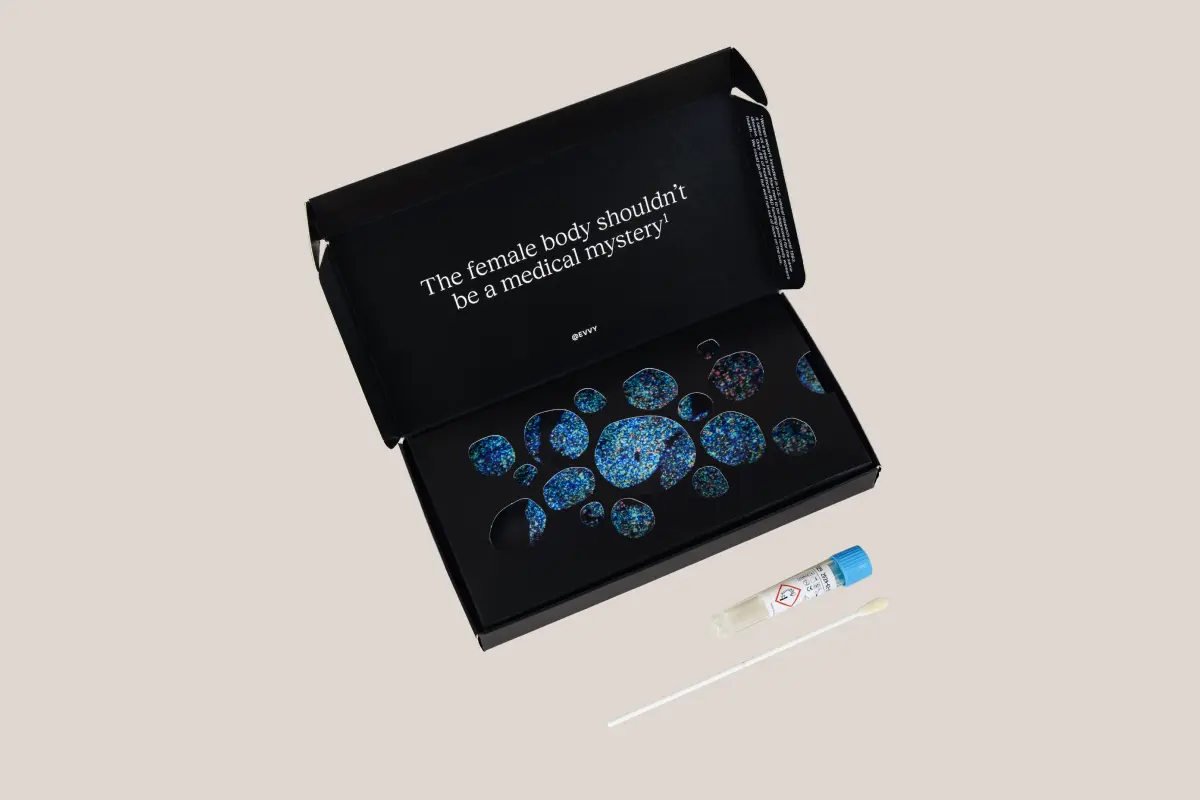
Get advanced insights into symptoms, fertility, and other health outcomes. Prelim results in 1-3 days.

Burning after sex? Learn what causes honeymoon cystitis, how to treat it, and how to stop it from coming back, including testing options for recurrent UTIs.
Words by Olivia Cassano
Scientifically edited by Dr. Krystal Thomas-White, PhD
Medically reviewed by Dr. Kate McLean MD, MPH, FACOG
If you've ever come home from a romantic holiday with your partner — or even just a one-night stand — and found yourself running to the bathroom every five minutes with a burning sensation that won't quit, you might have experienced honeymoon cystitis. Or in other words, a urinary tract infection (UTI) triggered by sex. Despite the name, there’s nothing romantic about it.
Whether you're dealing with a one-off infection or a frustrating pattern of recurrent UTIs after sex, this guide covers everything you need to know (including how Evvy's Vaginal Health & UTI Test can help you get clearer answers and faster relief).
Honeymoon cystitis is a colloquial term for what's medically called “postcoital cystitis,” a bladder infection that shows up after sexual intercourse. The name comes from the observation that these infections were historically associated with newly sexually active women, but the reality is that they can happen to any woman at any point in her life. That said, sex remains one of the strongest known triggers for acute urinary tract infections in women.
Essentially, it's a UTI with a clear trigger: sex. The timing is usually telling. Symptoms tend to show up within 24 to 48 hours of sexual activity. Beyond that, it's the same type of infection as any other UTI, caused by bacteria reaching the bladder and multiplying there. Understanding that connection (sex as a trigger) is actually useful because it opens the door to targeted prevention strategies that can make a real difference.
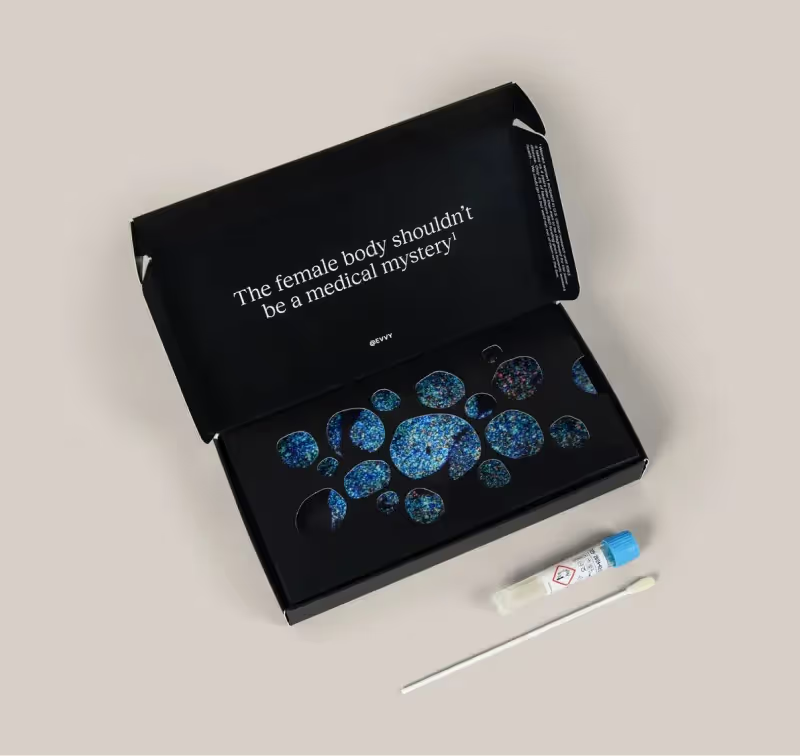
Recurrent symptoms? Get Evvy's at-home vaginal microbiome test, designed by leading OB-GYNs.
The short version is that sex can introduce bacteria into the urethra, and from there, those bacteria can travel up into the bladder, multiply, and cause an infection.
The urethra (the tube that carries urine out of your body) sits very close to both the vaginal opening and the anus. During sex, friction and movement can push bacteria (most often E. coli) toward the urethra. From there, it doesn't have far to travel to reach the bladder, and research shows the odds of developing a UTI increase after having sex.
Other factors that can raise your risk include using spermicides (which can disrupt the vaginal environment and increase infection risk two to three times), having a new sexual partner, and a history of previous UTIs.
Anatomy is mostly responsible. Women have a much shorter urethra than men, which means bacteria have less distance to cover to reach the bladder. Its proximity to the vaginal opening and anus also means there's more opportunity for bacteria to be introduced during sex. Really and truly, human biology just means we got the short end of the stick. But it does explain why UTIs, including post-sex UTIs, are so disproportionately common in women.
Symptoms are the same as any other UTI, and if you've had one before, you'll likely recognize them immediately.
The most common signs include:
Symptoms typically appear within a day or two of sex. They can range from mildly irritating to genuinely debilitating. If you develop a fever, back or side pain, nausea, or vomiting, it may be a sign that the infection has spread to the kidneys, in which case you should seek medical attention promptly.
If you suspect you have a UTI, the standard diagnostic route is a urine test. A traditional urine culture involves sending a sample to a lab, where it's grown over several days to identify the bacteria causing the infection. Once identified, you'll typically be prescribed a short course of antibiotics. For most uncomplicated UTIs, this is effective. Doctors typically prescribe a 3-day course of antibiotics, such as Trimethoprim or Nitrofurantoin, to treat honeymoon cystitis effectively.
That said, traditional urine cultures have real limitations. They can take days to return results, and research suggests they miss up to 50-70% of pathogens. If your infections keep coming back or your symptoms aren't resolving, that's worth taking seriously.
Evvy's UTI+ Test offers a more thorough, convenient alternative. Instead of waiting days for culture results, it uses PCR to identify 12 key uropathogens and 7 antibiotic resistance genes, with results in just 1 business day. That means fewer missed infections, less trial-and-error with antibiotics, and faster, more targeted relief. For women with recurrent post-sex UTIs, pairing the UTI+ Test with Evvy's Vaginal Health Test can also reveal whether bacteria in your vaginal microbiome might be contributing to the cycle.
A few supportive measures can help you feel more comfortable while you're treating a bladder infection, but it's important to be clear — these are not replacements for antibiotics when a real infection is present:
While your body can sometimes clear a mild UTI on its own, leaving it untreated is risky. Bacteria can spread to the kidneys and cause a much more serious infection. If your symptoms aren't improving after a couple of days or are getting worse, see a doctor.
If you're getting bladder infections regularly after sex, it's worth putting some consistent prevention habits in place:
With antibiotic treatment, most symptoms start to improve within a day or two. A typical course of antibiotics for an uncomplicated bladder infection lasts 3 to 7 days. Without treatment, symptoms can persist or worsen, so it's worth getting tested and treated rather than waiting it out.
It happens because sexual activity can physically introduce bacteria (whether from the bowel, vaginal area, or your partner’s penis) into the urethra. From there, bacteria can travel up to the bladder and cause an infection. Women are particularly susceptible due to the short length of the urethra and its proximity to the vaginal opening and anus.
Since it's a urinary tract infection, the most reliable fix is antibiotics prescribed by a healthcare provider, ideally following a urine test to identify the specific bacteria involved. While you're waiting for treatment to kick in, drinking plenty of water, taking OTC pain relief like ibuprofen, applying a heating pad to your lower abdomen, and peeing frequently can all help ease symptoms and support your recovery. Avoid sex until the infection has fully cleared.
Some mild urinary tract infections may resolve on their own, but it's not recommended to rely on that. Untreated infections can progress to the kidneys, which is much more serious. Supportive measures like hydration, cranberry, and AZO may help prevent or relieve mild symptoms, but they shouldn't replace antibiotic treatment for an active infection.
Yes. It's a straightforward bacterial infection and responds well to the right antibiotics. For women who experience it repeatedly, targeted strategies (including postcoital antibiotics and microbiome testing) can significantly reduce recurrence.
Most people describe a burning or stinging sensation when they pee, a constant urge to pee even when the bladder is empty, and sometimes pelvic pressure or discomfort. Urine may look cloudy or smell stronger than usual. It typically comes on within 24 to 48 hours of sex.
With antibiotic treatment, yes. Most people start feeling better within 24 to 48 hours. Without treatment, symptoms can persist or worsen. If you've had your symptoms for more than a few days or they're getting worse, see a healthcare provider.
Key prevention strategies include peeing after sex, staying well hydrated, avoiding spermicidal contraception, using lubricant, and (if you get infections frequently) discussing postcoital antibiotic prophylaxis with a doctor. Testing your vaginal and urinary microbiome with Evvy can also help you understand your personal risk factors and take a more targeted approach.