CONGRATS! YOU EARNED FREE SHIPPING.

Product Title
1
$0
$0
Subscription Title

Looking kind of empty in here.
We recommend:
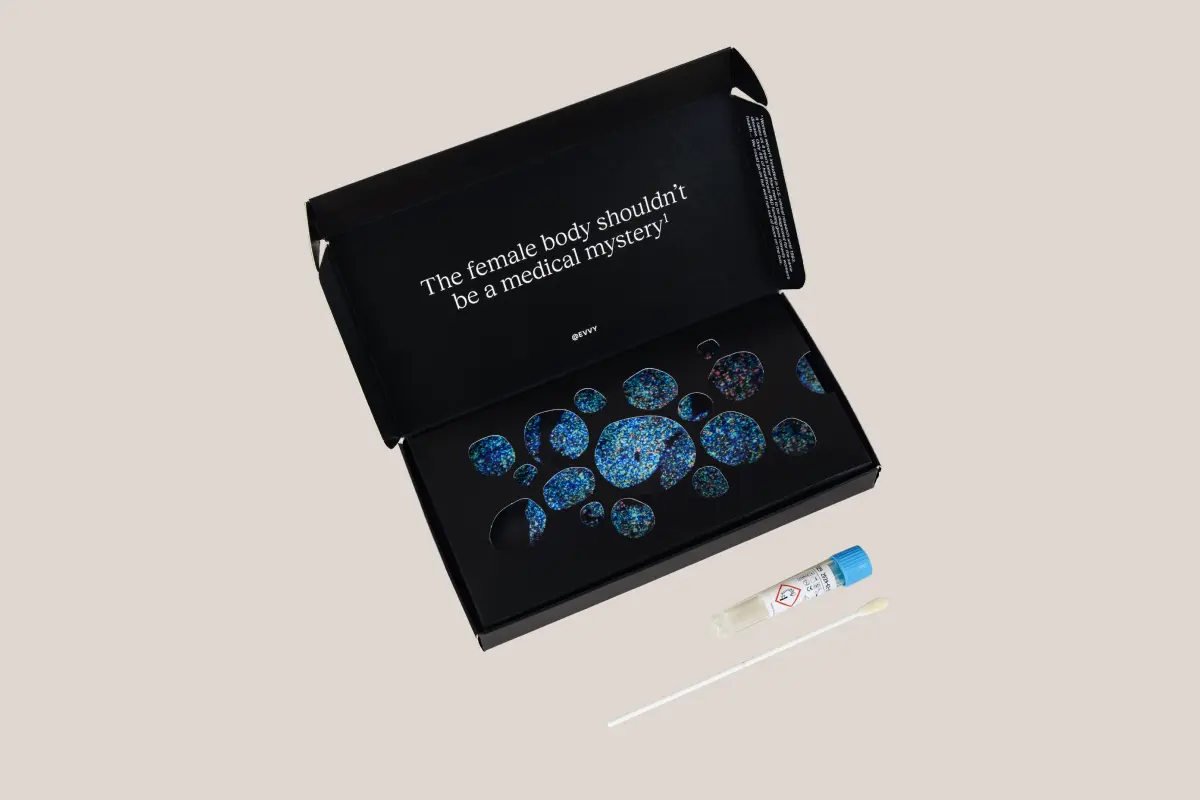
Get advanced insights into symptoms, fertility, and other health outcomes. Prelim results in 1-3 days.
.avif)
Boost fertility with evidence-backed vitamins and supplements. Learn which nutrients help, how to choose, and tips for both women and men.
Words by Olivia Cassano
Scientifically edited by Dr. Krystal Thomas-White, PhD
Medically reviewed by Dr. Kate McLean MD, MPH, FACOG
Key takeaways:
Have you ever wondered why most people suggest taking prenatal vitamins when you’re trying to get pregnant? One person swears by CoQ10, another says vitamin D changed everything, and suddenly your kitchen counter looks like a drugstore. The truth is that a few vitamins really do support reproductive health, but they work best when they’re targeted to your needs, not taken blindly.
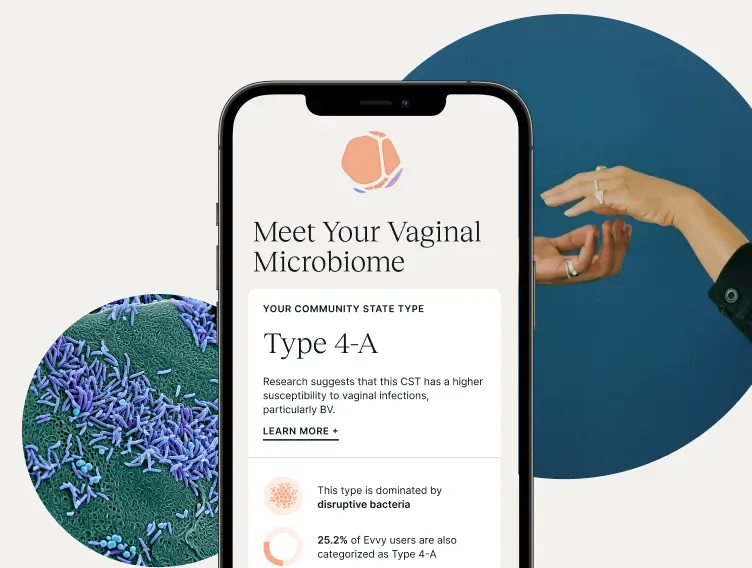
Fertility is multi-factorial, influenced by everything from hormones to age and lifestyle habits, and underlying health conditions. That includes the vaginal microbiome, which can affect reproductive health in ways we’re still learning about. Tools like Evvy’s Vaginal Health Test help you understand what’s going on at that level, so you can make smarter, more personalized choices alongside nutrition and lifestyle changes.
Let’s break down which vitamins actually help, who benefits most, and how to choose without getting overwhelmed.
Vitamin supplements aren’t magic fertility pills, and they’re not necessary for everyone (except folic acid — more on that below). If you’re eating a balanced diet, getting enough good-quality sleep, and don’t have nutrient deficiencies, supplements may only offer small benefits. But for many people trying to conceive, “good enough” nutrition still leaves gaps that matter for reproduction.
You’re more likely to benefit from prenatal vitamins if you have:
People over 35 may also see more benefit from certain nutrients that support egg and sperm quality, especially antioxidants and mitochondrial helpers like CoQ10.
A healthy diet matters too. Vegetarians and vegans are more likely to be low in vitamin B12 and iron. People who avoid dairy or sun exposure may be low in vitamin D. Chronic stress, intense exercise, and gut issues can all affect how well you absorb nutrients, even if you’re eating “right.”
The key point is that fertility supplements work best when they’re filling a real gap. Testing (bloodwork, cycle tracking, and even vaginal microbiome insights) can help you avoid guessing and focus on what your body actually needs.
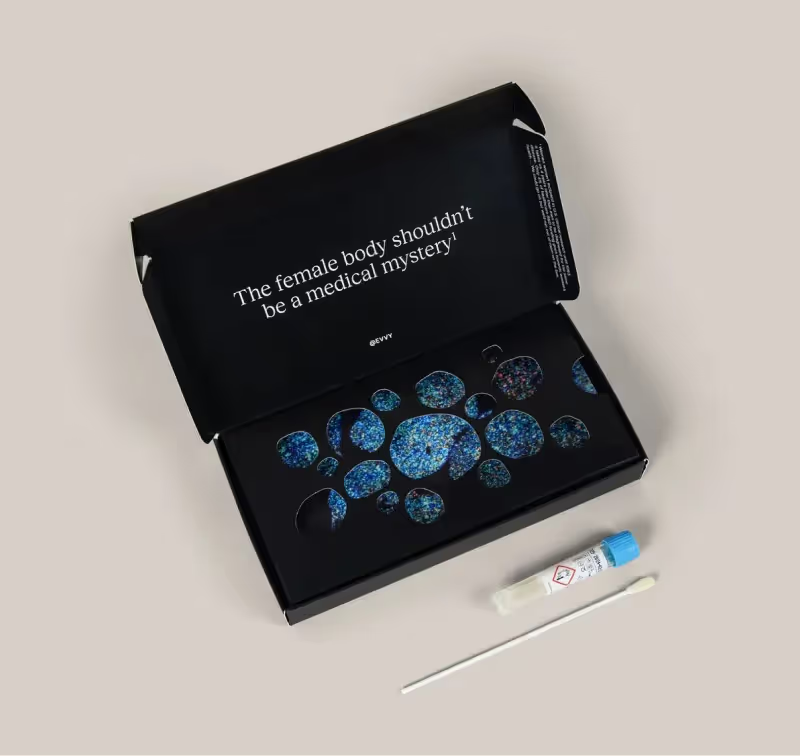
Recurrent symptoms? Get Evvy's at-home vaginal microbiome test, designed by leading OB-GYNs.
These are the essential nutrients with the most consistent evidence behind them when it comes to fertility support. Think of them as the foundation, not a miracle cure.
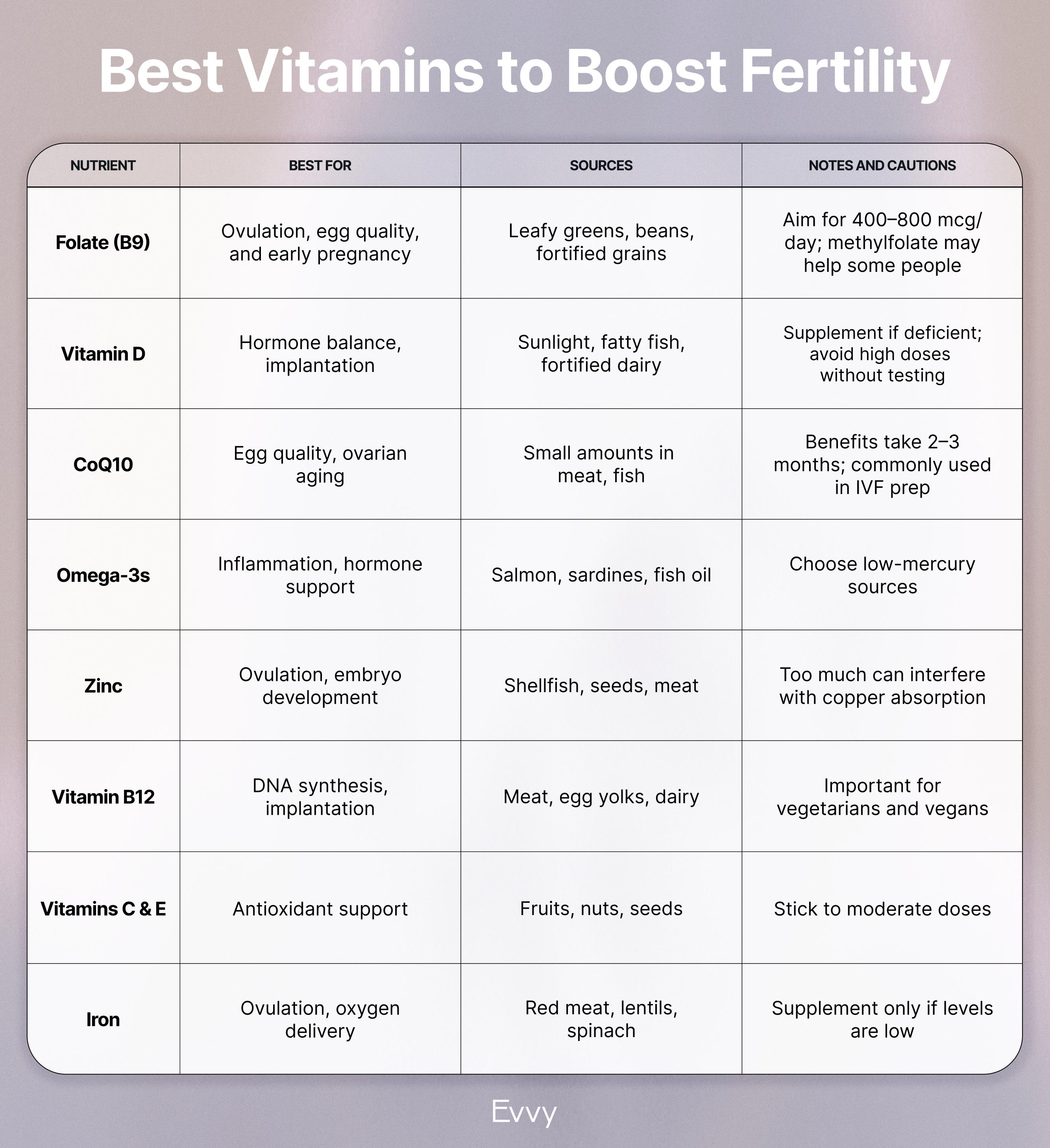
If there’s one vitamin that almost everyone trying to conceive should take, it’s folic acid (the synthetic version of folate). Folate, also known as vitamin B9, is essential for ovulation, egg development, and the earliest stages of pregnancy. It helps your body make and repair DNA, supports healthy cell division, and allows eggs to mature properly before ovulation. These processes are especially important in the weeks before conception, when egg health and hormone signaling are being set.
Folic acid is also critical for preventing serious birth defects. Adequate folate intake before and very early in pregnancy dramatically lowers the risk of neural tube defects, including spina bifida, which occur in the first few weeks after conception — often before someone even knows they’re pregnant. That’s why folic acid supplements are recommended before trying to conceive, not just after a positive test.
Higher folic acid intake has consistently been linked to better fertility outcomes as well. Women with sufficient folate levels tend to ovulate more regularly, have healthier progesterone levels in the luteal phase, and have a lower risk of infertility related to ovulation problems. Folic acid also helps lower homocysteine, a compound that, when elevated, can interfere with egg maturity and embryo quality.
The recommended dose is at least 400 micrograms of folic acid daily for anyone trying to conceive, both to reduce the risk of neural tube defects like spina bifida and to support fertility itself. Many prenatal supplements provide 400–800 micrograms per day, which is considered a safe and effective range. Some people benefit from the active form, methylfolate, especially those with MTHFR gene variants that make it harder to convert synthetic folic acid into its usable form.
However, in rare cases of infertility, taking excessive folate may cause problems. That is why it is important to talk to your doctor about taking or increasing the levels of any supplements while trying to conceive.
Vitamin D supplementation doesn’t get as much attention as folate, but it plays an important supporting role in reproductive health. Vitamin D receptors are found in the ovaries, uterus, and placenta, which means this vitamin is directly involved in ovarian function, hormone production, and preparing the uterine lining for implantation.
Low vitamin D levels can cause irregular ovulation, hormonal imbalances, and fertility issues, especially in people with conditions like PCOS. A vitamin D deficiency is also linked to increased oxidative stress (an imbalance between free radicals and antioxidants) and insulin resistance, which can disrupt normal ovulation. For those who are deficient, getting enough vitamin D may help make their cycles more regular and could improve their chances of getting pregnant.
That said, vitamin D isn’t a “more is better” supplement. Research hasn’t shown clear fertility benefits from supplementing if your levels are already adequate. That’s why testing matters. If you’re low, supplementing can be helpful for both fertility and overall health. If you’re not, taking high doses is unlikely to improve your chances of conception and could even be counterproductive at very high levels.
CoQ10 (coenzyme Q10) supports fertility by helping cells produce energy and by protecting eggs from oxidative damage. Eggs are especially energy-hungry cells, and as we age, their energy-producing structures (mitochondria) become less efficient. CoQ10 is a key part of the system that keeps those mitochondria working well.
Research shows that supplementing with CoQ10 supports egg quality, increases the number of eggs retrieved during in vitro fertilization (IVF), and improves embryo quality, especially in people over 35 or those with diminished ovarian reserve or poor ovarian response. It may also reduce chromosomal abnormalities in eggs and lower the risk of miscarriage in some populations.
CoQ10 doesn’t work overnight, though. Because egg development takes about three months, most studies show benefits after at least eight to 12 weeks of consistent use. It’s not necessary for everyone, but for people dealing with age-related fertility changes or specific infertility diagnoses, it can be a meaningful part of a fertility plan.
Omega-3 fatty acids, especially EPA and DHA, support fertility by reducing inflammation, improving hormone balance, and supporting egg and embryo quality. Higher omega-3 intake has been linked to a higher chance of conception, improved outcomes in IVF, and a lower risk of pregnancy loss.
These fats help regulate reproductive hormones and improve the environment of the ovary and uterus. They also support mitochondrial function in eggs and reduce oxidative stress, both of which are important for healthy egg maturation.
Women with higher omega-3 intake tend to have better pregnancy and live birth rates, both when trying naturally and with fertility treatment. If you don’t regularly eat fatty fish like salmon, sardines, or anchovies, a high-quality fish oil supplement can help fill the gap. While exact dosing isn’t firmly established, consistency matters more than perfection here.
Zinc is a quiet workhorse when it comes to fertility. It’s essential for ovulation, egg maturation, fertilization, and early embryo development. Without enough zinc, eggs may not mature properly, chromosomes may not divide correctly, and ovulation itself can be disrupted.
Zinc also plays an important role in hormone signaling and helps many enzymes that repair DNA and support cell division. In the ovary and uterus, it protects cells from damage and creates a good environment for implantation. Low zinc levels are associated with reduced ovarian reserve and poorer-quality embryos.
Most importantly, zinc can benefit both female and male fertility. In men, zinc is crucial for sperm production, motility, and DNA integrity. Because a deficiency can affect both egg and sperm quality, ensuring adequate zinc intake is an important, often-overlooked step in supporting overall fertility.
Vitamin B12 works hand-in-hand with folate to support vital processes like DNA synthesis and healthy cell division, which are crucial for ovulation, implantation, and the early stages of embryo development. When your B12 levels are low, it can lead to a rise in the amino acid homocysteine, which has been associated with some challenges in implantation and even pregnancy loss.
If you're facing issues like infertility or repeated miscarriages, or if you're going through assisted reproductive treatments, it's worth noting that low vitamin B12 levels can be a factor. In fact, many fertility clinics have found that higher B12 levels can lead to higher live birth rates, especially when paired with enough folate.
B12 deficiency is more common than you might think and can affect those who don’t consume much or any animal products, since we mainly find B12 in foods like meat, dairy, and eggs. The good news is that supplementation is generally safe and can be really beneficial, especially in the months leading up to conception.
Vitamins C and E can be great allies when it comes to supporting fertility, primarily because they're powerful antioxidants. Oxidative stress can affect important processes like egg quality, ovulation, and implantation, which is particularly important for those dealing with conditions like PCOS, endometriosis, or unexplained infertility.
Some studies suggest that a higher intake of vitamin C may lead to a shorter time to pregnancy for women under 35. On the other hand, vitamin E seems to be especially helpful for women over 35, likely because oxidative stress tends to increase with age. Together, these vitamins can help protect your eggs and create a better environment for a healthy conception.
While the benefits may be modest, they definitely contribute positively as part of a well-rounded, nutrient-rich diet or supplement plan, particularly for those experiencing higher oxidative stress. The good news is that typical supplemental doses are considered safe and aren’t linked to an increased risk of miscarriage.
Iron plays a vital role in keeping our bodies functioning well because it helps transport oxygen, produce energy, and support healthy cell growth. These factors are especially important for ovulation and implantation. Many people with periods, particularly those who experience heavy bleeding, might struggle with iron deficiency, and it often goes unnoticed unless ferritin levels are checked.
When iron levels are low, it can lead to irregular ovulation, make it harder to conceive, and even increase the risk of miscarriage. The good news is that by addressing iron deficiency, you may boost your chances of getting pregnant and having a healthy live birth, even if you’ve been facing unexplained infertility.
However, it’s important to remember that when it comes to iron, more isn’t always better. Too much iron can negatively impact ovarian reserve and hormone levels. That’s why it’s best to take iron supplements based on lab testing rather than just on a whim. If you’re found to be deficient, replenishing your iron can greatly enhance your fertility. But if your levels are fine, supplementation may not be beneficial and could even cause issues.
The fertility supplement world is crowded, and not everything with a hopeful label has solid evidence behind it. Myo-inositol, DHEA, herbal blends, and antioxidant “cocktails” often get attention online, but results are mixed or limited to specific groups.
For example, myo-inositol may be beneficial for women with PCOS to help regulate ovulation and improve egg quality, but the data is mixed, and it doesn’t reliably increase pregnancy rates for everyone. DHEA is sometimes used in fertility clinics for people with very low ovarian reserve, but it’s a hormone precursor and can backfire if taken without medical supervision.
Herbal supplements have become quite popular, and there’s some evidence suggesting that certain herbs might boost fertility. Research, including randomized controlled trials and reviews of traditional East Asian and Chinese medicine, has shown that these herbs can slightly improve pregnancy rates when compared to placebo or standard treatments, but research is limited. Some herbal extracts, particularly those with antioxidant, hormone-supporting, or phytoestrogenic properties, might be helpful for women dealing with conditions like PCOS, premature ovarian failure, endometriosis, or hypothalamic dysfunction. For example, plant-based antioxidants such as resveratrol have shown promise in enhancing ovarian function in early studies.
That said, it's important to note that the evidence isn't strong. Many studies have flaws, sample sizes can be quite small, and we still don’t know the best dosages. Most side effects are usually mild, but there can be interactions with other medications. That doesn’t mean they never help, but they shouldn’t replace evidence-based nutrients or medical care. And always remember to reach out to a professional for advice when considering these options.
If a supplement promises to “boost fertility fast” or claims to work for everyone, that’s your cue to be skeptical. Fertility is complex, and no single pill (herbal or otherwise) works universally.
It takes two to tango, and even though the onus is often put on women, male partners play their part, too. Remember, male factor infertility contributes to up to 50% of infertility cases. Even when the focus is on egg quality and cycles, sperm health plays an equal role in conception and pregnancy outcomes.
For women, the most essential nutrients are folate, vitamin B12, and vitamin D when levels are low. Iron matters if you’re deficient, especially with heavy periods. CoQ10 can be useful for people over 35 or those with low ovarian reserve, while omega-3s support hormone balance and inflammation across the board.
For men, zinc is a big one. It’s essential for sperm count, movement, and DNA integrity, especially in men with low sperm count or poor motility. CoQ10 supports sperm energy production and motility, helping sperm move more efficiently. Omega-3 fatty acids are linked to healthier sperm membranes and better overall semen quality, including improved count and movement.
Another critical nutrient for male fertility is L-carnitine, which helps sperm produce energy and has been shown to improve sperm motility, particularly progressive motility. Selenium also plays an important role by supporting antioxidant defenses in sperm and has been associated with better sperm shape and movement in men with infertility.
Antioxidants like vitamins C and E may help protect sperm from oxidative damage, which can harm sperm DNA, though evidence that they directly increase pregnancy or live birth rates is mixed.
The takeaway is simple: optimizing fertility works best when both partners are supported. Even modest improvements in sperm health can meaningfully increase the chances of conception.
If you’re trying to conceive, timing matters. Most fertility vitamins take at least two to three months to have an effect because that’s how long it takes eggs and sperm to mature. Starting supplements the month you want to get pregnant is better than nothing, but earlier is better.
Pair vitamins with the basics that make them work: regular sleep, balanced meals with enough protein, green leafy vegetables, healthy fats, and movement that supports (not stresses) your hormones. Tracking your cycle, ovulation, and symptoms gives you feedback that supplements alone can’t provide.
Lab work can be helpful, especially for vitamin D, iron, and B12. If you’re not seeing changes after a few months, or if cycles are very irregular, it may be time to loop in a clinician or fertility specialist.
And remember, fertility isn’t just about nutrients in your bloodstream. The reproductive tract environment matters too. Your vaginal microbiome can influence inflammation, infection risk, and how supportive the vaginal environment is for sperm and implantation.
With Evvy’s Vaginal Health Test and Fertility Insights, you can see whether your microbiome pattern has been associated with fertility challenges, pregnancy loss, or fertility treatment outcomes in research. These insights help connect the dots between symptoms, test results, and reproductive goals, so you can make more informed, personalized decisions, whether that’s adjusting treatment, timing, or working with a provider on targeted next steps.
Folic acid is the most consistently recommended vitamin for fertility and early pregnancy. It supports egg quality, ovulation, and healthy embryo development, and it also lowers the risk of neural tube defects such as spina bifida once pregnancy occurs. Because of these benefits, folate is recommended for all women trying to conceive, ideally starting at least a few months before pregnancy. While other vitamins like vitamin B12, vitamin D, and CoQ10 can also support fertility, folate is considered the cornerstone for preconception health.
The supplements with the strongest evidence for supporting fertility include folic acid, vitamin B12, omega-3 fatty acids, and CoQ10 in specific cases, such as advanced maternal age or reduced ovarian reserve. Vitamin D and iron are helpful when your levels are low, especially if you have irregular cycles, heavy periods, or a vitamin D deficiency. For men, zinc, selenium, CoQ10, L-carnitine, and omega-3 fatty acids have been linked to improved sperm count, motility, and DNA quality. The key is that the best supplements depend on your individual needs, which can be guided by testing, a balanced diet, and health history, rather than taking everything at once. Of course, consulting with a healthcare provider is recommended before starting any new supplement regimen.
There’s no instant fix. Fertility is influenced by hormones, egg and sperm quality, and reproductive tract health, all of which take time to change. That said, you can give yourself a head start by correcting nutrient deficiencies, eating balanced meals, managing stress, getting enough sleep, and exercising regularly. Tracking your cycle and ovulation can provide feedback on how your body responds. Supplements like folate, CoQ10, or omega-3s support these processes, but they usually take at least two to three months to influence egg or sperm quality, so patience is key.
No single vitamin can make you more fertile. Vitamins and supplements can support ovulation, egg and sperm quality, and a healthy reproductive environment, but they work best as part of a larger fertility plan. That plan might include lifestyle habits, cycle tracking, lab testing, and guidance from a healthcare provider. Personalized insights, such as those from Evvy’s Vaginal Health Test and Fertility Insights, can also help you understand what your body actually needs, making your supplement strategy more targeted and effective rather than a guessing game.
Want to learn more about preconception supplements? See how Luminary Vitamins can help support your fertility goals.