CONGRATS! YOU EARNED FREE SHIPPING.

Product Title
1
$0
$0
Subscription Title

Looking kind of empty in here.
We recommend:
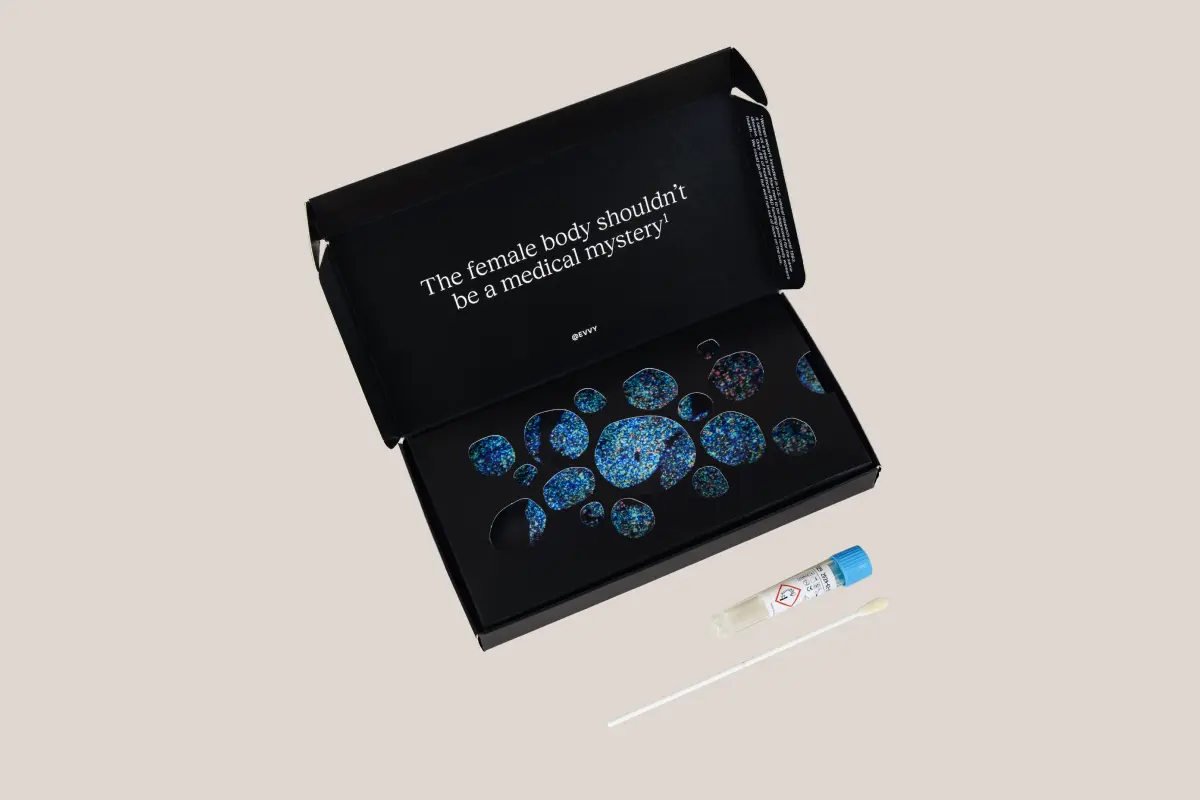
Get advanced insights into symptoms, fertility, and other health outcomes. Prelim results in 1-3 days.

BV is common in pregnancy and often has no symptoms. Learn how it affects your pregnancy, how to get tested, and which treatments are safe for you and your baby.
Words by Olivia Cassano
Scientifically edited by Dr. Krystal Thomas-White, PhD
Medically reviewed by Dr. Kate McLean MD, MPH, FACOG
Bacterial vaginosis (BV) is one of the most common vaginal infections in women, and being pregnant doesn't protect you from it. If anything, the hormonal changes that come with pregnancy can make your vaginal microbiome more vulnerable to disruption.
Reading about BV during pregnancy can feel overwhelming, especially when you're already navigating so much. But here's the reassuring part: BV is common, it's very treatable, and catching it early makes a real difference. Whether you're already pregnant or just starting to think about it, understanding BV is one of the most proactive things you can do for your reproductive health.
Below, we cover what BV is, why pregnancy raises your risk, how it's diagnosed, and which treatments are safe when you're expecting. Want a deeper look at your vaginal microbiome? Evvy's Vaginal Microbiome Test can help.
Bacterial vaginosis isn’t just uncomfortable to deal with. When left untreated during pregnancy, BV can affect your baby in pregnancy, increasing the risk for premature birth and low birthweight, as well as other health problems.
Preterm birth is one of the most well-documented risks associated with BV. Preterm birth is when someone gives birth before 37 weeks of pregnancy, and it can lead to serious health complications for newborns, including breathing difficulties, feeding problems, and developmental delays. Research shows that BV roughly doubles the odds of premature birth overall.
Premature rupture of membranes (PROM) is another concern. Bacterial vaginosis can weaken the amniotic sac, which may cause it to break before labor begins, and that can lead to infection and early delivery. BV can also lead to intrauterine infections and increase your risk of acquiring other sexually transmitted infections (STIs), including HIV.
Miscarriage risk may also be higher with BV, especially in the first trimester. Multiple studies have found a link between BV and early pregnancy loss, though the research is still evolving, and having BV doesn’t mean miscarriage is inevitable.
Certain BV-associated bacteria can cause pelvic inflammatory diseases (also called PID), which can lead to infertility and other reproductive health issues. BV can also raise your risk of postpartum infections after a vaginal delivery or C-section.
Researchers are still piecing together exactly why BV affects pregnancy outcomes. The leading theory is that bacterial imbalances in the vagina can allow harmful bacteria to travel up into the uterus and trigger inflammation. Genetics may also play a role, and some people seem more vulnerable to complications than others.
All of this is why catching bacterial vaginosis early matters so much. The sooner it’s detected and treated, the better. Getting treated for BV during pregnancy can help protect your baby and reduce the risk of complications. And the good news is that BV is very treatable, especially when caught early.
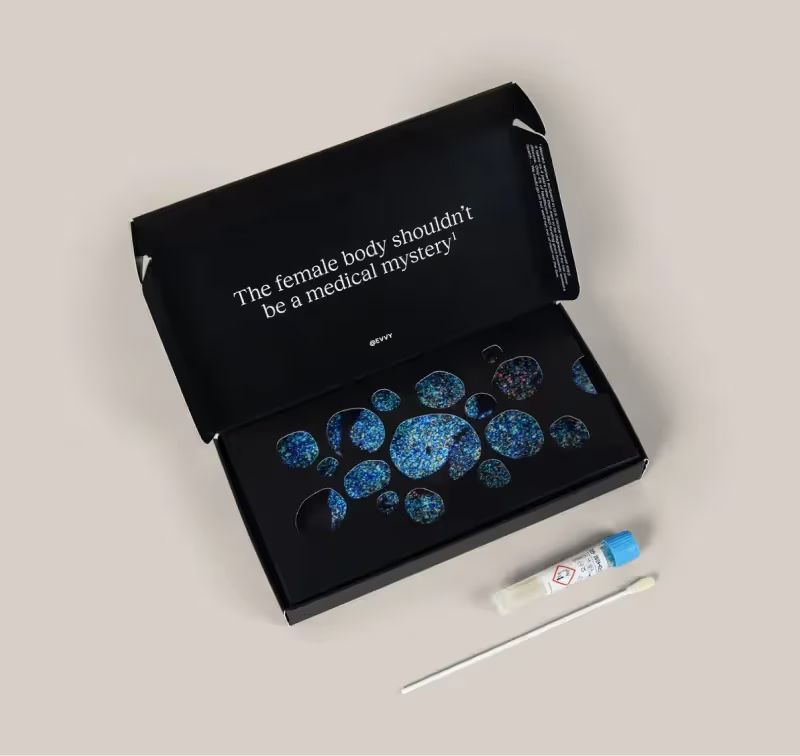
Recurrent symptoms? Get Evvy's at-home vaginal microbiome test, designed by leading OB-GYNs.
Bacterial vaginosis isn’t caused by one specific “bad” bacterium. It’s more of a whole-microbiome imbalance (also called vaginal dysbiosis). In a healthy vaginal microbiome, Lactobacillus bacteria dominate. They produce lactic acid, keep your vaginal pH low, and help fend off infections. When Lactobacillus levels drop, other bacteria (like Gardnerella vaginalis and Prevotella) can overgrow and cause problems.
Researchers still don’t fully understand why this happens to some people and not others. But some known risk factors include:
During pregnancy, changes in estrogen and progesterone can shift your microbiome in ways that make dysbiosis more likely (even if you’ve never had BV before).
More than half of the people with vaginal dysbiosis have no signs or symptoms at all. When symptoms of BV do show up, they usually include:
During pregnancy, it's easy to chalk up changes in discharge to just being pregnant — and sometimes that's all it is. But if your discharge turns gray or watery, or develops a noticeable fishy smell, it's worth mentioning to your healthcare provider. "Fishy smell during pregnancy" and "unusual vaginal discharge during pregnancy" are worth taking seriously rather than dismissing.
Because BV symptoms can be so easy to misinterpret, testing is really the only way to know for sure.
The first trimester brings a lot of change in your body, including your vaginal microbiome. BV can pop up due to the hormonal shifts of early pregnancy, as these changes can make your microbiome more vulnerable. This is why bacterial vaginosis sometimes develops or flares up during this time.
BV in early pregnancy has been linked to an increased risk of first-trimester miscarriage. That can feel scary to read, and we get it. But the key thing to hold onto is that BV is treatable, and having it doesn’t mean something will go wrong.
If you think you might have BV in your first trimester, don’t sit on it. Reach out to your OB-GYN or healthcare provider, who can test you and prescribe antibiotics if needed. Both metronidazole and clindamycin are safe to use in pregnancy. Catching it early really does make a difference, so don’t hesitate to bring it up, even between appointments.
If you're trying to get pregnant, your vaginal microbiome matters more than most people realize. BV has been linked to infertility, an increased risk of miscarriage, and in-vitro fertilization (IVF) failure. Left untreated, bacterial vaginosis can also lead to pelvic inflammatory disease (PID), an infection of the reproductive organs that may affect your ability to conceive. Getting tested before pregnancy gives you the chance to spot and address any imbalances proactively, rather than finding out after the fact.
And it's not just about BV. Your vaginal microbiome plays a broader role in reproductive health — a Lactobacillus-dominant microbiome has been associated with better fertility outcomes, while dysbiosis (even without obvious symptoms) may make conception harder. Understanding your baseline before you start trying gives you useful information when you can actually act on it.
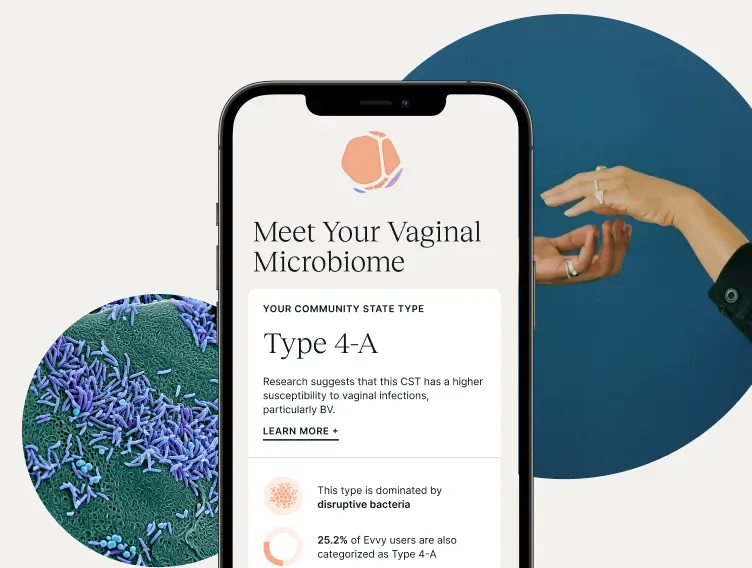
That's where Evvy's Vaginal Microbiome Test comes in. Using advanced sequencing technology, it detects 700+ bacteria and fungi from a single at-home swab, identifying BV-related patterns, showing which protective bacteria are present, and flagging any disruptions that could affect your fertility or pregnancy. Results are clinician-reviewed and come with a personalized care plan, so you know exactly what you're working with before you start trying.
Diagnosing BV is generally pretty simple, but it takes more than relying on symptoms alone.
At a clinic, your provider will usually do a pelvic exam and take a swab of vaginal fluid. To diagnose BV, they'll typically look for at least three of four markers, known as the Amsel criteria. These are:
Some providers use a lab-based scoring method called the Nugent score instead, which assesses the bacterial makeup of the swab sample. Most clinics now use PCR-based tests.
One thing to keep in mind: standard clinical tests can tell you whether you have BV, but not exactly which bacteria are driving it or what your overall microbiome looks like. That matters because BV can look the same on the surface while being caused by different bacterial imbalances underneath, which is part of why treatment doesn't always work the first time.
For people without symptoms, it's also worth knowing that routine BV screening isn't currently recommended for all pregnant women. The evidence that treating asymptomatic BV prevents preterm birth isn't consistent enough to make it standard practice. If you've had a previous preterm birth or late miscarriage, though, it's a conversation worth having with your provider.
If you've had recurring BV or want more detail than a standard swab can give you, a more comprehensive microbiome test is worth considering.
If you have BV symptoms during pregnancy, the Centers for Disease Control and Prevention (CDC) recommends getting treated to reduce the risk of complications for both you and your baby.
Metronidazole is the most commonly prescribed option. It comes as an oral tablet or a vaginal gel, which are both considered safe in pregnancy. Some providers prefer to use the vaginal gel in early pregnancy rather than oral tablets, so your provider will guide you on what makes most sense for your situation.
Clindamycin vaginal cream is the other go-to option, particularly for people who can’t tolerate metronidazole. It has a solid safety record in pregnancy, too.
Whichever treatment you’re prescribed, make sure you finish the full course, even if you start feeling better before it’s done. Stopping early can leave some bacteria behind, increasing the risk of BV returning.
It’s also worth knowing that BV recurrence rates are high. Research indicates that more than 50% of women treated for bacterial vaginosis will experience a recurrence within 12 months, highlighting the need for careful management of treatment options. This is also why post-treatment care (like probiotics and microbiome testing) matters, and why understanding your specific microbiome can help you and your provider choose the most effective treatment the first time.
After antibiotics, probiotics containing Lactobacillus strains can be helpful as supportive care. They won’t treat active BV on their own, but they can help your microbiome recover after treatment and may reduce the risk of BV returning.
You can't fully prevent BV, especially during pregnancy, when your hormones are constantly shifting. But you can do things to support a healthy microbiome.
Probiotics with Lactobacillus strains (particularly L. crispatus or L. rhamnosus) are one of the most researched tools for vaginal microbiome support. Some studies suggest they may help maintain vaginal pH and reduce BV recurrence, especially after antibiotic treatment. Just check with your OB-GYN before starting anything new during pregnancy.
There's also emerging research on partner treatment. A 2025 study published in the New England Journal of Medicine found that treating male partners with antibiotics reduced BV recurrence in women by nearly half. If you're in a relationship and experiencing recurrent BV, this is worth raising with your provider.
Other habits that can help:
Tracking your microbiome over time with Evvy can also help you understand how pregnancy-related hormonal shifts are affecting your vaginal health, and catch any imbalances before they become a problem.
Having BV when you're pregnant raises your risk of complications like preterm birth, premature rupture of membranes, postpartum infection, and miscarriage, especially in the first trimester. However, getting treated for BV in pregnancy can help protect your baby and reduce the risk of complications. Many people with BV go on to have completely healthy pregnancies, especially when it’s caught and treated early. BV is very manageable with pregnancy-safe antibiotics, which is why testing matters.
Get in touch with your healthcare provider as soon as you can. Skip the over-the-counter products — they won’t fix the underlying imbalance. Your provider can confirm whether it’s BV and prescribe the right antibiotic. The sooner you’re treated, the lower your risk of complications.
At the doctor's, BV is typically diagnosed using the Amsel criteria, the Nugent score, or PCR tests, all of which involve testing a vaginal swab in a clinical setting. At home, Evvy's Vaginal Microbiome Test uses metagenomic sequencing to analyze your vaginal microbiome and detect BV-associated bacteria, all from a swab you take yourself. That said, if you're pregnant and have symptoms, it's still a good idea to follow up with your provider in person.
Yes, there is a well-established link between BV and preterm labor. Research shows BV roughly doubles the odds of delivering before 37 weeks overall, and the risk appears higher the earlier in pregnancy BV is detected. This is one of the main reasons providers recommend treating BV promptly during pregnancy, even if symptoms are mild.
BV doesn’t directly infect your baby, but untreated BV can cause problems for your baby during pregnancy, including preterm birth and low birthweight (when a baby is born weighing less than 5 lb 8 oz), as well as premature rupture of membranes. These issues can have serious consequences for a newborn. Treating BV promptly and finishing your full course of antibiotics significantly lowers those risks.
You can treat BV with antibiotics, usually metronidazole (oral or vaginal gel) or clindamycin vaginal cream. Both are safe to use in pregnancy. Treating BV with antibiotics during pregnancy is important to reduce risks for both mother and baby. Your provider will figure out the best option based on your trimester and symptoms. Always finish the full course, even if you feel better before it’s done. Stopping early increases the risk of recurrence.
There is a research link between BV and higher miscarriage risk in the first trimester. BV-related inflammation may affect the uterine environment in early pregnancy. But having BV at 8 weeks doesn't mean miscarriage will happen. Many people with BV have healthy pregnancies, especially with timely treatment. If you're worried, don't wait and reach out to your provider.
Sometimes BV can clear on its own, but during pregnancy, waiting it out isn't a safe approach. There's no reliable way to know whether your BV will resolve without treatment, and the risks of leaving it untreated are real. If you're pregnant and think you might have BV, get tested and treated rather than hoping it resolves itself. Your provider can make this really straightforward.
Yes, and ideally before you conceive. BV has been linked to fertility challenges, early miscarriage, and lower IVF success rates. Testing before pregnancy gives you the chance to treat any existing BV and support your microbiome beforehand. Evvy's Vaginal Microbiome Test is a great starting point for a comprehensive picture of your vaginal health before you start trying.
Probiotics alone won't clear an active BV infection; you still need antibiotics. But certain Lactobacillus-based probiotic strains may help support your microbiome and reduce the risk of BV coming back after treatment. They're generally considered safe in pregnancy, but check with your provider before adding anything new to your routine.