CONGRATS! YOU EARNED FREE SHIPPING.

Product Title
1
$0
$0
Subscription Title

Looking kind of empty in here.
We recommend:
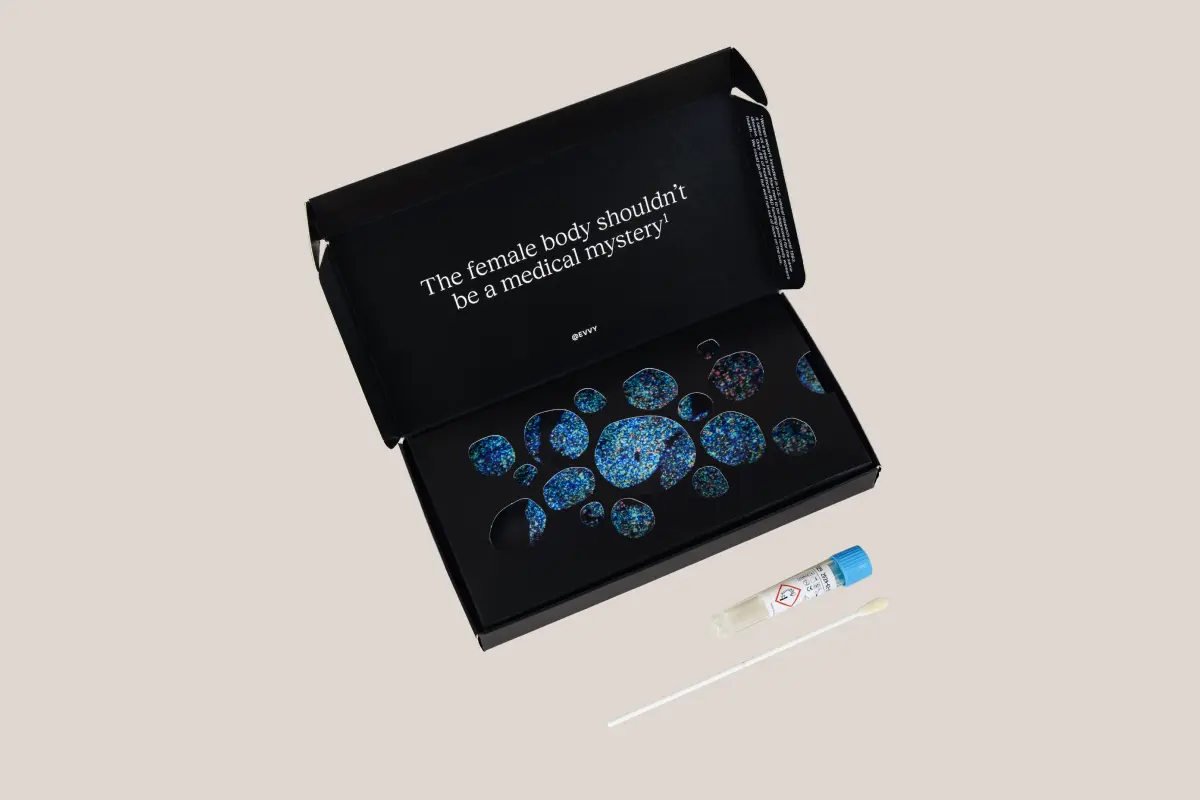
Get advanced insights into symptoms, fertility, and other health outcomes. Prelim results in 1-3 days.
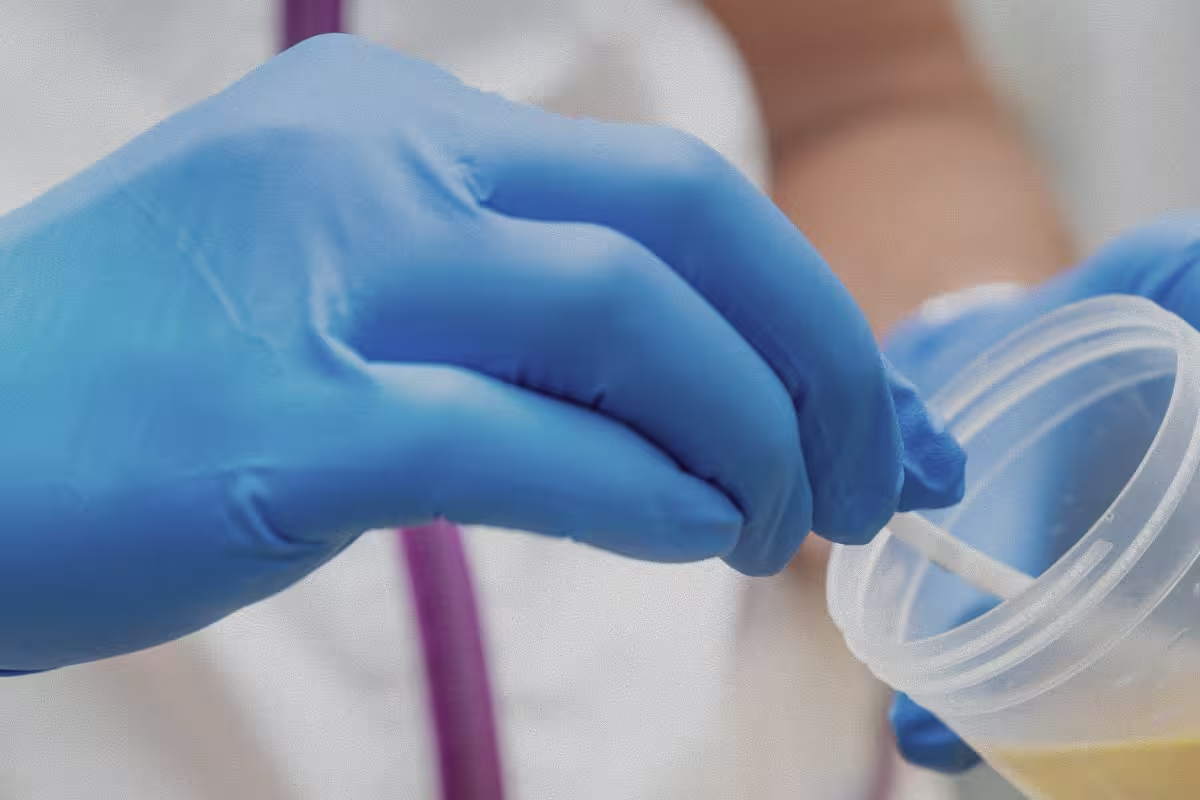
PCR detects DNA. Culture grows live bacteria. Both diagnose UTIs, but the results mean different things. Here's how to know which test you actually need.
Words by Olivia Cassano
Scientifically edited by Dr. Krystal Thomas-White, PhD
Medically reviewed by Dr. Kate McLean MD, MPH, FACOG
PCR (polymerase chain reaction) and culture tests are the two main lab methods used to diagnose infections, including urinary tract infections (UTIs).
They both analyze your urine, but they work completely differently — and they don’t tell your provider the same things. PCR looks for the genetic material of bacteria and other pathogens. Culture grows live organisms from your sample to see what’s actually thriving in there. That difference matters more than you’d think.
Although they may sound like just technical details, each one has real implications for your care. Getting the wrong test at the wrong time can mean waiting days longer than necessary, getting prescribed an antibiotic that won’t work, or walking away with a “normal” result that doesn’t match how you really feel.
Keep reading to learn more about how each method works, what the results actually mean, and how to think about which test makes sense for your situation. For those looking for a fast, at-home starting point, the Evvy UTI+ Test is a rapid PCR-based test that can flag pathogens and certain resistance markers without seeing a doctor.
The key differences between PCR and culture come down to three things: what each test detects, how fast results come back, and what they can (and can’t) tell you about treatment.
PCR detects the DNA of bacteria, fungi, or other pathogens in your urine. It amplifies tiny amounts of genetic material millions of times over, so even trace quantities show up. Crucially, it doesn’t need the bacteria to be alive because fragments are enough. That’s a big deal if you’ve recently taken antibiotics. The catch? PCR can’t always confirm whether the organism it found is actually causing your symptoms, so that still takes clinical judgment.
TL;DR:
Culture works by placing your urine sample on a growth medium and waiting for any bacteria to multiply into visible colonies. This process usually takes 24–72 hours. Those colonies are then identified by type, and if there’s a significant number, susceptibility testing is performed to determine which antibiotics will actually work. It’s slower, but it confirms that live bacteria are present and actively growing.
TL;DR:
Because PCR doesn’t need bacteria to grow, it’s generally faster. Many lab-based PCR panels yield results within a few hours to one business day. That said, speed isn’t guaranteed. It still depends on how quickly your sample gets to the lab, batch processing schedules, and which panel is being run.
At-home options like the Evvy UTI+ Test can cut that wait even further by skipping the clinic visit. Just keep in mind: faster doesn’t always mean more complete. What’s included in the results matters just as much as when they land.
Culture takes longer because biology can’t be rushed. Once your sample arrives at the lab, it’s plated and incubated for 24–48 hours before colonies are even visible. Identifying what’s grown takes additional steps, and if susceptibility testing is needed, that’s another 16–24 hours on top. All in, you’re typically looking at 48–72 hours from sample collection to final results (sometimes longer if there’s a transport delay, a busy lab, or a slow-growing organism involved).
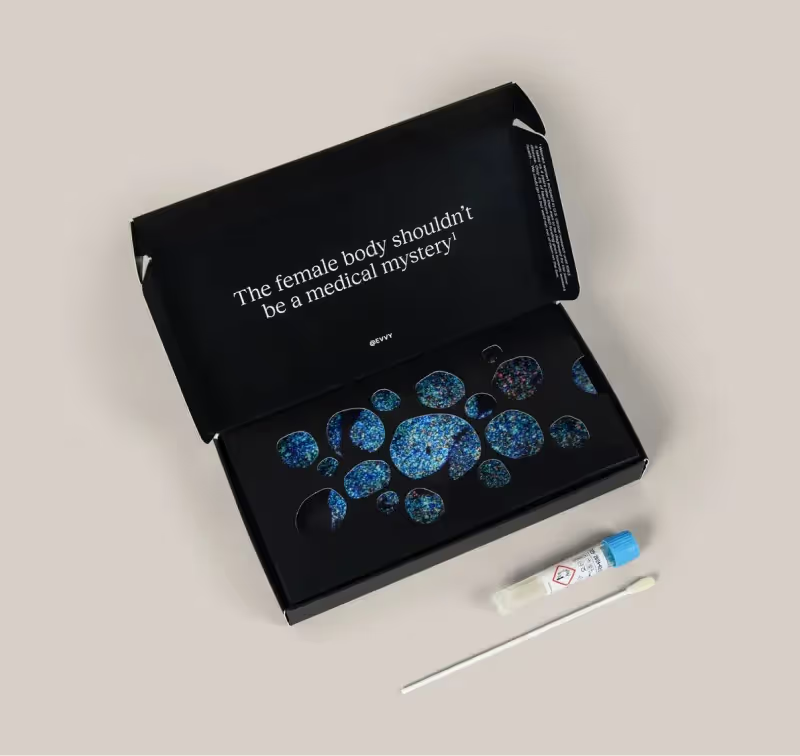
Recurrent symptoms? Get Evvy's at-home vaginal microbiome test, designed by leading OB-GYNs.
Here’s something worth knowing: some PCR panels (like Evvy’s UTI+ Test) include resistance markers, which are genetic sequences linked to specific resistance mechanisms. But detecting a resistance gene isn’t the same as doing susceptibility testing. A gene can be present without being clinically expressed. And its absence doesn’t guarantee an antibiotic will work. PCR resistance markers can help your provider rule out certain antibiotics early, which is useful. But for complicated or recurrent infections, it’s usually a starting point, not the full picture.
Culture is where you get real susceptibility data. Live organisms from your sample are directly exposed to a panel of antibiotics, and the lab measures how much growth each one inhibits. The result is a breakdown of which antibiotics your specific infection is susceptible to, intermediate to, or resistant to. That’s the gold standard for antibiotic selection, especially when treatment has already failed, when resistance is a concern, or when the infection is complicated. If you’ve been through multiple rounds of antibiotics that didn’t work, this is the data that can actually tell you why.
PCR’s sensitivity is one of its biggest strengths, but it can also be a source of confusion. Because it picks up genetic material rather than live organisms, it can flag bacterial species that are present in tiny amounts, aren’t actively causing infection, or got into your sample during collection. A poorly collected sample, for example, might test positive for a skin or vaginal organism that has nothing to do with your UTI. PCR also can’t distinguish between a significant find and an incidental one — that’s a judgment call your provider has to make based on your full clinical picture. So, a positive PCR result isn’t always a clear-cut diagnosis.
That’s why the Evvy UTI+ Test includes a bacterial load alongside every result. An Evvy-affiliated provider reviews your results, keeping both your bacterial load and your symptoms in mind. So you’re not left trying to interpret a number in isolation, and any diagnosis takes the full picture into account.
Culture can miss things, too, and this happens more than people realize. Traditional culture methods can miss up to 50-70% of pathogens, which ultimately delays care.
If you’ve taken even a single dose of antibiotics before your sample is collected, that can be enough to suppress bacterial growth and produce a “no growth” result, even if an infection is present.
Some bacteria are also just hard to grow in standard lab conditions and need specialized media that routine culture doesn’t use. Low colony counts are sometimes written off as contamination when they might actually reflect a real, low-level infection. The bottom line: a negative culture doesn’t always mean you’re in the clear, especially if your symptoms persist.
PCR detects the DNA or RNA of bacteria and other pathogens, so it can find organisms even if they’re dead, dormant, or only present in small amounts. Culture requires live bacteria to grow in a lab over 24–72 hours. In practice, PCR is faster and less affected by prior antibiotic use, but culture gives you susceptibility data that shows exactly which antibiotics will work against the organism that’s causing your infection.
PCR results are typically available within a few hours to 1 business day once the sample reaches the lab (though transport time and batch processing can add to that). At-home PCR tests like Evvy’s UTI+ Test can cut the wait even further. Culture takes 24–48 hours for growth and identification, and if susceptibility testing is needed, add another 16–24 hours. The total turnaround time is usually 48–72 hours, sometimes longer.
Culture is the go-to when your provider needs full antibiotic susceptibility data, when a first round of treatment hasn’t worked, or when they want to confirm that live bacteria are genuinely causing your symptoms (rather than just showing up in a PCR result). It’s also standard for complicated UTIs in higher-risk groups — like people who are pregnant, immunocompromised, or dealing with recurrent infections that need precise antibiotic targeting.
Neither is universally better; it depends on your situation. PCR wins when speed matters, when you’ve recently taken antibiotics, or when you need a broader look at what’s going on. Culture wins when you need exact antibiotic guidance, confirmation of active infection, or you’re trying to avoid treating something that may not need treatment. Many see PCR as an adjunct to the current gold-standard diagnostics, while others consider it an alternative because of its similar yields and faster results. But emerging research suggests that the future might not be about choosing between PCR and traditional culture, but rather integrating both methods for better patient care.
Traditional culture methods take 24–48 hours for initial growth and identification. If susceptibility testing is needed on top of that, you're looking at another 16–24 hours, so total turnaround from when the sample hits the lab is usually 48–72 hours. Factor in transport time from wherever you collected the sample, and results can take longer. If a slow-growing organism is involved or the lab is busy, it may take longer than 72 hours. That said, most providers won't ask you to wait it out. They'll typically start you on empirical treatment (an antibiotic chosen based on the most likely organisms) as soon as the sample has been collected. If your results show a different antibiotic would work better, they'll adjust from there. So while the lab timeline matters, it rarely means a delay in treatment.
Choosing the right testing approach can feel overwhelming, especially when you’re dealing with ongoing symptoms. If you’re unsure whether Evvy’s UTI+ Test is right for you, our team is here to help. Reach out to us at support@evvy.com, and we’ll be happy to answer your questions and help you decide on the next best step for your care.