CONGRATS! YOU EARNED FREE SHIPPING.

Product Title
1
$0
$0
Subscription Title

Looking kind of empty in here.
We recommend:
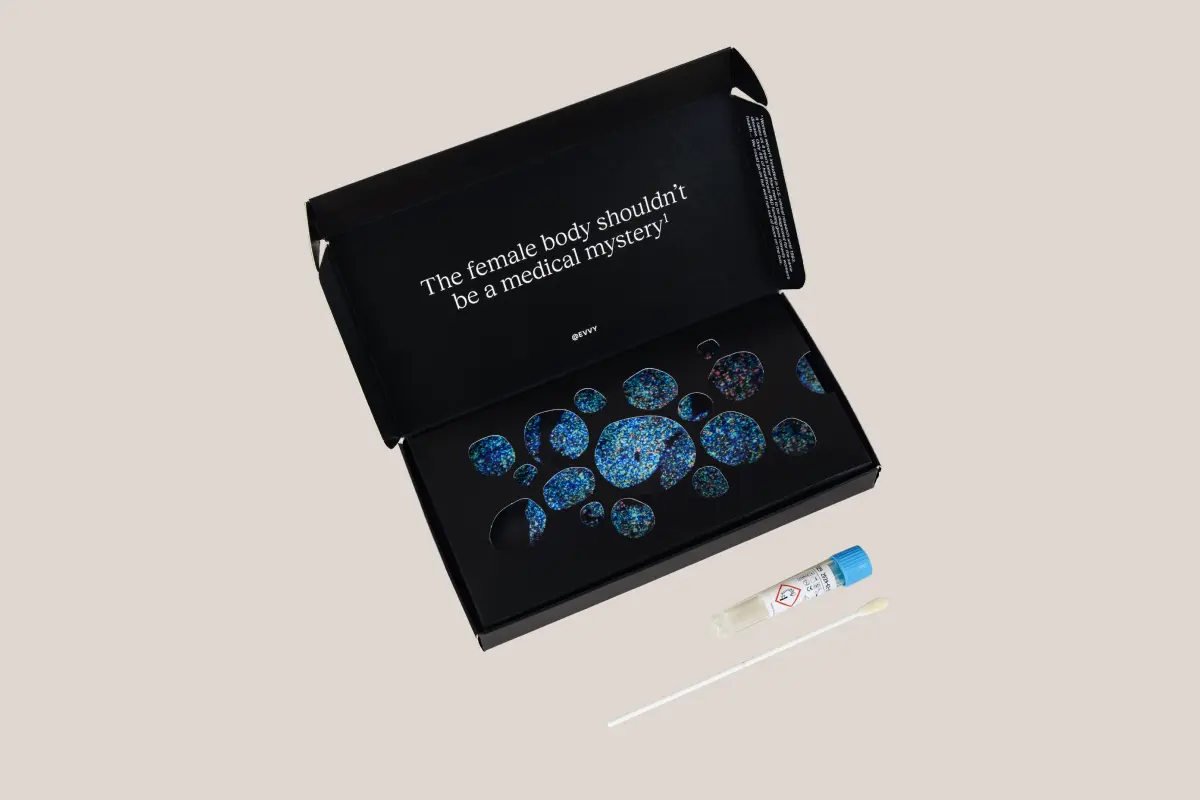
Get advanced insights into symptoms, fertility, and other health outcomes. Prelim results in 1-3 days.

Trichomoniasis can stay dormant for months or years. Learn how it spreads, how long it goes undetected, and what it means if partners test differently.
Words by Olivia Cassano
Scientifically edited by Dr. Krystal Thomas-White, PhD
Medically reviewed by Dr. Sameena Rahman, MD
Trichomoniasis, often referred to as "trich," is a common but lesser-known sexually transmitted infection (STI) that mainly affects women. It doesn’t usually cause symptoms and can lie dormant for months, so it’s not uncommon to feel like it just showed up out of the blue. But like any STI, you can’t contract it on your own. Keep scrolling to learn more about how trichomoniasis is spread, its warning signs, and how to treat it.
Trichomoniasis is a sexually transmitted infection caused by a parasite called Trichomonas vaginalis. This tiny organism infects the urogenital tract, which includes the vagina, urethra, and bladder in women. While it’s more common in sexually active women, men can also contract and spread the infection via sexual intercourse.
Trichomoniasis is usually spread through unprotected sexual contact with an infected partner. This can include vaginal sex, oral sex, and anal sex.
Since T. vaginalis can be spread via semen, pre-cum, and vaginal fluids, you can also get a trich infection by sharing sex toys if you do not wash them or cover them with a condom before use. It's important to note that women in same-sex relationships can also spread a trichomoniasis infection via vulva-to-vulva contact. It can not be contracted through casual contact, such as hugging, kissing, sharing towels, or sitting on dirty toilet seats.
Trich is usually asymptomatic, meaning most people with it may not experience any noticeable symptoms, contributing to its spread. Around 70% of people with trichomoniasis don't experience any signs or symptoms at all, according to the Centers for Disease Control and Prevention (CDC).
When symptoms do appear, they can include:
These can often be a sign of other infections, including bacterial vaginosis (BV), a yeast infection, a urinary tract infection (UTI), or another sexually transmitted infection. Since other infections can look and feel like trich, getting tested and seeing your healthcare provider for proper treatment is always a good idea.
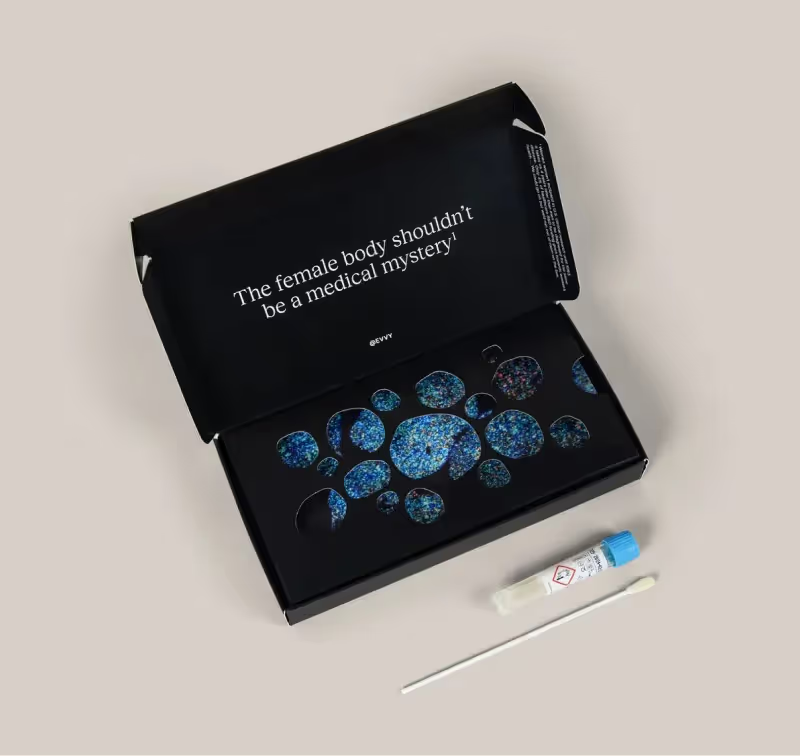
Recurrent symptoms? Get Evvy's at-home vaginal microbiome test, designed by leading OB-GYNs.
While it's technically impossible to "get" trich on your own without any form of contact with an infected individual, the infection can lie dormant and lead to confusion.
Trich can lie dormant for weeks, months, or even longer. It has an incubation period of around 5 to 28 days, according to the CDC — but it might take much longer for signs to show up. This means that an infected person may not show signs right away, or at all, which can lead to the infection being unknowingly spread. A woman may believe she contracted it without sexual contact if symptoms appear long after a previous sexual encounter. It’s also worth noting that women can get reinfected if their partners are not treated simultaneously.
Regular STI screenings are crucial, especially if you have new or multiple sexual partners. You can reduce your risk of getting trichomoniasis by using condoms and dental dams each time you have sex and covering sex toys with a condom during partnered sex.
Yes, and this is more common than people realize. If you've tested positive for trichomoniasis and your partner has tested negative, it doesn't automatically mean someone is lying or has been unfaithful. There are a few reasons (both biological and logistical) why this can happen.
Trichomoniasis is significantly more common in women than in men, and men are much less likely to experience symptoms or test positive even when they're infected. Research suggests that T. vaginalis often clears spontaneously in men within a couple of weeks, but during that window, transmission to a female partner can still occur. This is sometimes called an "asymmetric" infection pattern, and it's one of the key reasons trich can be so hard to track.
Testing sensitivity also plays a role. The most accurate diagnostic method for trichomoniasis is a nucleic acid amplification test (NAAT), but not all clinics use this approach. Older testing methods, such as wet prep microscopy, have a sensitivity of around 51-65% in men, meaning a significant portion of male infections can go undetected even when a test is performed.
It's also possible that a partner was tested during a period when parasite levels were too low to detect, or that the infection cleared in them before they were tested.
If you've been diagnosed with trich, current CDC guidelines recommend that all sexual partners from the previous 60 days be treated, regardless of their test result. This precautionary approach helps break the cycle of reinfection and accounts for the limitations of testing in male partners.
If you’re sexually active, it’s important to get tested — whether or not you’re experiencing symptoms.
Getting tested for trich is pretty straightforward. The testing process usually involves a:
Trichomoniasis tests are not typically part of every STI panel, so you may have to request it specifically. Alternatively, you can also do an at-home STI test, such as Evvy's Expanded PCR Panel and Vaginal Health Test, by taking the sample yourself and sending it to a lab for analysis.
Trich is treatable with prescription antibiotics, most commonly metronidazole (taken as a single dose) and tinidazole (generally taken in a lower dose twice a day for 7 days).
It’s important to complete the entire course of treatment to ensure the infection clears entirely. You should also inform any recent sexual partners, as they will need to be treated as well to prevent reinfection (even if they don’t have any symptoms).
Taking care of trich (or any other STIs you may have) is important, as it can lead to serious health issues if you don't get treatment. Specifically, trich can cause inflammation in the genital area and make it more likely for you to get other STIs. If it's not treated, trichomoniasis can also cause cervicitis, an inflammation in the cervix. Signs of cervicitis include bleeding between periods, pain during or after sex, and unusual discharge.
Like STIs such as chlamydia and gonorrhea, trichomoniasis can also spread from the lower genital area to the uterus and ovaries, leading to pelvic inflammatory disease (PID).
Trichomoniasis can be especially tough for pregnant women. Although it's rare, having trichomoniasis during pregnancy can lead to preterm delivery or low birth weight. So, if you're pregnant and have signs of trichomoniasis, it's really important to see your doctor right away.
If you're in a committed relationship and you unexpectedly contract trichomoniasis, it's natural to suspect infidelity, but STIs aren't always a sign of cheating. Most people with trichomoniasis won't have any signs of the infection. Additionally, you can harbor the Trichomonas vaginalis parasite for many months without knowing. This means that you might have contracted it from a previous relationship or sexual encounter and are only now showing symptoms. It also means you could have acquired the infection from a past relationship and unknowingly transmitted it to your current partner.
No, a man can't give a woman trichomoniasis without being infected himself. This infection is caused by a parasite called Trichomonas vaginalis, which is passed through sexual activity. So, for a man to pass it on to a woman, he needs to have the parasite himself. One thing to keep in mind is that many men with trichomoniasis don't have any symptoms and might not even know they're infected. This means they can unintentionally transmit the parasite to their partners. So, even if a man doesn't have symptoms, he could still carry and spread the parasite. Both partners will have to get tested and treated for trichomoniasis.
A woman can have trichomoniasis for months or even years without knowing. The infection is often asymptomatic, which means a woman may be unaware she has it. When symptoms do appear, they can develop within 5 to 28 days after exposure, but it's also common for the infection to remain asymptomatic for much longer. Regular screening and STI tests are crucial, especially if you have new or multiple sexual partners, to detect and treat trichomoniasis even in the absence of symptoms.
The first signs of trichomoniasis in women (when they appear at all) typically include itching or irritation inside the vagina or around the vulva, unusual discharge that may be yellow-green, grey, or frothy, a foul or fishy odor, and a burning sensation when peeing. Some women also notice pain during sex or light spotting. Because these symptoms can easily be mistaken for BV or a yeast infection, testing is the only reliable way to confirm a trich diagnosis.
Trichomoniasis can remain dormant in a woman for anywhere from a few weeks to several years. While the standard incubation period is five to 28 days, a significant proportion of infections never cause symptoms at all — meaning the parasite can persist indefinitely in the urogenital tract without the person ever knowing. This is why regular STI testing matters even if you feel completely fine and aren't experiencing any symptoms.
Long-term dormancy with trichomoniasis is rare but possible. More often, a delayed diagnosis happens because the infection was picked up in the past and didn’t show symptoms. Many people don’t know they have trichomoniasis because it’s not included in standard STI tests. They usually get tested only if they ask for it or if it’s found by chance. If you’ve never been tested for trich, a positive result doesn’t always mean you were exposed recently.
Strictly speaking, trichomoniasis is a sexually transmitted infection — which means it’s spread through genital-to-genital or genital-to-anal sexual contact. However, the infection can also be passed by sharing unwashed sex toys. It can’t be contracted through toilet seats, shared towels, swimming pools, or casual contact like hugging or kissing. If you've received a trich diagnosis and have not been sexually active recently, the most likely explanation is that the infection has been dormant since a previous sexual encounter, sometimes for many months or longer.