CONGRATS! YOU EARNED FREE SHIPPING.

Product Title
1
$0
$0
Subscription Title

Looking kind of empty in here.
We recommend:
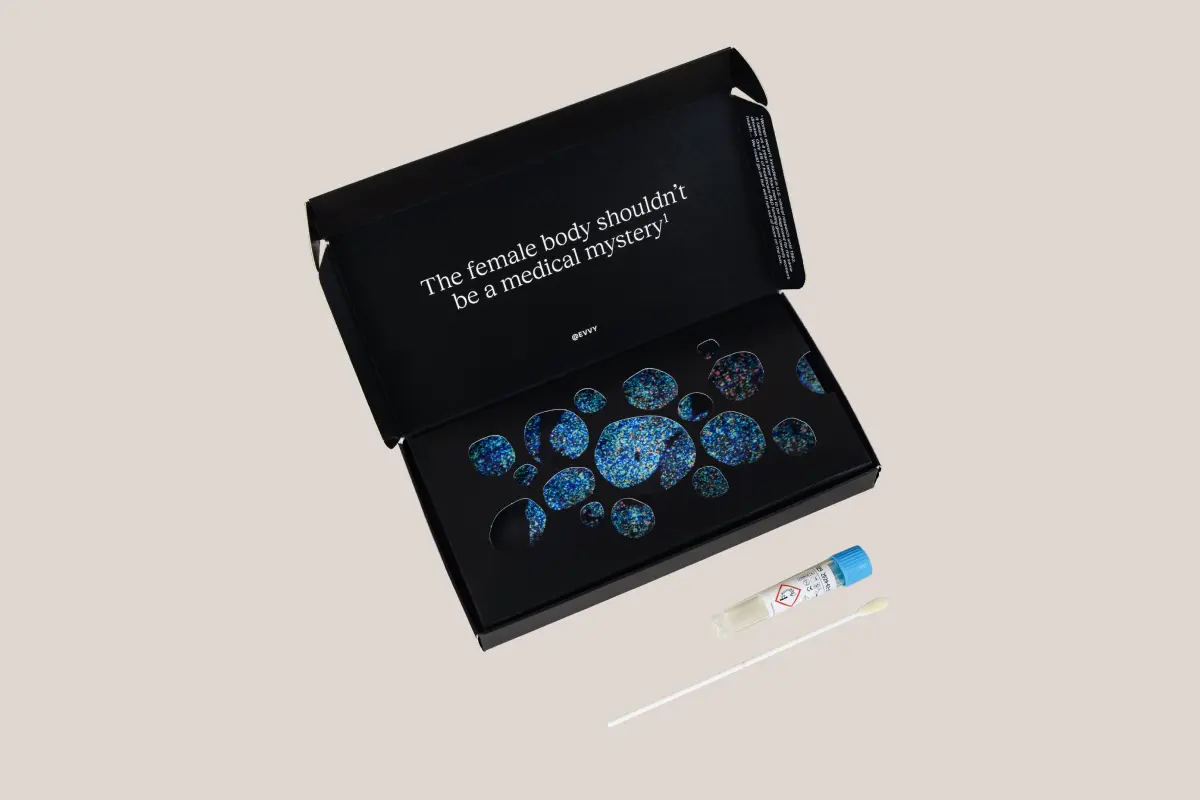
Get advanced insights into symptoms, fertility, and other health outcomes. Prelim results in 1-3 days.

Recurrent UTIs after sex with the same partner? Learn why it happens, how your vaginal microbiome plays a role, and how to lower your risk.
Words by Olivia Cassano
Scientifically edited by Dr. Krystal Thomas-White, PhD
Medically reviewed by Dr. Kate Baron, MD
If you get a urinary tract infection (UTI) every time you and your partner have sex, it’s easy to land on the conclusion that he’s the one to blame. But it's not that simple. UTIs are not passed the same way sexually transmitted infections (STIs) are, but sexual activity can be a trigger for UTIs. (Tricky, we know!) Friction and penetration during sex can push bacteria from the skin or around the anus closer to the urethra, where they may enter and travel to the bladder, potentially causing an infection.
It feels partner-specific because regular sex with anyone raises the likelihood of a UTI. But whether that exposure turns into a UTI, again and again, often comes down to your vaginal microbiome, along with factors like hormones, anatomy, and habits. When protective Lactobacillus bacteria are depleted, disruptive bacteria like E. coli may colonize more easily. UTIs are considered recurrent when you have two or more in six months or three or more in a year.
Not in the way an STI gets passed from one person to another. A UTI isn't classified as an STI because it’s usually caused by bacteria from your own body, not by germs passed from one person to another during sex. Most UTIs are caused by E. coli, a bacterium that normally lives in your own gut and around your anus. During sex, thrusting and friction can physically move that bacteria from your genital area toward your urethra (where it doesn't belong) and from there into your bladder.
So, while your boyfriend may not carry a UTI and pass it to you, what he can do is contribute bacteria of his own, from his skin, his hands, or his penis, which adds to what's already getting pushed toward your urethra. A small study found that in some couples, the E. coli isolated from a man's urine was genetically similar to the strain found in his partner's UTI, suggesting bacteria can move between partners during sex. But that's not the same as an infection being "given." It's closer to shared exposure than transmission, and whether that exposure turns into a UTI still depends heavily on your own body.
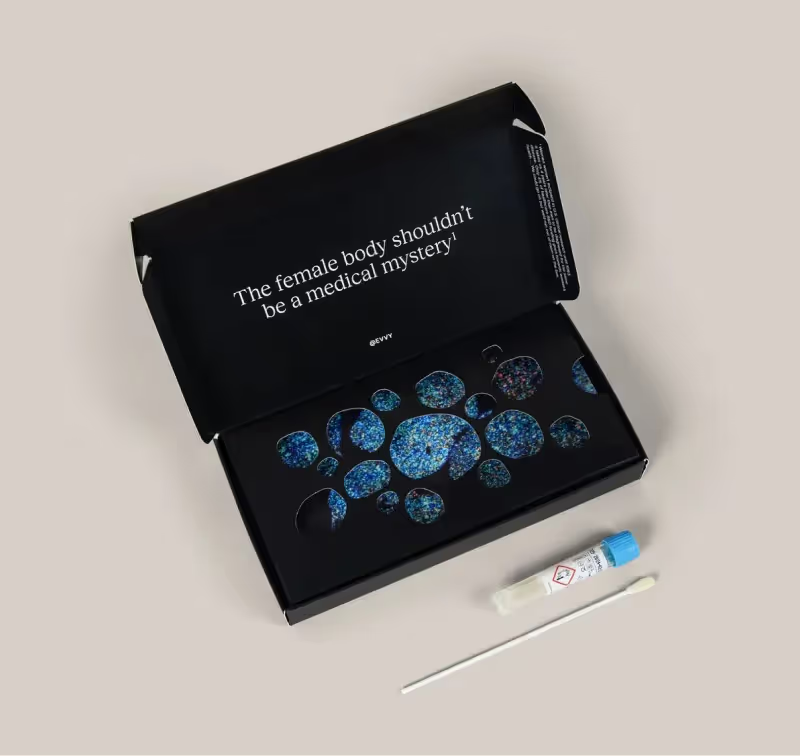
Recurrent symptoms? Get Evvy's at-home vaginal microbiome test, designed by leading OB-GYNs.
Getting a UTI after having sex with your boyfriend isn’t a sign of infidelity. The bacterium responsible for the vast majority of UTIs, E. coli, normally lives in the gut, though only certain strains cause UTIs. It's usually not about poor hygiene, and it's not a sign he cheated on you. That said, symptoms that feel like a UTI can sometimes be an STI, so testing is worth considering if your cultures keep coming back negative or there’s any chance of exposure.
You can start getting UTIs after sex with a partner you've been with for months or years, even if it's never happened before, and there are several possible reasons why:
All these factors can influence your vaginal and urinary health, regardless of who you're having sex with.
Although sex is a big trigger for UTIs, it’s not the only one. People who aren't sexually active get UTIs too. Nearly a third of women will have had at least one UTI by age 24, and up to 50% of women will have one at some point in their life, sexually active or not.
Not fully emptying your bladder, dehydration, and even genetics can all raise your UTI risk independently of sex. Wiping back to front is often cited as a risk too, though the evidence is limited. So can menopause, since declining estrogen changes vaginal pH and reduces protective bacteria, making infections roughly twice as likely after menopause.
If it's not transmission, why do you keep getting UTIs with the same partner? A few things are usually at play, and they tend to compound.
Penetration presses against the front vaginal wall and, through it, the bladder and urethra, nudging bacteria from around the vaginal opening and anus toward the urethral opening. This effect has a nickname, "honeymoon cystitis," because it shows up so often when sex becomes more frequent, whether that's a new relationship or a more active phase with an existing one.
Insufficient lubrication can also irritate the urethra and surrounding tissue, making it easier for bacteria to take hold. Changes in arousal, hormones, or less foreplay than earlier in the relationship can quietly increase friction without either of you noticing.
Then, there's what else touches your body during intercourse. Fingers, condoms, or a penis that have had contact with the anus and then move to the vagina or urethra can transfer E. coli directly. This isn't unique to any one partner; it's true of anal-to-vaginal contact with anyone. Going from anal to vaginal contact without washing or changing the condom is a common, avoidable way this happens. It just becomes noticeable with a consistent partner because the routine repeats.
Finally, there's your vaginal microbiome. Sex can temporarily shift its balance, and if it's already running low on protective Lactobacilli, bacteria pushed toward your urethra may have an easier time causing an infection. This may help explain why some people get a UTI almost every time they have sex, and others don’t. This is also where a vicious cycle can start for some people, because treating a UTI with antibiotics can clear the infection, but it doesn't necessarily restore your vaginal microbiome. Antibiotics can kill helpful Lactobacilli along with harmful bacteria, which may leave your microbiome weaker the next time you have sex and make it easier for bacteria to cause future infections. This can contribute to needing more antibiotics, creating a cycle. That doesn’t mean you should skip antibiotics for a confirmed UTI, which needs treatment. It means prevention and an accurate diagnosis matter.
Yes, to a degree. Men can have UTI-associated strains of E. coli on their skin or occasionally in their urine without symptoms, since male anatomy makes it much harder for the bacteria to travel far enough to cause an infection. A longer urethra and greater distance from the anus give men natural protection that women's anatomy doesn't offer.
The research on this is limited, though. A small study comparing bacteria from women with UTIs to bacteria in their male partners' urine found genetically matching E. coli strains in several couples, based on genetic fingerprinting. That tells us bacterial exchange between partners can happen. It doesn't mean men are a hidden reservoir of infection that needs treating, because in most of these cases, the man had no symptoms and no infection of his own. He was simply carrying bacteria that were much less likely to cause trouble in his anatomy than in hers.
In practice, this means a male partner rarely needs a urine culture or antibiotics just because his girlfriend keeps getting UTIs. The exception is if he has symptoms of his own; in that case, he should be evaluated separately. Additionally, if you test positive for an STI, he should be tested too.
If your urine cultures keep coming back clean but you still feel symptoms after sex, a UTI might not be the issue. Several other conditions overlap with UTI symptoms and are worth ruling out.
BV and yeast infections can both cause burning when you pee, as irritated vaginal tissue reacts to urine, even though the infection is vaginal, not urinary. STIs like trichomoniasis, chlamydia, and gonorrhea can cause the same burning and urgency, and are easy to mistake for a UTI without testing. Aerobic vaginitis (AV), a less common vaginal infection, can also cause urinary discomfort. So can plain friction and dryness from sex itself, because irritated tissue can mimic UTI symptoms for a day or two with nothing actually growing in the urinary tract. Conditions like interstitial cystitis (bladder pain syndrome) can also cause UTI-like symptoms with negative cultures.
Then there are UTIs caused by organisms not included in a standard UTI or STI panel. These can cause symptoms identical to an E. coli UTI but won't show up on a routine culture, which is one reason people can get negative results despite real symptoms. Infections with lower bacterial counts than the standard lab threshold can also be missed.
If you're cycling through negative cultures while still feeling awful, it's a good reason to talk to a provider about looking beyond the standard UTI test.
Most UTIs are diagnosed from symptoms alone, a quick in-clinic urine dipstick, or a urine culture sent to a lab. For a straightforward, one-off UTI, these work reasonably well.
But they can fall short, especially for people who experience recurrent UTIs. Standard urine cultures and dipsticks can miss infections. Cultures can miss up to 60-70% of pathogens, including organisms like Ureaplasma or Mycoplasma that don't grow well in a lab, and neither test can detect biofilms, protective bacterial clusters that shield against antibiotics. That gap has real consequences, because nearly one in two women are prescribed an antibiotic that may not actually work against their infection, and three in four get longer courses than necessary. Neither test looks at your vaginal microbiome at all, so a negative result doesn't mean nothing's wrong — it may just mean the test wasn't built to find it.
Evvy's Vaginal Health & UTI+ Test combines a urine test that identifies the bacteria behind your current infection and checks for antibiotic resistance, plus a vaginal swab that maps your microbiome, including Lactobacillus levels and any disruptive bacteria present. Instead of treating each infection as a one-off, it can show whether a depleted microbiome may be contributing to the pattern, so you and your provider can build a prevention plan.
It usually means bacteria from your own body, or occasionally from your partner's skin, were pushed toward your urethra during sex. Men can’t “give” women a UTI in the same way they can pass on an STI. The mechanics of sex — like penetration and friction — are a common trigger for UTIs, whether or not you used condoms or, as a matter of fact, had sex with a man or woman.
Annoyingly, there's no way to prevent UTIs after sex fully, but a few habits may lower your risk. One thing your boyfriend can do is wear a condom, which may reduce bacterial transfer and keep semen from contacting your vagina (semen can temporarily raise vaginal pH). Direct evidence that condoms prevent UTIs is limited, so think of this as a possible help, not a guarantee. Avoiding going from anal to vaginal contact without washing or changing the condom is another one. Lube may help too, since it can reduce friction and irritation, making it easier for bacteria to settle in — just make sure it's spermicide-free, since spermicide can deplete Lactobacillus and is linked to a higher UTI risk. Drinking plenty of water may also help. Peeing after sex doesn't have strong evidence behind it, but it costs nothing and takes seconds, so it's worth doing anyway if you're prone to UTIs. If UTIs after sex keep happening despite all this, it's worth asking a provider about prophylaxis, a low-dose antibiotic taken after sex specifically to prevent recurring UTIs. Other options to ask about include vaginal estrogen after menopause.
Only if he's experiencing UTI symptoms of his own. Since a UTI isn't an STI, there's no standard recommendation to test or treat a sexual partner just because you keep getting infections. Research showing bacteria can move between partners doesn't change this; in most cases, the male partner has no infection or symptoms of his own, just bacteria that behave differently in a different anatomical environment. If you’ve been diagnosed with an STI, he should be tested and treated for that separately.
This is common, and it doesn't mean your symptoms are imaginary. Standard cultures detect only a limited set of bacteria under specific lab conditions, so they can easily miss many organisms. Infections with low bacterial counts, or samples taken after you’ve already started antibiotics, can also come back negative. Symptoms can also come from something other than a UTI, like BV, a yeast infection, aerobic vaginitis, or an STI. If your results keep coming back negative but you're still experiencing symptoms, Evvy's Vaginal Health & UTI+ Test looks at both sides at once: a urine sample to check for uropathogens that standard cultures often miss, and a vaginal swab to analyze your microbiome, for a fuller picture than either test gives on its own.