CONGRATS! YOU EARNED FREE SHIPPING.

Product Title
1
$0
$0
Subscription Title

Looking kind of empty in here.
We recommend:
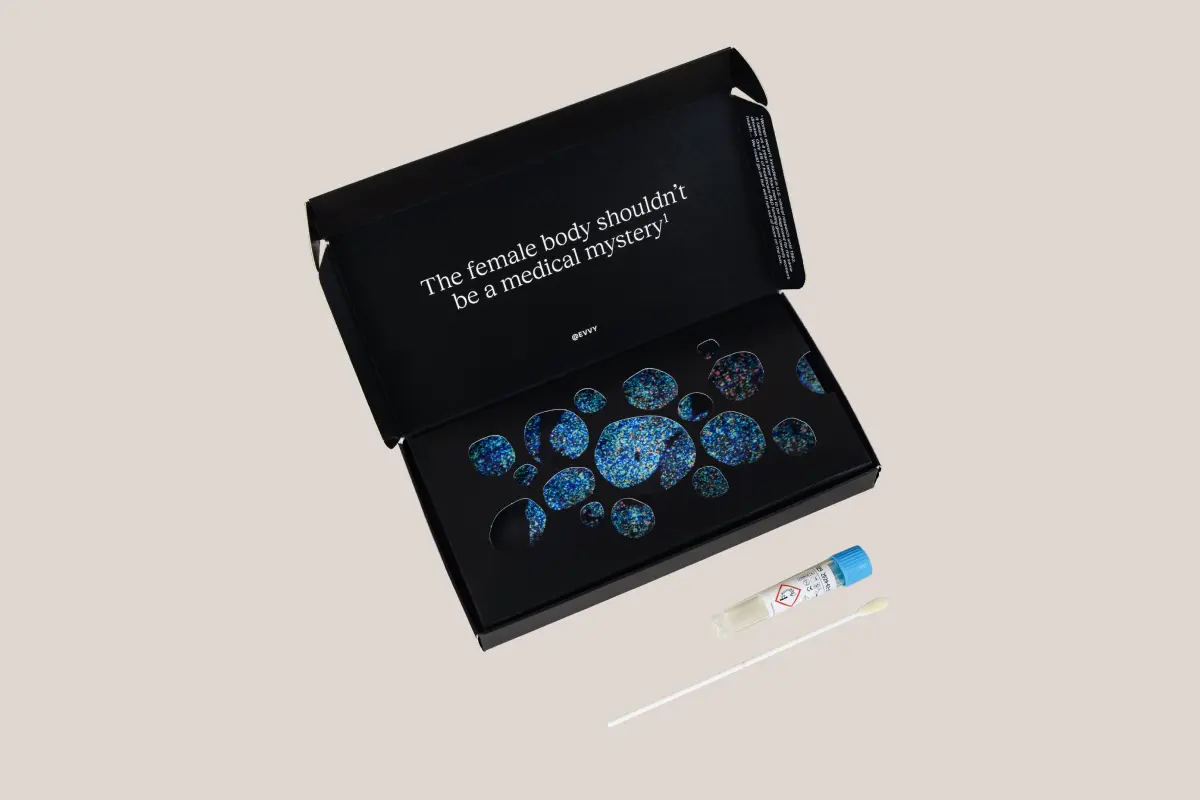
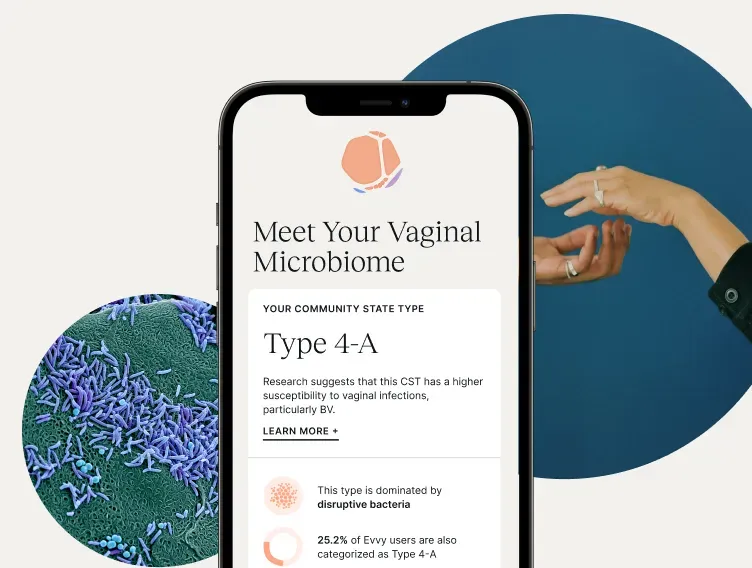
Get advanced insights into symptoms, fertility, and other health outcomes. Prelim results in 1-3 days.

Semen doesn’t directly cause a UTI, but it can shift your vaginal microbiome and add to your risk. Here’s what actually triggers a UTI after sex.
Words by Olivia Cassano
Scientifically edited by Dr. Krystal Thomas-White, PhD
Medically reviewed by Dr. Kate Baron, MD
Sexual activity is a known trigger for urinary tract infections (UTIs), so much so that the phenomenon has been coyly named “honeymoon cystitis.” While semen itself doesn’t directly cause UTIs, it can affect your vaginal microbiome in a way that makes them more likely to take hold.
Keep reading to learn how semen is one of the several sex-related factors that can tip the odds and make you more prone to UTIs.
Even when you remove semen from the equation, penetrative sex (with a penis, finger, or sex toy) can push bacteria like E. coli toward your urethral opening. From there, bacteria only need to travel a short distance to reach the bladder and multiply.
A big reason why UTIs are so much more common in women than in men is that the female urethra is pretty short and positioned close to both the vagina and rectum. Bacteria have a shorter distance to travel and more opportunities to reach the bladder. Men have a longer urethra (and it's further away from the anus), which makes it harder for bacteria to reach the bladder.
The mechanics of sex are separate from anything semen is doing chemically, which explains why UTIs can happen even if you had protected sex. Any penetrative activity can move bacteria toward the urethra, so semen exposure may add a second layer of risk on top of this, but it isn't the only one, and usually it isn't the main one.
Semen isn't acidic — quite the opposite. It has an alkaline pH (typically between 7.2 and 8.0), compared to a healthy vaginal pH of 3.8 and 4.5.
If semen were acidic, it probably wouldn’t disrupt things much, since a healthy vagina is already acidic. An alkaline substance, though, is a different story. When semen raises your vaginal pH, even temporarily, it shifts the environment away from the range where Lactobacilli do best. Lactobacilli produce the lactic acid that keeps vaginal pH low, which helps keep harmful bacteria in check. As pH rises, Lactobacillus populations may drop, giving species like E. coli, Gardnerella, and other disruptive bacteria a chance to grow.
So while "acidic sperm" isn't the cause, the underlying concern behind the question is valid, because semen can effectively change your vaginal chemistry after sex. It's just the alkalinity, not acidity, that's doing it. This is also why semen exposure is linked not only to UTIs but to bacterial vaginosis (BV) as well, which is itself associated with a higher vaginal pH.
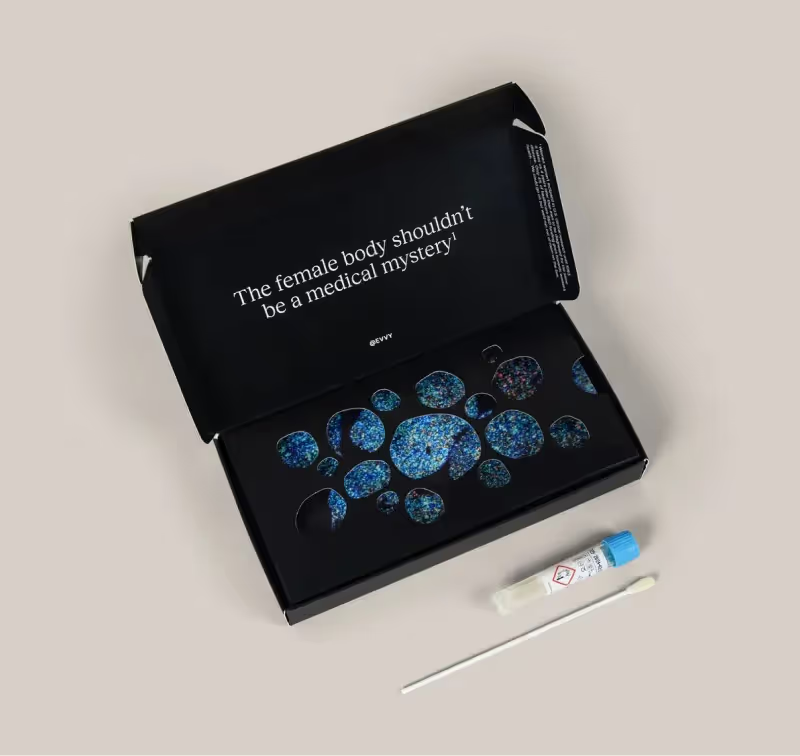
Recurrent symptoms? Get Evvy's at-home vaginal microbiome test, designed by leading OB-GYNs.
A healthy vaginal microbiome is dominated by protective Lactobacillus species like L. crispatus, L. jensenii, and L. gasseri. These bacteria feed on glycogen (sugar) and produce lactic acid, which keeps your vaginal pH low and creates colonization resistance, your body’s natural ability to stop pathogens from establishing themselves.
Semen can disrupt this on two fronts. First, its alkalinity raises vaginal pH, sometimes for several hours after sex, which may give opportunistic bacteria enough time to grow while Lactobacilli are suppressed. Second, semen carries its own bacteria, which can further disrupt microbial balance. That imbalance can weaken your vaginal and urogenital defenses, making it easier for UTI-causing bacteria to take hold.
For someone with a resilient, Lactobacillus-dominant microbiome, this disruption is usually short and self-correcting. The vagina buffers back to its normal pH within a matter of hours, and Lactobacillus reasserts itself. But if your microbiome is already low in protective bacteria, whether from antibiotics, hormonal changes, low estrogen, or a prior infection, that buffer doesn't happen as efficiently. The pH shift lasts longer, which may give uropathogens more time to multiply and move into the urethra, making a UTI more likely.
This may be one reason two people can have the same amount of sex, and only one ends up with a UTI. It's rarely about semen alone; it's more about whether your vaginal microbiome can handle the disruption (along with individual factors like anatomy and genetics).
A UTI after sex typically shows up within 24 to 48 hours and causes:
Not everything that feels like a UTI after sex is one. BV typically causes thin, grey vaginal discharge and a fishy odor. BV can also cause a burning sensation, but that burning tends to come from the vagina rather than the urethra, though the two can be hard to tell apart by feeling alone.
Sexually transmitted infections (STIs) like chlamydia, gonorrhea, and trichomoniasis can also cause a burning sensation when you go to the bathroom, sometimes alongside unusual discharge and pelvic pain.
A yeast infection typically causes vulvar and vaginal itching, and urine can sting as it passes over inflamed skin. When present, discharge is often thick, white, and cottage-cheese-like. Vaginal itching or unusual discharge can suggest a vaginal cause rather than a UTI. Because all these conditions overlap so much, symptoms alone aren’t a reliable way to tell what’s going on. Taking Evvy’s Vaginal Health & UTI+ Test can give you a clearer picture of what is causing your symptoms.
A standard urine culture is the usual way to confirm a UTI (often after a quick dipstick test), but it has some drawbacks. Most tests detect E. coli and a handful of other common uropathogens at fairly high concentrations. That means infections caused by less common bacteria, or infections with bacterial counts below the standard threshold, can come back "negative" even when you have symptoms. Some studies suggest standard cultures miss a large share of pathogens; urine cultures can miss up to 60-70% of pathogens.
A urine culture also only tells you about your urinary tract. It says nothing about your vaginal microbiome, which may be the piece explaining why UTIs after sex keep happening in the first place. If Lactobacilli levels are already low, or if BV is present alongside a UTI, standard urine testing alone won't catch that.
Evvy's Vaginal Health & UTI+ Test is built to close that gap. It uses metagenomic sequencing and PCR to give you a more complete picture of both your urinary system and vaginal microbiome. That matters if you're trying to figure out whether recurring UTIs are about the infection itself, an underlying microbiome imbalance, or both. Instead of guessing at the connection between sex and your symptoms, you get a data-backed answer.
Standard treatment for an uncomplicated UTI is a short course of antibiotics, usually 3 to 7 days, depending on the medication and how straightforward the infection is. Symptoms typically start improving within a day or two, though it's important to finish the full course even if you feel better before then. Eligible Evvy users can access prescription UTI treatment directly through Evvy, without needing a separate in-person visit (and with the possibility of same-day pickup for UTI medications).
If you keep getting UTIs — specifically after sex — your healthcare provider may also recommend something called postcoital prophylaxis: a single low dose of antibiotic taken within a couple of hours of sex, rather than a full course every time. It's typically reserved for people who experience recurrent UTIs tied to sexual activity, since it's UTI prevention rather than a treatment for an active infection.
Other steps often recommended for preventing post-sex UTIs include drinking water and peeing soon after sex. The evidence for peeing after sex is limited, but it’s low-risk. Spermicides and diaphragms are associated with higher UTI risk, so it’s worth avoiding them if you’re prone to UTIs. For people past menopause, vaginal estrogen can also reduce recurrent UTIs, so ask your provider.
See a doctor if you have UTI symptoms, especially fever, chills, nausea, vomiting, or pain in your back or side, since these can signal a kidney infection. Don’t wait on at-home test results if your symptoms are severe, and seek prompt care if you are pregnant or notice blood in your urine. The same goes for symptoms that don't improve after antibiotics, or if you get UTIs 2 or more times in 6 months or 3 or more times in a year.
Sperm and semen don't directly cause UTIs because they aren’t a typical source of the bacteria that cause them (mainly E. coli from the gut). Semen can temporarily raise vaginal pH, which may suppress protective Lactobacilli and make it easier for uropathogens already present to multiply and reach the urethra.
Most UTIs after sex happen because bacteria from your own gut or skin get pushed toward the urethra during penetration. Even though semen itself isn’t the cause, its alkaline pH can disrupt the healthy balance of good bacteria in the vagina and give bad bacteria a chance to take over. It’s really the combination of these factors, not just semen alone, that can increase your chances of getting an infection.
Having sex during an active UTI won't necessarily make the infection worse, but it's still worth avoiding. Ejaculation itself isn't the issue; it’s that the friction and pressure of sexual intercourse can irritate an already-inflamed urethra, and sex can also push more bacteria into the urinary tract, which may prolong the infection. It’s better to wait until you've finished your full course of antibiotics and your symptoms have cleared before having sex again.
Semen itself doesn’t directly cause a bladder infection, but when it stays in the vagina for a long time, its alkaline pH can reduce Lactobacilli and give harmful bacteria a chance to grow and increase the risk of a UTI, and there isn’t strong evidence that simply leaving it in raises your UTI risk. Its alkaline pH can temporarily raise vaginal pH, which may reduce Lactobacilli and allow harmful bacteria to grow, but the vagina typically buffers back within hours. Even with protected sex, a UTI can still happen. The friction during penetration can push bacteria towards the urethra, whether or not semen is present. Additionally, having semen in the vagina may increase the risk of other vaginal infections, such as BV.
Using condoms may lower the risk of UTIs by preventing semen from entering the vagina, which helps maintain a healthy pH balance, though direct evidence is limited. They don’t eliminate the risk entirely, since bacteria can still move toward the urethra during penetration, even with a condom. Condoms lubricated with spermicide, along with spermicides and diaphragms, are linked to a higher UTI risk, so skip them if you’re prone to UTIs.
It’s possible, but oral sex isn’t a well-established cause of UTIs. Saliva, mouth bacteria, or the transfer of existing genital and rectal bacteria from the lips and tongue could move bacteria toward the urethra, even without the friction that makes penetrative sex a more common trigger. Oral sex can also transmit STIs like gonorrhea and chlamydia, which cause UTI-like burning with urination, so testing is worthwhile if symptoms develop after oral sex.