CONGRATS! YOU EARNED FREE SHIPPING.

Product Title
1
$0
$0
Subscription Title

Looking kind of empty in here.
We recommend:
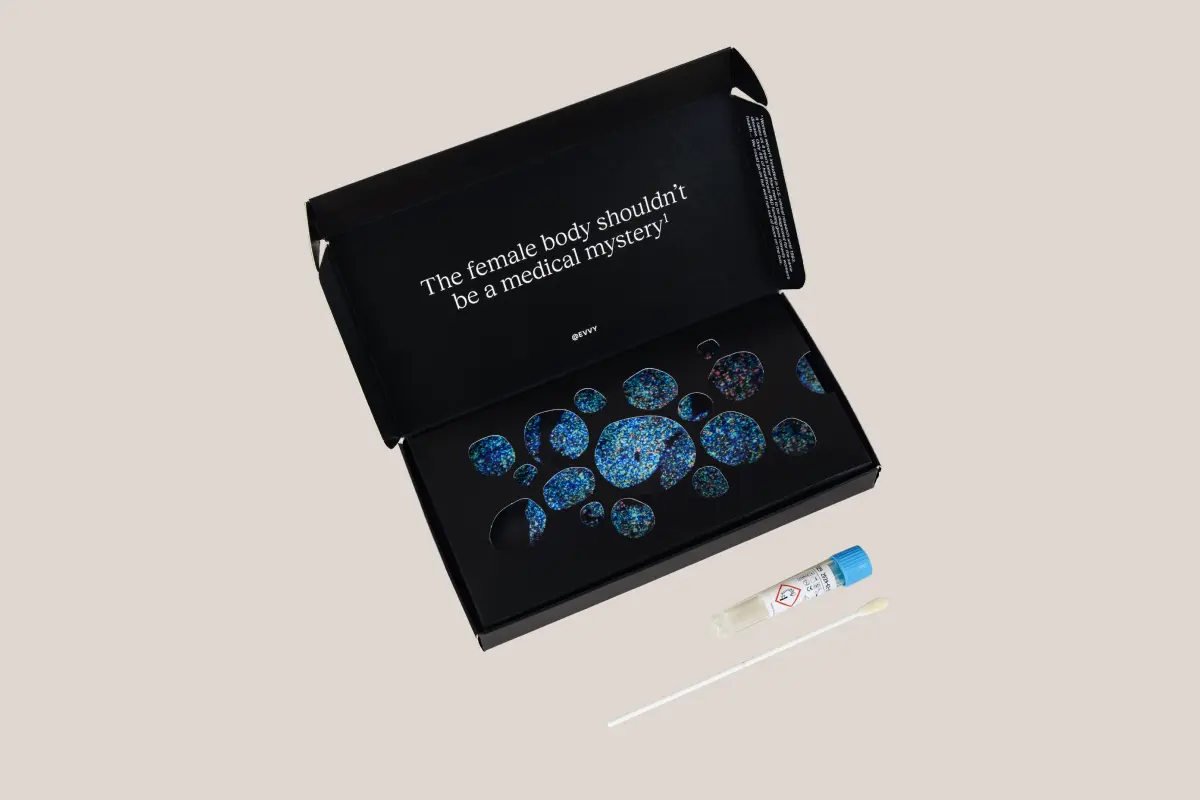
Get advanced insights into symptoms, fertility, and other health outcomes. Prelim results in 1-3 days.

Wondering if an uncircumcised partner is behind your recurring BV? Here's what the research actually shows, and how to find out what's really going on.
Words by Olivia Cassano
Scientifically edited by Dr. Krystal Thomas-White, PhD
Medically reviewed by Dr. Kate McLean MD, MPH, FACOG
More and more research suggests that men play a bigger role in bacterial vaginosis (BV) than we once thought. Although an estimated 70% to 80% of adult American men are circumcised, you may be wondering if sex with an uncircumcised partner will increase your risk of developing BV.
Men can't get BV themselves, but whether they’re circumcised or not, they can carry BV-associated bacteria like Gardnerella and Prevotella on their penis and in semen. So, the bacteria doesn’t just go away because a partner is circumcised.
That said, circumcision does seem to play a role. Some research found that circumcising male partners lowered BV rates in women, but it’s not as cause-and-effect as it sounds. Circumcised men can still carry a lot of BV-related bacteria, and uncircumcised men can carry very little. Having a foreskin can affect the odds, but it doesn’t determine the outcome.
If you’re dealing with recurring BV after having sex with the same partner, circumcision shouldn’t be the first thing to consider (it’s a big, permanent decision for something very treatable). The better first step is figuring out which bacteria are driving your recurrence, using condoms consistently, and treating both you and your partner.

Recurrent symptoms? Get Evvy's at-home vaginal microbiome test, designed by leading OB-GYNs.
The strongest evidence comes from a randomized controlled trial in Uganda. In the trial, HIV-negative men were randomly assigned to either immediate circumcision or a delayed control group. Their wives were monitored for BV over the next year. The wives of men in the circumcision group had significantly lower rates of BV (with a 40% reduction). They also had lower rates of trichomoniasis and genital ulcers, even when condom use was taken into consideration.
An older U.S. study is part of why this topic gets confusing. A 1999 Baltimore-based study of straight couples found no statistical link between a male partner's circumcision status and his female partner's BV — 29% of women with circumcised sexual partners had BV, compared with 33% with uncircumcised partners, a gap too small to be meaningful in that sample. It wasn't a bad study, but it had two real limitations. First, the sample was small (just 272 couples), which makes it harder to detect a moderate effect even if one exists. Second, it relied on clinical exam and standard diagnostic criteria to identify BV, not on sequencing, so it couldn't see what was actually living on the penis the way later studies could.
That second point matters because sequencing is what later explained why circumcision makes a difference. One study looked at Ugandan men before and after circumcision and found it reduced several types of anaerobic bacteria on the penis, including ones closely linked to BV. Another study of couples in Uganda used sequencing on 165 uncircumcised men and found that the bacteria on the penis were associated with female partner BV. Together, these studies explain the trial result above: circumcision doesn't just correlate with lower BV; it changes the bacterial environment in a way that helps explain why.
The strongest evidence comes from studies in African populations. This research is valuable, but the situation in the U.S. regarding BV, circumcision rates, and sexual health may be different. There isn’t a large, recent study from the U.S. that uses sequencing to confirm the same findings. Until such a study is done, we can say the mechanism is well supported, but we still don’t know the exact effect size for U.S. couples.
The area under the foreskin (known as the sub-preputial space) creates a warm, moist, low-oxygen environment where anaerobic bacteria thrive. Bacteria like Gardnerella and Prevotella grow well in low-oxygen conditions, which is why they increase in the vagina during BV.
One of the Ugandan studies we mentioned earlier found that before circumcision, the area just behind the head of the penis (the coronal sulcus), which is covered by the foreskin, had higher amounts of anaerobic bacteria, including types found in the vagina during BV. After circumcision, several of these bacteria decreased significantly (basically, they got evicted). This shows that circumcision changes the environment in a way that can make it hard for BV-causing bacteria to stick around.
However, saying it "favors" them doesn't mean it causes BV. Removing the foreskin changes the odds by altering the sub-preputial environment, but it doesn't stop a partner from carrying these bacteria elsewhere: circumcised men can still carry BV-associated bacteria on other parts of the penis, inside the urethra, and in semen. The local environment under the foreskin is just one factor among many, including sexual history, the specific bacteria exchanged between partners over time, and individual differences in skin bacteria.
Circumcision status shifts the odds at a population level, but within any one relationship, it's the specific bacterial community on your partner's penis that determines your risk, and that varies a lot from couple to couple.
The Ugandan couples study makes this clear. Researchers looked at the penile microbiota of 165 uncircumcised men and checked whether having a partner with BV made a difference. It did: men whose partners had BV carried more Gardnerella and other BV-linked bacteria than men whose partners didn't. Since every man in this study was uncircumcised, the finding is useful precisely because it strips circumcision out of the picture. Even with foreskin held constant, bacterial levels still varied a lot from man to man, and that variation, not circumcision status, is what is associated with partner BV.
This lines up with the broader shift in how researchers think about BV itself. BV isn't caused by a single organism; it's a shift in the balance of an entire bacterial community, away from protective Lactobacillus strains and toward a mix of anaerobes. This also applies to the penis. Circumcision can affect how this bacterial community develops, but it’s not a simple yes-or-no situation. It depends on how many bacteria are present and how similar they are to those found in BV. This balance is influenced by whether a person is circumcised, their sexual history, their partner's history, condom use, and any recent BV treatments.
Practically, this means two people with uncircumcised partners can have very different experiences, and two people with circumcised partners can too. One might never deal with recurrent BV; another might get it every time they have condomless sex with the same partner. Circumcision status shifts the probability, but what's actually colonizing that specific partner's genitals at that specific time is what determines the outcome for you, and that's not something you can tell just by looking.
BV isn't officially classified as a sexually transmitted disease (STD) in the traditional sense, but the evidence for sexual exchange of BV-associated bacteria between partners has gotten stronger in the last few years. Multiple studies have found that BV-associated organisms can be identified on male genitalia and in couples' shared microbiomes, and that women with BV are more likely to have a partner with a similar bacterial profile.
The clearest proof of concept, though, comes from a different kind of study: what happens when the male partner is treated. For years, trials that treated male partners with antibiotics failed to reduce BV recurrence in women, which researchers used as evidence against a sexual transmission model. But those earlier trials used single-agent treatment and often had low adherence. A 2025 randomized controlled trial published in the New England Journal of Medicine (NEJM) addressed those issues by treating male partners with both oral metronidazole and topical clindamycin applied to the penile skin. Recurrence within 12 weeks dropped to 35% in the partner-treatment group, compared with 63% in the group where only the woman was treated. The trial was actually stopped early because the difference was too large to justify continuing to withhold partner treatment from the control group.
That's a big deal, because it means treating the male partner's bacterial load nearly halves recurrence rates. If BV-associated bacteria weren't moving between partners, treating the partner shouldn't change anything for the woman — but it does.
Mechanistically, sex seems to move bacteria in both directions. Penetration, skin-to-skin contact, and shared fluids all give anaerobic bacteria a chance to travel from the penis into the vagina, and back again. It's a two-way exchange, not a one-time infection, which means partners can keep passing bacteria back and forth if nothing changes. That's a big reason BV comes back even after treatment worked the first time. It's also why using condoms during and after treatment, until both partners are clear, breaks the cycle and gives the vaginal microbiome a chance to recover its healthy Lactobacillus balance.
BV tends to dominate this conversation, but it's not the only thing people search for when they notice a pattern between their partner's anatomy and their own symptoms. Urinary tract infections (UTIs) and yeast infections come up just as often, and it's worth being precise because the evidence and mechanisms differ from BV.
Broadly speaking, the foreskin can be a factor in a partner's own risk of picking up or carrying certain organisms, and sex itself is a well-established risk factor for UTIs in women regardless of a partner's anatomy. But "uncircumcised penis" isn't shorthand for "will give you an infection." Hygiene, the specific organisms present, and how recently either partner has had one all matter more than circumcision status alone.
Having an uncircumcised partner doesn’t typically raise your risk of getting a UTI. Most UTIs in women come from the woman's own gut bacteria, like E. coli, traveling the short distance from the anus to the urethra. Sex can push that process along through friction and movement, which is why UTIs are so closely linked to sexual activity in general, regardless of a partner's anatomy.
Uncircumcised men indeed have a higher risk of getting UTIs themselves. Research in infant boys shows a much higher rate of UTIs when uncircumcised, with some studies finding up to a twelve-fold difference. But that's about his own risk, not about whether he can pass anything to a partner. There isn't good evidence that bacteria from the foreskin get sexually transmitted and cause UTIs in partners.
So for adult women, a partner's circumcision status isn't a proven, meaningful UTI risk factor. If UTIs and BV are both showing up, it's worth testing for each rather than assuming one explains the other, since different bacteria are usually behind them.
Sex can be a trigger for yeast infections, but it's not a direct cause, and there isn't much evidence that circumcision status plays a role. Yeast infections happen when Candida, a fungus that normally hangs out in small amounts in the vagina, gut, and on the skin, overgrows.
Men, circumcised or not, can carry Candida on the penis, usually without any symptoms, and can pass it along during sex. But the idea that uncircumcised men carry more of it doesn't hold up well: one small study found yeast colonization rates were pretty similar between circumcised and uncircumcised men (14% vs 17%), so foreskin just isn't a proven factor here the way it is for BV.
In practice, an uncircumcised partner might play a small supporting role in recurrent yeast infections, but it's rarely the main cause. The bigger drivers are usually things like antibiotic use, hormonal changes, blood sugar levels, and your own vaginal microbiome's balance of Lactobacillus to Candida. If yeast infections keep showing up specifically after sex with the same partner and nothing else has changed, it's worth keeping partner colonization in mind, but it shouldn't be your first assumption.
A standard BV test (a wet mount, Amsel criteria, or a point-of-care PCR panel) answers one question: do you have BV? That's useful, but it won't tell you which bacteria are actually there, in what amounts, or whether things are trending better or worse between episodes. Plus, a lot of these tests have low sensitivity, which can affect accuracy. If your BV is a one-off, that's usually fine. If it keeps coming back, especially after sex with the same partner, you're missing the details that would actually help you figure out why.
Evvy's Vaginal Microbiome Test uses metagenomic sequencing to analyze everything in your vaginal sample, so instead of a yes/no, you get the full picture: which bacteria are present, how much of each, and how that compares to a healthy, Lactobacillus-dominant microbiome. If you see a heavy load of Gardnerella and Prevotella that keeps showing back up after treatment and after sex with the same partner, that's a pattern that points toward partner-driven recurrence, not just a missed dose of antibiotics.
Knowing that changes what to do next. If it looks partner-driven, Evvy also offers male partner BV treatment. If your results don't point toward partner-driven recurrence, the more useful next step is probably rethinking your own treatment approach, not your partner's anatomy.
Penile microbiome testing isn't something commonly available yet, at least not as a regular option. While there are studies using 16S rRNA sequencing (like the ones in Uganda we referenced earlier), it's not part of standard sexual health care in the U.S. Currently, there isn't a simple test, like Evvy's, that a partner can order and do at home. Most healthcare providers don’t typically swab for BV-associated bacteria in men because, in the past, there hasn't been a clear treatment plan linked to a positive result.
Things are starting to change, though. Recent trials have shown that treating male partners with both oral and topical antibiotics can help reduce recurrence, leading some clinicians to be more open to prescribing treatment based on a woman’s test results and the couple's history. So, if you have concerns about recurrent issues based on your own testing, you should share that information with your healthcare provider and discuss partner treatment options directly. In the meantime, using condoms consistently and not ignoring BV symptoms is the best course of action.
Yes, indirectly. Men can't get BV themselves, so there's no infection passed like with other sexually transmitted infections. However, bacteria linked to BV can be transferred from an uncircumcised partner's penis to your vaginal microbiome during sex. This can help cause BV or make it come back. A study found that circumcising male partners can significantly reduce this risk. Although the foreskin can allow more bacteria to build up, it doesn't always happen: some uncircumcised partners have very little bacteria, and some circumcised partners can still carry some.
If BV keeps coming back, especially after being intimate with the same partner, it may be because you're transferring bacteria back and forth. Your partner's genital microbiome could contain organisms associated with BV, and during sex, they can be passed to you (this is true whether or not he’s circumcised). Even though treatment can help clear your vaginal microbiome for a while, unprotected sex can bring those bacteria back before your healthy Lactobacillus levels have a chance to bounce back. If sex is causing your recurrent BV, treating both partners while using condoms can be the most effective way to break the cycle.
Not directly. Most UTIs in women come from the woman's own gut bacteria migrating to the urethra, though sex can also introduce bacteria from a partner and speed up that process through friction and movement, regardless of a partner's circumcision status. There isn't strong evidence tying adult partner circumcision status specifically to a woman's UTI risk.
At a population level, yes. A randomized trial found that circumcising male partners cut BV in their wives by roughly 40%, and severe BV by around 60%, over a year, and a separate cohort study found a similar gap in incident BV. But it doesn't guarantee protection for any individual couple. Circumcised partners can still carry meaningful amounts of BV-associated bacteria, and plenty of people with uncircumcised partners never deal with recurrent BV. Circumcision status may affect the odds, but it doesn't determine the outcome for any one relationship.
Circumcision is a personal, permanent decision, and it's not something doctors recommend as a way to manage a partner's recurrent BV. There are lower-cost, reversible steps worth trying first, like microbiome testing, treating both partners, and using condoms during treatment. Those give you real options without anyone having to make a permanent call.
It may. The area under the foreskin can harbor anaerobic bacteria linked to bacterial vaginosis BV, so regular, gentle cleaning beneath the foreskin can help reduce bacterial buildup, which may lower how much gets passed to a partner. However, just because a partner is circumcised doesn't mean the risk of BV goes away. Circumcised men can still carry bacteria associated with BV, so good hygiene alone isn't a complete solution. While basic hygiene helps reduce overall bacteria, washing too hard or too often can irritate the skin instead of helping. If tests show that your BV comes from bacteria exchanged with a partner, changes in hygiene alone probably won't solve the problem. The best approach is to treat the bacteria directly in both partners and use condoms during that time.