CONGRATS! YOU EARNED FREE SHIPPING.

Product Title
1
$0
$0
Subscription Title

Looking kind of empty in here.
We recommend:
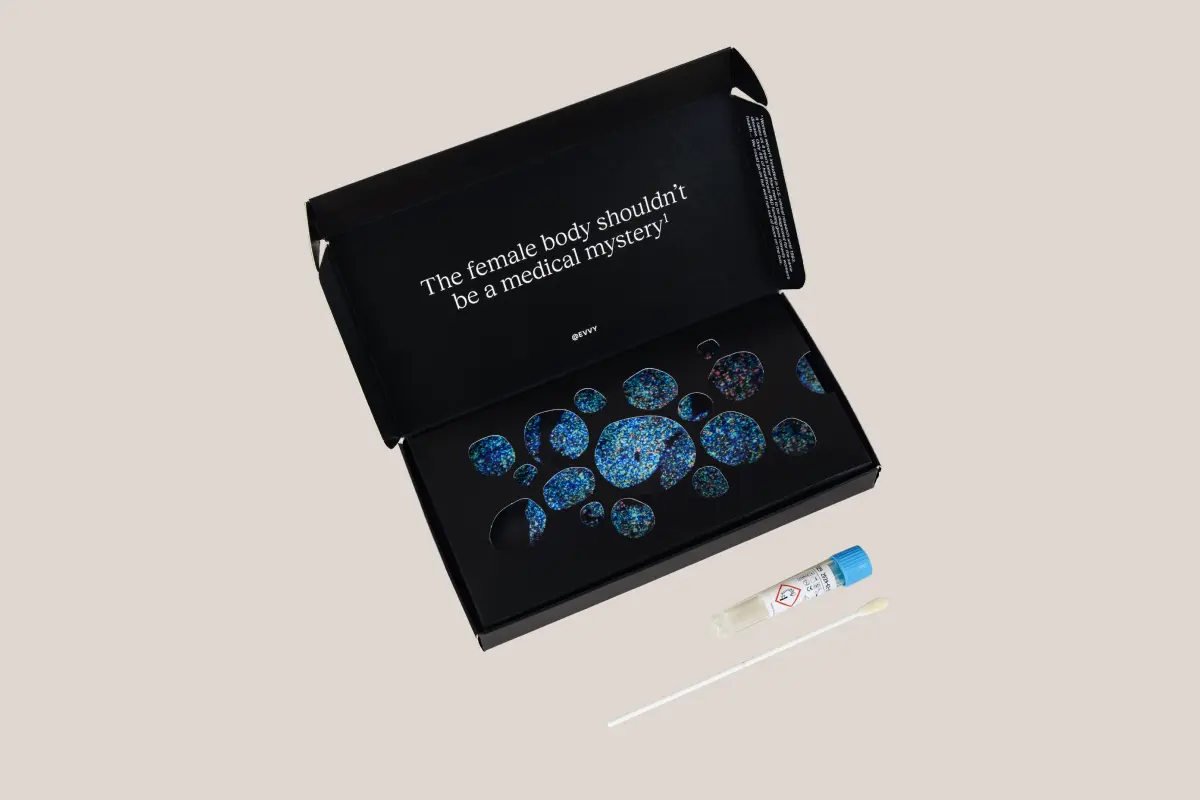
Get advanced insights into symptoms, fertility, and other health outcomes. Prelim results in 1-3 days.

Wondering if semen can cause BV? Here's what the science says about how sex affects your vaginal pH and microbiome, and how to reduce your risk.
Words by Olivia Cassano
Scientifically edited by Dr. Krystal Thomas-White, PhD
Medically reviewed by Dr. Kate McLean MD, MPH, FACOG
While semen doesn’t directly cause bacterial vaginosis (BV), unprotected sex with men does increase your likelihood of developing it, and semen plays a pretty big role in that.
BV occurs when the normal balance of bacteria in the vagina shifts in an unfavorable direction, and protective Lactobacillus bacteria are outnumbered by disruptive ones. It's the most common vaginal infection among people with vaginas, affecting around one in three at some point during their reproductive years.
Unprotected sex contributes to this imbalance in two ways. Semen is alkaline, so when it enters the vagina, it temporarily raises vaginal pH — and a higher pH creates conditions where BV-causing bacteria are more likely to thrive.
Semen can also carry BV-associated bacteria from a male partner's reproductive tract, introducing them directly into the vaginal microbiome. Neither of these means BV is inevitable after unprotected sex, but understanding the two routes helps explain why it's such a common trigger and what you can do about it.
A healthy vagina is naturally acidic to keep bad bacteria in check. Semen works against this in two key ways: by altering the vaginal pH and by transmitting BV-causing bacteria.
A healthy vaginal pH ranges from 3.8 to 4.5. That acidity comes mainly from Lactobacilli bacteria, which produce lactic acid and hydrogen peroxide to maintain an environment hostile to opportunistic pathogens.
Semen, by contrast, is alkaline and has a pH of around 7.2 to 8.0. When semen enters the vagina during unprotected sex, it temporarily raises vaginal pH, which can take up to 8 hours after intercourse to restore. In that window, the environment becomes less acidic and more hospitable to BV-associated bacteria. The more frequently this happens (i.e., the more unprotected sex you have) without strong Lactobacillus support to buffer the change, the more opportunity disruptive bacteria have to take hold

Recurrent symptoms? Get Evvy's at-home vaginal microbiome test, designed by leading OB-GYNs.
It's not just the pH shift that matters. Semen itself can carry BV-associated bacteria, and those bacteria can be introduced directly into the vaginal microbiome during unprotected sex.
Although men can’t get BV, they can carry BV-associated bacteria like Gardnerella, Prevotella, Atopobium vaginae, and others on penile skin and in semen, and pass them on during sex. A landmark 2025 study published in the New England Journal of Medicine (NEJM) provided the strongest evidence yet that BV has a sexually transmitted component: treating male sexual partners alongside female partners cut BV recurrence by 50%, and recurrence in the untreated group was nearly twice as high.
This isn't proof that semen alone causes BV, but it strongly supports the idea that sexual partners share BV-associated bacteria back and forth, making reinfection a real driver of recurrence. Research also shows that concurrency (having multiple partners) and having a new sex partner are both risk factors for BV transmission.
Not everyone who has unprotected sex develops BV, and that's not necessarily just down to luck. The baseline state of your vaginal microbiome matters a lot, and that baseline varies significantly from person to person.
Researchers categorize vaginal microbiomes into community state types (CSTs) based on which bacteria dominate. CSTs I, II, III, and V are each dominated by a different Lactobacillus species; CST IV is characterized by low Lactobacillus abundance and a higher diversity of anaerobic bacteria — and it's associated with a greater risk of BV. Where you sit on this spectrum influences how well your vaginal environment can absorb disruptions, such as a semen-driven pH shift.
Within the Lactobacillus-dominant CSTs, the specific species matters too. People with a Lactobacillus crispatus-dominant microbiome (CST I) tend to be the most resilient, as L. crispatus is a particularly potent producer of lactic acid and hydrogen peroxide. Research found that the presence of L. crispatus is partly heritable, meaning some people are naturally better equipped to buffer against disruption than others.
On top of baseline CST, factors like hormonal changes, recent antibiotic use, menstrual cycle phase, douching, and a history of BV can all shift your microbiome toward lower Lactobacillus abundance — whether temporarily or long-term. If your Lactobacillus levels are already depleted when you have unprotected sex, the pH shift from semen has less to counterbalance it.
BV doesn't always cause noticeable symptoms, but when it does, the most common ones are a thin, greyish-white vaginal discharge and a fishy odor, particularly noticeable after sex. Some people also notice itching or a mild burning sensation.
If you notice a change in odor or discharge after unprotected sex, that's worth paying attention to. But symptoms alone can't confirm BV, because several vaginal conditions — including yeast infections and some sexually transmitted infections (STIs) — can cause overlapping symptoms. Getting an accurate diagnosis matters because the treatments are different.
If symptoms appear after unprotected sex, you don't need to wait a certain number of days before testing. BV can develop quickly when the vaginal environment shifts, so testing sooner rather than later means you can start treatment — and stop the disruption to your microbiome — as early as possible.
That said, if you've recently had sex, it's worth knowing that semen itself can temporarily raise vaginal pH, which may affect results from certain at-home pH tests. A microbiome test that directly identifies bacteria, rather than inferring their presence from pH alone, is more reliable in this context. We recommend waiting 24 hours after sex before taking your Evvy Vaginal Microbiome Test. This gives any semen or lube time to clear, so it doesn't interfere with your results (a precaution backed by current vaginal microbiome research).
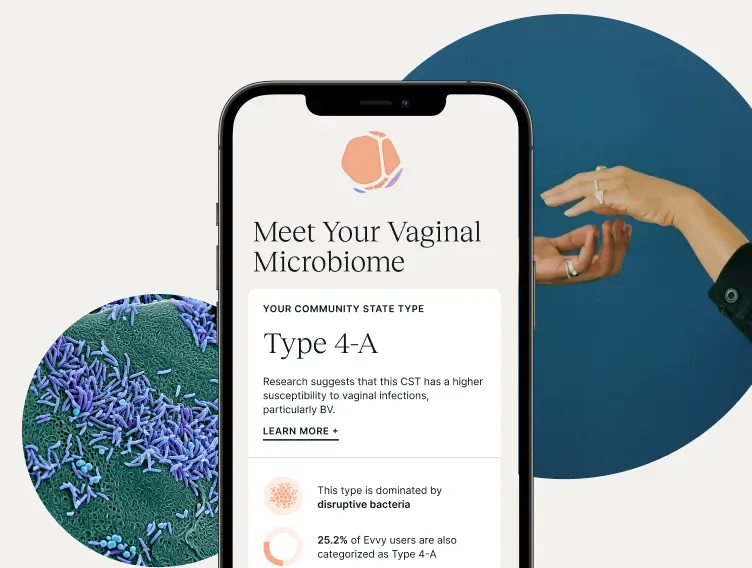
Evvy's Vaginal Microbiome Test uses metagenomic sequencing to identify and quantify the full range of bacteria and fungi in your vaginal microbiome. Unlike standard tests that detect one or two target bacteria, metagenomic sequencing maps your entire microbiome, so you can see exactly which BV-associated bacteria are present and in what proportions.
This matters particularly for people with recurrent BV after sex, because not all BV is the same. Evvy research has identified distinct BV subtypes driven by different bacterial communities, and the subtype can influence how well standard treatment works and how likely you are to experience recurrence.
A standard swab or pH test won't tell you which bacteria are present or in what proportions. Evvy's metagenomic sequencing maps your entire microbiome, so you and any provider you work with get the full picture of what's actually driving your symptoms, not just confirmation that BV is present. Eligible Evvy users who test positive for an imbalance or infection can access custom prescription treatment through an Evvy-affiliated provider.
There's no single approach that eliminates the risk entirely, but a combination of strategies can meaningfully reduce how often semen disrupts your vaginal environment.
Using a condom consistently is the most direct way to protect your vaginal pH and microbiome from the effects of semen. Condoms prevent both semen from entering the vagina and the transfer of bacteria from a partner's penile skin or semen. Research shows that consistent condom use decreases the risk of BV by 45%.
People with multiple or new partners have a significantly higher risk of BV, and unprotected sex is a consistent risk factor across the research. Using condoms doesn't have to be all-or-nothing; even partial use reduces exposure (although we’ll always recommend using condoms every time you have unprotected sex).
Dental dams are also worth considering for oral-vaginal and vulva-to-vulva contact, since research shows that BV-associated bacteria can also be passed between female sexual partners.
Aside from practicing safe sex, two more lifestyle factors worth knowing about are douching and smoking. Douching disrupts the vaginal microbiome directly by washing away the Lactobacilli that keep your pH balance in check — and despite being marketed as a hygiene practice, it's consistently associated with higher rates of BV. Smoking is less obvious but equally relevant. Research links smoking to reduced Lactobacillus abundance in the vaginal microbiome, likely through its effects on estrogen levels and local immunity, both of which influence which bacteria can thrive. Cutting both out is one of the more straightforward ways to support your baseline microbiome health.
Probiotics are another option worth considering, though it's important to be clear about what they can and can't do. They won't treat an active BV infection; if you have BV, you need antibiotics or prescription-grade alternatives. But for people who get BV repeatedly after sex, supporting the vaginal microbiome between infections can help build resilience against disruption.
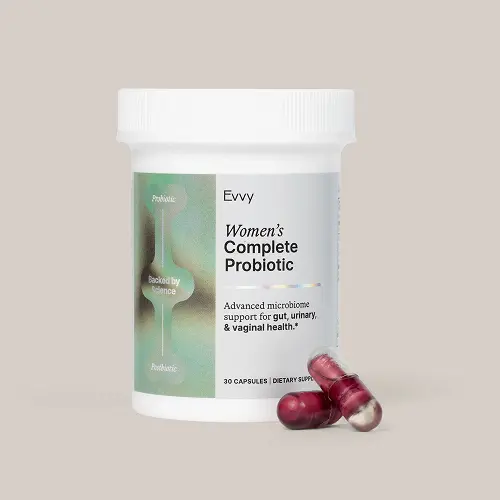
Look for strains specifically researched for vaginal health, particularly Lactobacillus crispatus, Lactobacillus rhamnosus, and Lactobacillus reuteri. Both Evvy's Women's Complete Probiotic and Vaginal Probiotic Suppositories contain all three strains. The oral probiotic offers 3-in-1 gut, urinary, and vaginal support, while the suppositories deliver those good bacteria directly to the vaginal environment for more targeted support.
Neither product is designed to treat active BV, but as part of a broader approach to microbiome health, they can help you maintain a more Lactobacillus-dominant environment that's better equipped to handle the disruption semen exposure can cause.
If you're getting BV repeatedly after unprotected sex with the same partner, standard antibiotics alone may not be enough, and the reason is reinfection. Research, including the 2025 NEJM study, shows that male partners can carry and transmit BV-associated bacteria, effectively reintroducing them after you've finished treatment. Without treating the source, recurrence becomes a near-certainty for some people.
If that sounds familiar, it's worth raising partner treatment with your healthcare provider. There are currently no official treatment guidelines for BV in male partners, but the NEJM study — which found recurrence rates of 35% with partner treatment versus 63% without — is changing the conversation. Some providers are now recommending simultaneous treatment for both partners: the female partner with her standard BV treatment, and the male partner with a combination of oral metronidazole and topical antibiotics.
Boric acid is another option that comes up in the context of recurrent BV. Though it's not a first-line treatment and shouldn't replace antibiotics for an active infection, boric acid suppositories can be a useful adjunct for people who keep getting BV despite completing treatment. They work by restoring vaginal acidity, which helps create an environment less hospitable to BV-associated bacteria. Some providers recommend them as a maintenance strategy between infections or alongside antibiotics for persistent cases.
Taking an Evvy test can also help. Identifying exactly which bacteria are driving your BV gives you and your provider a clearer picture of whether standard treatment is targeting the right bacteria and what a more personalized approach might look like. If partner treatment is the missing piece, Evvy offers Male Partner BV Treatment — an antibiotic regimen of oral metronidazole plus topical clindamycin, discreetly delivered to your partner. Since men don't develop BV themselves, the goal is to eliminate BV-associated bacteria harbored in the penile microbiome that can be passed back and forth during unprotected sex.
The most effective steps are using condoms consistently, supporting your vaginal microbiome with probiotics between infections, and — if you're getting BV repeatedly with the same partner — asking your doctor about partner treatment. Condoms do the most work here because they block both the pH-disrupting effect of semen and the transfer of BV-associated bacteria. You can also avoid anything that strips your protective Lactobacillus bacteria, such as using douches, scented vaginal products, and smoking, all of which reduce your microbiome's resilience.
Yes, it can contribute to both. Semen has a pH of around 7.2 to 8.0, which is significantly more alkaline than the healthy vaginal pH of 3.8 to 4.5. Exposure to semen temporarily raises vaginal pH, which creates an environment where BV-associated bacteria are more likely to overgrow. Semen also carries bacteria from the male reproductive tract, and if a partner carries BV-associated bacteria, those can be deposited directly into the vaginal microbiome during sex.
Because semen is alkaline, and your vaginal environment is designed to be acidic. When semen enters the vagina, it temporarily shifts the pH upward. This is a normal physiological response, not a sign that something is wrong with either of you. Whether this leads to BV depends largely on how resilient your vaginal microbiome is. People with a strong Lactobacillus-dominant microbiome often return to their normal pH within hours and don't develop symptoms. People with lower baseline Lactobacillus levels may be more vulnerable to the shift. If you're noticing consistent changes after sex with your partner, it's worth getting a microbiome test to understand your baseline and check for any BV-associated bacteria that may have been transferred.
A temporary fishy odor after unprotected sex is often related to the chemical interaction between semen and the vaginal environment. Semen's alkaline pH can make amines (naturally present in vaginal secretions) more volatile, producing a fishy odor. If the odor resolves without other symptoms, it may just be a normal pH reaction. But if the smell persists, is accompanied by unusual vaginal discharge (thin, grey, or white), or keeps coming back after sex, it's worth testing for BV. A persistent fishy odor is one of BV's most common symptoms, and the only way to know for sure is to check what's actually happening in your microbiome.