CONGRATS! YOU EARNED FREE SHIPPING.

Product Title
1
$0
$0
Subscription Title

Looking kind of empty in here.
We recommend:
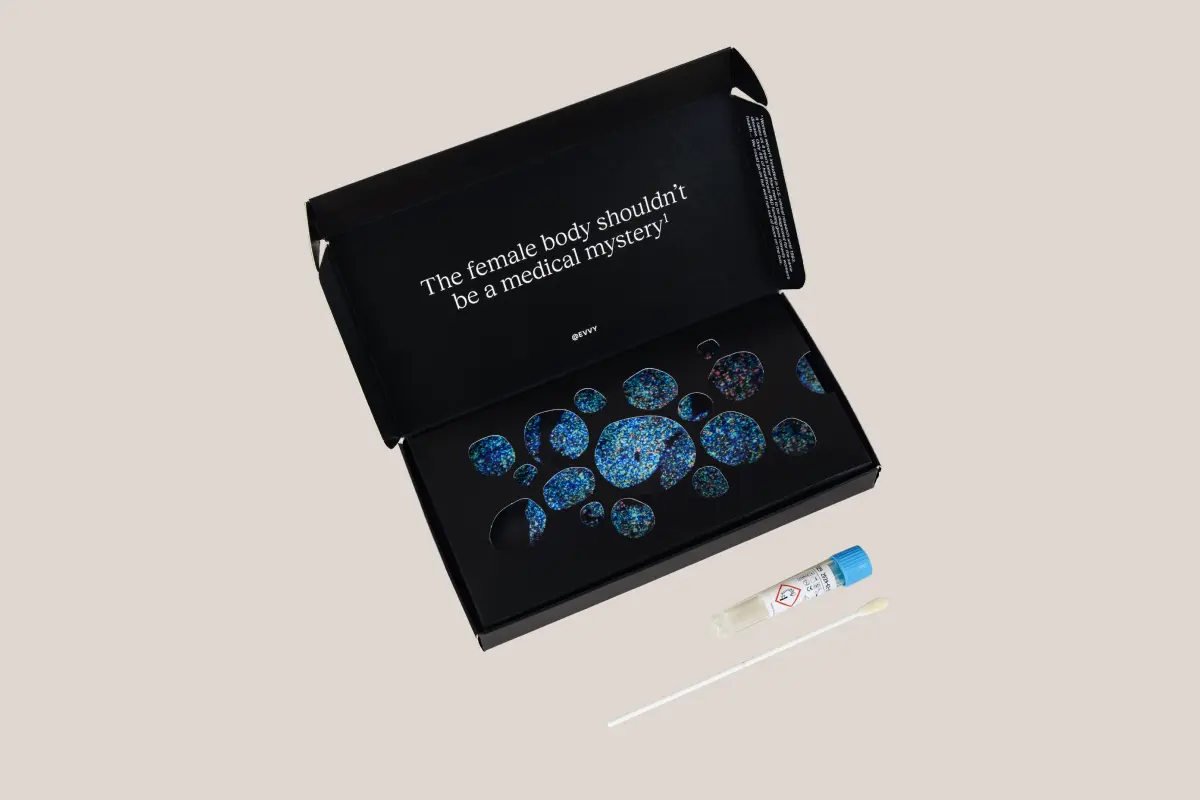
Get advanced insights into symptoms, fertility, and other health outcomes. Prelim results in 1-3 days.

Not all lubes are vagina-friendly. Learn which common lubricant ingredients can disrupt your vaginal microbiome, and what to use instead.
Words by Olivia Cassano
Scientifically edited by Dr. Krystal Thomas-White, PhD
Medically reviewed by Dr. Kate McLean MD, MPH, FACOG
Realistically, everyone can benefit from using lube when they have sex. It increases sexual pleasure, reduces discomfort, and prevents tissue irritation or injury from friction. What it’s not supposed to do is mess with your vaginal health.
But here's the thing: many off-the-shelf personal lubricants contain ingredients that make sex feel great but can quietly disrupt the delicate ecosystem living inside your vagina. And because the vaginal lining is highly absorbent (way more than your skin), what you put in there matters.
The vaginal microbiome is a finely tuned environment, dominated by Lactobacillus bacteria that keep your vaginal pH acidic and protect against infection. When lube ingredients throw off that balance (even just temporarily), it can increase your risk of developing bacterial vaginosis (BV), yeast infections, cause irritation, and increase susceptibility to sexually transmitted infections (STIs). Research shows that many commonly found ingredients in personal lubricants impair Lactobacillus growth and damage the vaginal epithelium, the protective cell layer that lines your vagina and acts as your first line of defense.
The frustrating part is that most of these ingredients are widely used, and you'd never know to avoid them without doing a deep dive into the research — so that's exactly what we did. Below, we cover the specific ingredients to avoid, what to look for instead, and what changes if you're trying to conceive or navigating menopause.
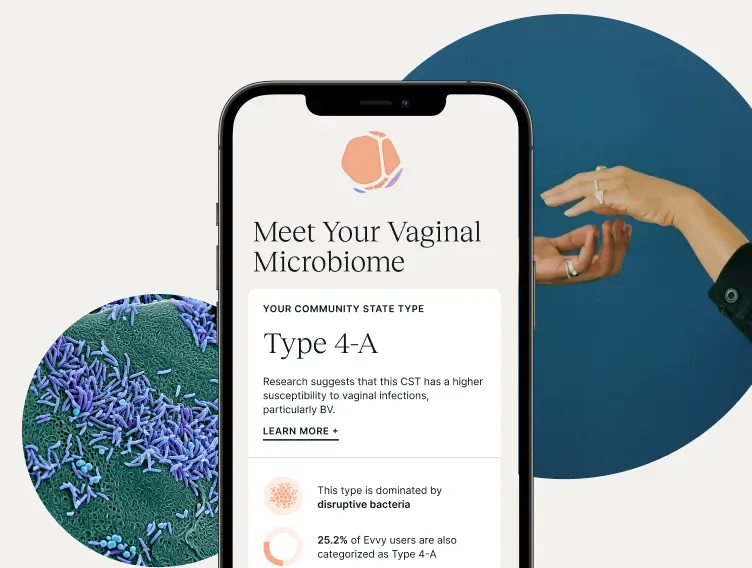
And if you want to know what's actually going on in your vaginal microbiome, Evvy's Vaginal Microbiome Test gives you a comprehensive look at the bacteria and fungi living in your vagina, so you can make truly informed decisions about your health.
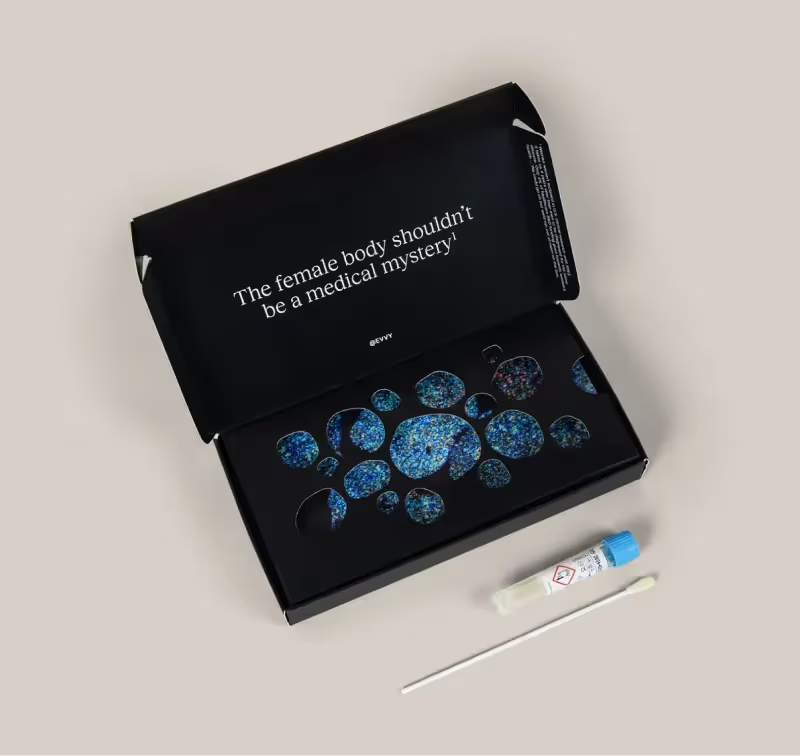
Recurrent symptoms? Get Evvy's at-home vaginal microbiome test, designed by leading OB-GYNs.
Your vagina isn't a passive organ. It maintains a carefully calibrated environment — with a pH between 3.8 and 4.5 — that's naturally dominated by Lactobacillus species. These good bacteria produce lactic acid and hydrogen peroxide, which ward off pathogens and keep the microbiome stable. It's a finely tuned system that does a really good job at keeping your reproductive health strong and protected.
The problem is that many lube formulations contain harsh ingredients that either kill off Lactobacillus, spike the osmolality (the concentration of particles in a solution) beyond what vaginal tissue can tolerate, or physically damage the mucosal lining. A hyperosmolar lube (one that has a much higher solute concentration than vaginal fluids) pulls water out of vaginal cells, causing them to shrink and even die. Recent studies have found that even a single exposure to a hyperosmolal lubricant can shift the vaginal microbiome and increase BV risk.
The World Health Organization (WHO) recommends that lubricants have an osmolality below 380 mOsm/kg to match the body's natural fluids. Most over-the-counter lubes clock in far higher than that.
It's worth noting that many of the “harmful” chemicals found in lube are perfectly safe in other contexts. Glycerin shows up in moisturizers, parabens in serums, and propylene glycol in everything from skincare to food. The issue isn't the ingredient in isolation; it's what happens when it meets the highly absorbent, microbiome-dependent environment of the vaginal lining.
Here are the specific ingredients to watch out for:
Glycerin (also called glycerol) is one of the most common ingredients in lube. It's added to give lubricants that slippery, cushioning feel, but it comes at a cost. Glycerin is a sugar alcohol, and sugar feeds yeast. If you're prone to yeast infections, glycerin-containing lubes may be a recurring trigger you've never connected the dots on.
Beyond yeast, glycerin significantly raises the osmolality of a lubricant, contributing to the hyperosmolal problem described above. Studies have found that it reduces Lactobacillus viability and can damage vaginal epithelial cells. Even in small concentrations, it's worth avoiding if your microbiome is already on the delicate side.
Parabens (like methylparaben, propylparaben, and butylparaben) are preservatives that prevent bacteria and mold from growing in water-based products. In many contexts — like skincare and cosmetics — they're perfectly safe and serve an important purpose. Keeping a moisturizer shelf-stable isn't trivial, and parabens do that job well. Regulatory bodies like the Food and Drug Administration (FDA) and many European counterparts have deemed them safe at low concentrations for external skin use.
The concern with vaginal application is different. Parabens can act as endocrine disruptors, meaning they may mimic estrogen and interfere with hormone function. Most of the research here has been done in vitro (in a lab, not in humans), so we don't yet know exactly how parabens behave in the vaginal environment. What we do know is that vaginally applied products are absorbed more readily than those applied to the skin. Until we have clearer answers, many clinicians recommend avoiding parabens in products used internally — especially during pregnancy or when trying to conceive (TTC).
Propylene glycol is another humectant (a moisture-retaining agent) that is commonly used in hyperosmolar lubricants. Like glycerin, it's hyperosmolal at the concentrations typically used in lube, which means it can pull water from vaginal cells and disrupt the mucosal barrier.
It's also a known irritant for people with sensitive skin or vulvar conditions like lichen sclerosus. If you've experienced burning, itching, or irritation after using lube and can't figure out why, propylene glycol could be a likely culprit. Worth scanning your current lube's ingredient list.
Petroleum-based ingredients (like Vaseline or Aquaphor) are great for preventing chapped lips or helping a wound heal, but they’re a hard no for vaginal use, for a few reasons. First and foremost, they degrade latex condoms. If you're using condoms for STI prevention or contraception, a petroleum-based lube makes them significantly less effective.
Beyond that, petroleum products don't wash out of the vagina easily (not that you should be washing your vagina). They can linger in the vaginal canal, trapping bacteria and creating an environment where BV-associated pathogens thrive. Petroleum isn't water-soluble, so it coats the vaginal lining rather than being absorbed normally, disrupting the natural self-cleaning process.
Nonoxynol-9 (N-9) is a spermicide once thought to offer STI protection, but decades of research have definitively overturned that idea. N-9 is a detergent, and it doesn't discriminate between sperm and vaginal cells. Evidence shows it damages the vaginal epithelium and Lactobacillus populations.
Studies have actually shown that frequent use of N-9 increases HIV risk, rather than reducing it, because it strips away the tissue that acts as a barrier to infection. It also raises BV risk and causes significant local irritation.
Chlorhexidine gluconate is an antiseptic used in surgical scrubs and some medical lubricants. While it's effective at killing pathogens in surgical contexts, it's far too broad-spectrum for the vaginal environment. It doesn't just target harmful bacteria — it also wipes out Lactobacillus species, which are exactly what you want to preserve.
Some clinical lubricants used in medical settings (like for ultrasounds or exams) still contain it. If you're having a procedure and want to be proactive, it's okay to ask what's in the lubricant being used, although it’s unlikely to cause harm if used infrequently.
Fragrance and flavoring agents are added to make lubes smell or taste appealing. The problem: "fragrance" is a catch-all term that can encompass dozens of individual chemical compounds, none of which need to be disclosed on labels. Many of these compounds are irritants or allergens.
In the vaginal environment, fragrances raise pH, disrupt the microbiome, and frequently cause contact dermatitis and irritation. Flavored lubes are typically loaded with sugar-based sweeteners that feed yeast and are strongly associated with yeast infections. Even if your skin tolerates fragranced products externally, the vaginal lining is a different story. Keep it fragrance-free and flavor-free.
If you're trying to conceive, lube is still very much on the table, but you need to be more selective. Most conventional lubricants aren’t sperm-friendly, even if they don't contain the outright harmful ingredients listed above.
The key concept here is osmolality. Sperm are highly sensitive to their environment, and hyperosmolar lubricants (those with high solute concentrations) can cause them to shrink and lose motility due to osmotic stress. Studies have shown that many popular lubes significantly reduce sperm motility within minutes of exposure, which is the last thing you want when timing intercourse around ovulation.
pH matters, too. Sperm thrive in a slightly alkaline environment, typically around a pH of 7 to 8. The vagina’s natural acidity is not ideal for sperm, but this is only temporary. Near ovulation, cervical mucus becomes more alkaline, creating a favorable pathway for sperm. However, lubricants with very low pH levels can disrupt this process.
Some ingredients to specifically avoid when TTC:
Instead, look for lubricants specifically formulated and tested for sperm compatibility, which some brands market as “fertility-friendly.”
There are genuinely great lubricants out there that won't mess with your microbiome. Here's what to look for.
The main ingredients to avoid are glycerin, parabens (in vaginal products), propylene glycol, petroleum-based ingredients, nonoxynol-9, chlorhexidine gluconate, and fragrance or flavoring agents. These can disrupt the vaginal microbiome, cause irritation and tissue damage, or increase your risk of infections such as BV and yeast infections. Look for low-osmolality, pH-balanced, fragrance-free lubes.
Glycerin is a sugar alcohol that feeds yeast and can trigger or worsen yeast infections in people who are prone to them. It also has a notable effect on lubricant osmolality, meaning it can draw water away from vaginal cells. This can lead to some damage and disrupt the natural protective barrier of the vagina. Plus, research shows that glycerin can reduce Lactobacilli survival and harm vaginal cells, both of which are important for maintaining a healthy vaginal environment.
Most gynecologists recommend water-based, fragrance-free, dye-free lubricants that are pH-balanced and low osmolality. Water-based and silicone-based lubricants that are pH-balanced, paraben-free, glycerin-free, and fragrance-free are recommended for maintaining vaginal health. For vaginal dryness related to hormonal changes, hyaluronic acid-based vaginal moisturizers are also widely recommended. Many gynecologists suggest avoiding anything with glycerin, fragrances, or warming/cooling sensations, as these are common irritants.
When TTC, steer clear of any lube containing glycerin, propylene glycol, nonoxynol-9, or petroleum. These ingredients impair sperm motility through osmotic stress or directly kill sperm. Also, avoid parabens out of caution. Most conventional water-based lubes — even popular brands — have been found to reduce sperm motility, so don't assume a lube is TTC-safe just because it's widely available.
Yes, lube is safe to use when trying to conceive, as long as you choose a fertility-friendly formula. Many people need lubrication to make sex comfortable, especially during a lengthy TTC journey where the pressure can make natural lubrication harder. Look for products that are specifically labeled "sperm-safe" or "fertility-friendly," which are formulated to match the osmolality and pH of fertile cervical mucus.
No lube treats or prevents HSV-2 (the virus that causes genital herpes), but choosing a gentle, barrier-supportive lubricant can help minimize irritation and support the integrity of the vaginal lining. Carrageenan-based lubes have shown some activity against herpes simplex virus in lab studies, though this hasn't been confirmed in clinical trials. More importantly, avoid lubes with nonoxynol-9 or other ingredients that damage the mucosal lining, as this can make you more vulnerable to outbreaks or transmission. A simple, low-osmolality lube is a safe choice, but you should always discuss management with your healthcare provider.
Menopause-related dryness usually responds best to a combination of a daily moisturizer and a lubricant for sex (because they do different jobs). For daily moisture, hyaluronic acid is one of the most well-researched options and is recommended by major menopause societies. Evvy's Hyaluronic Acid Suppositories are designed exactly for this. Used regularly, not just during sex, to keep vaginal tissue hydrated and comfortable. For external dryness and irritation, Evvy's Soothing Vulva Cream can help calm and nourish sensitive skin. For sex specifically, silicone-based lubes tend to last longer and work well for people with more significant dryness. Talk to your provider about whether local hormonal therapy (like vaginal estrogen) might also be right for you.
During pregnancy, vaginal tissue is even more sensitive, so it's especially important to avoid potentially harmful ingredients. Pregnancy-safe lubes should be free of parabens, glycerin, propylene glycol, nonoxynol-9, fragrances, and petroleum. If you're pregnant, it's always a good idea to check in with your OB or healthcare provider before introducing a new vaginal product.