CONGRATS! YOU EARNED FREE SHIPPING.

Product Title
1
$0
$0
Subscription Title

Looking kind of empty in here.
We recommend:
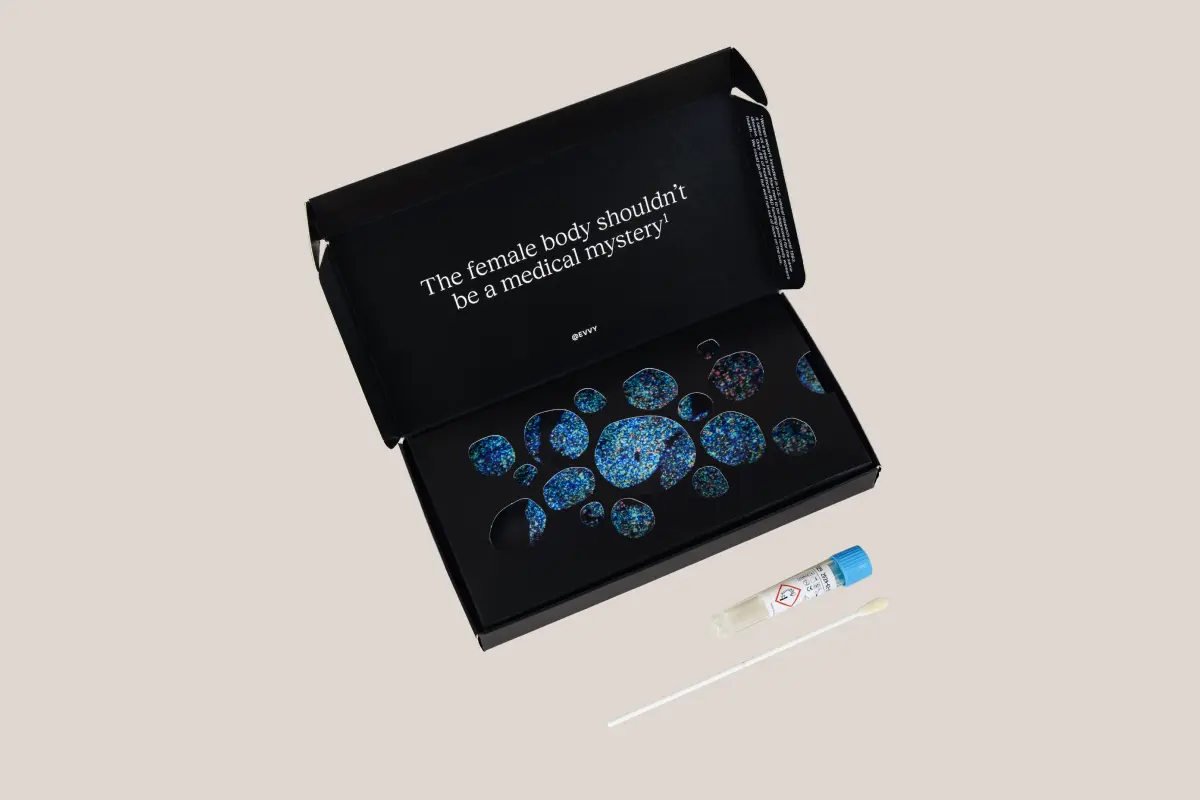
Get advanced insights into symptoms, fertility, and other health outcomes. Prelim results in 1-3 days.

Looking for the best probiotic to take with antibiotics to prevent a yeast infection? Learn which strains help and when to take them.
Words by Olivia Cassano
Scientifically edited by Dr. Krystal Thomas-White, PhD
Medically reviewed by Dr. Kate McLean MD, MPH, FACOG
Antibiotics are a well-known risk factor for yeast infections, so how do you stop them from coming back after a course of antibiotics?
The answer may lie in the right probiotics. These “good bacteria” are best known for keeping your gut happy, but they also play a powerful role in maintaining a healthy vaginal microbiome — your body’s natural defense system against bacterial and yeast overgrowth. The right probiotic strains can help restore balance, prevent recurrences, and support overall vaginal health.
Keep reading to learn more about the science behind probiotics and yeast infections, the most effective strains, and compare leading probiotic products.
Antibiotics are among the most common triggers of yeast infections (also known as vaginal candidiasis). While they kill off harmful bacteria, they also wipe out protective Lactobacilli in the vaginal microbiome, the bacteria that normally keep things in balance by producing lactic acid and maintaining a low, protective pH. With Lactobacilli knocked back, Candida (the fungus responsible for yeast infections) has a chance to overgrow.
This is where probiotics come in. Probiotics are live microorganisms, like certain bacteria and yeasts, that help support a healthy balance of microbes in the body. Some researchers believe that taking probiotics alongside or after a course of antibiotics may help restore Lactobacilli levels and lower the risk of a yeast infection following treatment. That said, it's worth emphasizing that while the theory is strong, the clinical evidence is still evolving, and probiotics aren't a guaranteed fix on their own, especially once an infection has already taken hold.
Recurrent symptoms? Get Evvy's at-home vaginal microbiome test, designed by leading OB-GYNs.
Our bodies host thriving microbial communities in many places, especially in the gut and the vagina. These two ecosystems are deeply connected through what scientists call the gut-vagina axis, a communication pathway between the digestive tract and vaginal microbiota. What happens in one often influences the other.
In the gut, a diverse mix of microbes helps with digestion, immunity, and nutrient absorption. When that balance is disrupted, beneficial bacteria can decline, allowing opportunistic organisms to flourish. This imbalance doesn’t just affect digestion; it can also send ripple effects that influence immune responses, inflammation, and even microbial “spill-over” that impacts vaginal health.
In the vagina, the microbiome is normally dominated by one or a few Lactobacillus strains that keep the environment slightly acidic (pH around 3.8-4.5). This acidity acts as a natural shield against yeast and harmful bacteria. But when Lactobacilli levels drop, and yeast or other microbes gain ground, symptoms such as itching, discharge, and irritation can appear.
Keeping both the gut and vaginal microbiomes healthy is key to preventing yeast infections and supporting recovery, and probiotics may play an important role in maintaining that delicate balance across the gut-vagina axis.
Yeast infections happen when the balance between Candida and the body’s natural defenses is disrupted. Normally, small amounts of Candida live harmlessly in the vagina, but certain factors can cause it to multiply and lead to infection. Common triggers include:
When Candida (usually, Candida albicans) multiplies unchecked, it can cause a vaginal yeast infection. In such cases, symptoms include itching, burning, thick white discharge, and irritation. The role of probiotics here is to help re-establish the beneficial bacterial barrier so that Candida doesn’t overwhelm the system.
Probiotics may play a helpful role in managing and preventing yeast infections — but there are some important caveats. They can support the vaginal flora, promote healthy bacterial growth, and make the vaginal environment less hospitable to yeast. However, they’re not a magic fix or a replacement for antifungal treatment.
Probiotics, especially Lactobacillus species, help maintain a balanced and resilient vaginal flora — a key defense against Candida. This balance supports long-term vaginal health and may reduce the risk of recurrence after an infection. Still, it’s important to understand that probiotics cannot treat an active yeast infection on their own. They work best as an addition to standard care, not as a standalone cure.
Research supports this supportive role. Clinical studies show that probiotics may improve short-term outcomes when used alongside antifungal medications for vulvovaginal candidiasis, leading to higher cure rates and fewer relapses in the first month. However, evidence for long-term beneficial effects remains limited and inconsistent. Some trials report symptom improvement and reduced recurrence with probiotic–antifungal combination therapy, while others show little added effect.
One major caveat is that not all probiotics are created equal. Different studies use different strains, doses, and delivery methods, which makes results difficult to compare. For example, Lactobacillus rhamnosus GR-1 and Lactobacillus reuteri RC-14 have shown promise in several studies, while others may not have the same impact. The specific strain matters — and choosing one backed by clinical evidence is key.
The good news is that probiotics are generally safe and well-tolerated, and they may help restore microbial balance after antifungal or antibiotic use. They can support immune health and reduce the risk of Candida overgrowth again. But high-quality research is still needed to identify the best strains, doses, and regimens.
Long story short: probiotics can help strengthen and maintain a healthy vaginal microbiome, but they appear to work better as adjuncts rather than stand-alone cures, and the type of probiotic strain, dose, and context (e.g., along with antifungals) likely matter.
Using probiotics alongside traditional antifungal medications, like azole drugs, can be helpful for women with frequent yeast infections. Studies show that adding Lactobacilli to antifungal treatment can lead to better results and fewer returning infections, compared to using antifungal medicine alone. However, since the studies vary in strains, treatment durations, and what they measure, we should be careful when interpreting the results. For women with recurring yeast infections, a well-selected probiotic, taken under a doctor’s guidance, may help improve their body's ability to fight infections.
Another potential benefit of probiotics lies in prevention, particularly in contexts where the microbial balance is likely to be disrupted — such as during or shortly after taking antibiotics.
Taking antibiotics can sometimes disrupt the balance of good bacteria in your body, allowing Candida and other bacteria to thrive. Some studies suggest that taking probiotics during this time may help reduce the risk of yeast growth or recurring vaginal infections. However, it’s important to note that while this idea shows promise, there isn't substantial evidence specifically supporting the prevention of yeast infections. It’s a good strategy to consider, but remember it should not replace good hygiene practices, monitoring your symptoms, or consulting with your healthcare provider.
If you're taking antibiotics and want to support your vaginal microbiome, a probiotic with the right Lactobacillus strains can help. Look for:
When choosing a product, look for one that lists specific strains (or combinations), is third-party tested for quality, and contains a clinically-backed amount of colony-forming units (CFUs) — most studies use doses in the range of 1–10 billion CFUs per day.
If you're taking an Evvy probiotic, wait at least 2 days after finishing antibiotic treatment before starting probiotics. Taking them together can cause the antibiotic to neutralize the probiotic's beneficial bacteria before they have a chance to work.
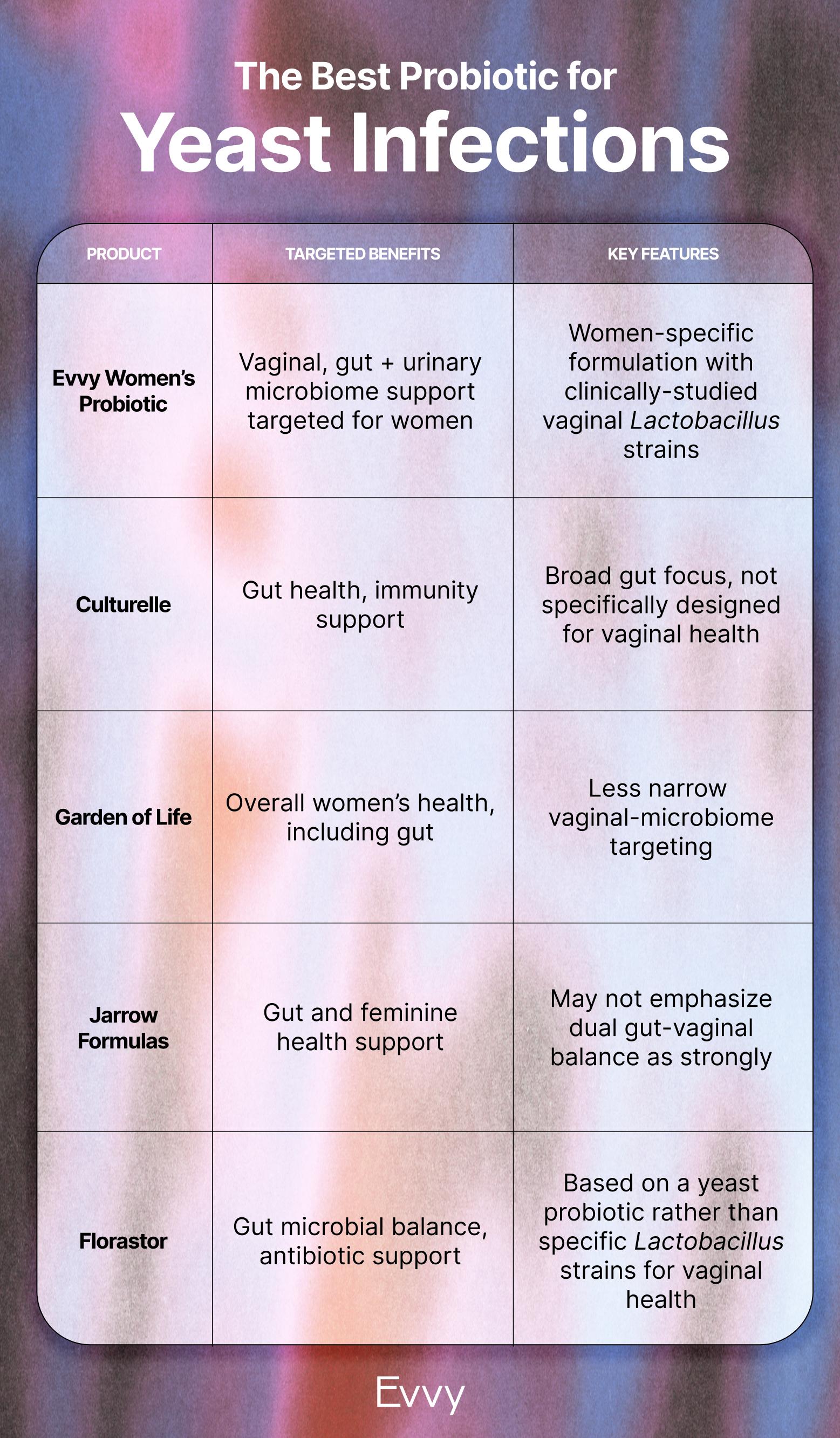
When choosing a probiotic for vaginal health, it’s best to pick one designed for women’s vaginal health, using clinically supported strains.
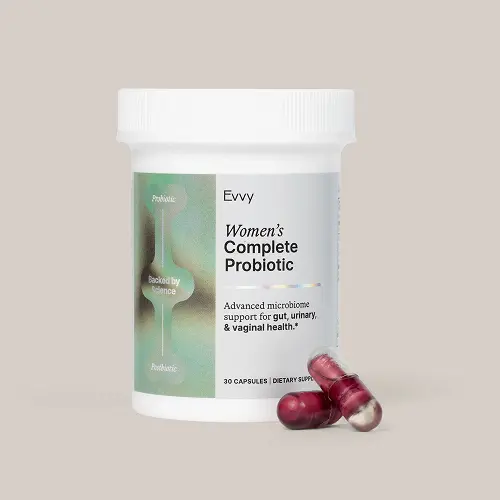
Evvy Women’s Complete Probiotic is specially designed to support women’s unique, interconnected microbiomes. It features multiple clinically studied Lactobacillus strains chosen to support the vaginal, gut, and urinary tract microbiomes — all of which work together. This targeted support helps maintain healthy microbial diversity and can lower the chances of Candida overgrowth.
After antifungal treatment, Evvy’s Vaginal Probiotic Suppositories offer an even more direct way to help restore and rebalance the vaginal microbiome. Together, these products make a great team for supporting ongoing comfort and preventing future imbalances, such as yeast infections.
Taking a probiotic alone won’t get rid of a vaginal yeast infection in most cases. While some studies suggest probiotics may enhance treatment effectiveness and reduce recurrent vulvovaginal candidiasis, conventional antifungal therapy remains the most effective option. If you suspect a yeast infection, it’s best to consult your healthcare provider for diagnosis and appropriate medication first, then consider probiotics as supportive.
The best probiotic would be one specially formulated for both gut and vaginal health, containing strains such as Lactobacillus rhamnosus GR-1, L. reuteri RC-14, L. crispatus, L. acidophilus, or L. plantarum. The product should specify these strains, list CFUs, and be third-party tested. Targeted, clinically-researched formulas like Evvy Women’s Complete Probiotic and Vaginal Probiotic Suppositories, which emphasize vaginal microbiome support, may offer the most targeted benefit.
It’s very unlikely that taking standard-dose probiotics will cause a vaginal yeast infection in a healthy person. Most research indicates probiotics are safe and adverse effects are rare. However, if you have a severely compromised immune system or a rare underlying condition, it’s wise to check with your doctor before starting any probiotic supplement.
Yes, there is a plausible benefit in taking probiotics during or after antibiotic use, because antibiotics kill off beneficial bacteria that help keep yeast in check. Some observational and small-trial data suggest that probiotics may reduce the risk of subsequent yeast or vaginal infections in this setting. However, this is not guaranteed, so combining probiotics with other prevention strategies (e.g., good hygiene, breathable clothing, practicing safe sex) is best.
There’s no strong evidence that probiotic treatment causes or worsens yeast infections in healthy people. Research shows minimal risk of probiotic-triggered yeast overgrowth. That said, because the vaginal microbiome is complex, using a probiotic not designed for vaginal health (or using it incorrectly) won’t necessarily help, and might give a false sense of security. Always pair probiotic use with a correct medical diagnosis and treatment when needed.
The most studied strains for vaginal health include Lactobacillus rhamnosus GR-1, Lactobacillus reuteri RC-14, Lactobacillus crispatus, Lactobacillus acidophilus, and Lactobacillus plantarum. These strains help maintain a low, protective vaginal pH and support healthy flora, which can make it harder for Candida to overgrow. Look for products that list specific strains (like Evvy’s Women’s Complete Probiotic and Vaginal Probiotic Suppositories), since the evidence is strain-specific rather than universal.
Probiotics may help lower the risk, but it’s not a guarantee. Antibiotics wipe out protective Lactobacilli along with harmful bacteria, leaving room for Candida to take over. Taking a probiotic with the right strains, spaced appropriately from your antibiotic doses, may help support recolonization of healthy bacteria. That said, clinical evidence is still evolving, so probiotics work best as a supportive measure alongside good hygiene practices, not a standalone prevention method.