CONGRATS! YOU EARNED FREE SHIPPING.

Product Title
1
$0
$0
Subscription Title

Looking kind of empty in here.
We recommend:

Get advanced insights into symptoms, fertility, and other health outcomes. Prelim results in 1-3 days.

Do boric acid suppositories really change how you taste, smell, or feel? Learn what the evidence says and when to see a provider.
Words by Olivia Cassano
Scientifically edited by Dr. Krystal Thomas-White, PhD
Medically reviewed by Dr. Sameena Rahman, MD
When it comes to vaginal health, there’s no shortage of tips, tricks, and home remedies circulating online — not all of them are reliable, unfortunately. One recent trend suggests that boric acid suppositories can improve the way your vagina “tastes”.
But does this claim hold any truth? Below, we dive into what boric acid is, what it does (or doesn’t do), whether it has any impact on how your vagina tastes, and if the way you taste should even matter.
Boric acid is a naturally occurring compound used for various medical purposes for over a century. In the context of vaginal health, it’s commonly used to treat yeast infections and bacterial vaginosis (BV).
Available in the form of vaginal suppositories, boric acid works by restoring vaginal pH, making it a potential solution for recurring infections that don’t respond well to standard treatments.
Despite being around for ages, the scientific evidence on boric acid’s efficacy is pretty lacking. It can be helpful in some situations, but it’s rarely recommended as a first-line treatment for vaginal infections. Due to its antifungal properties, some research shows that boric acid suppositories can be effective in treating yeast infections when other antifungal treatments haven't worked, or when you're dealing with recurrent vulvovaginal candidiasis caused by specific, less common strains of the Candida fungus.
The evidence is less convincing for boric acid in bacterial vaginosis. But that’s not surprising — bacterial vaginosis is notoriously stubborn, and sometimes not even antibiotics do the trick. Research suggests that boric acid might help treat bacterial vaginosis when combined with antibiotics, but it’s not a cure-all.
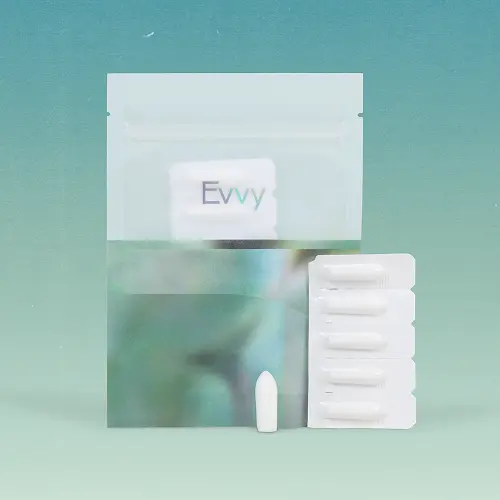
Even though you don't need a prescription to buy boric acid suppositories, it's a good idea to consult with your doctor first. Boric acid prescribed by a doctor (like the boric acid you can get through Evvy) tends to be purer and less likely to cause adverse reactions than boric acid purchased over the counter or online.
Vaginally inserted boric acid suppositories are generally considered safe, but, as with any medical treatment, they may cause mild side effects. Common side effects of boric acid suppositories include:

Recurrent symptoms? Get Evvy's at-home vaginal microbiome test, designed by leading OB-GYNs.
The idea that boric acid can alter or “improve” the taste of the vagina is a misconception. Boric acid isn’t designed to change the taste of your vagina. Its main function is to treat infections by balancing the vaginal environment, which may indirectly affect the way you smell — and, by association, taste.
A variety of factors, including diet, hormonal changes, overall health, and your unique vaginal microbiome, influence the way your vagina tastes. Not to mention that the way you taste or smell can change from day to day
A healthy vagina naturally has a mild, slightly tangy taste due to its acidic pH. This natural balance is essential for preventing infections and maintaining overall vaginal health, but everyone is different. Just like no two vulvas look the same, no two vulvas or vaginas will smell or taste the same, either.
It’s also worth pointing out that boric acid and oral sex don’t mix. Boric acid is generally safe to use vaginally (as long as you’re doing so under the guidance of a healthcare provider), but it’s highly toxic when ingested. You should wait a few days after using a boric acid suppository before receiving oral sex. And, of course, it’s always best to use a barrier method like a dental dam to reduce your risk of contracting a sexually transmitted infection (STI) or bacterial vaginosis.
Boric acid doesn't target odor directly, but it can reduce the odor associated with vaginal pH imbalance, particularly the fishy smell associated with bacterial vaginosis. BV-related odor comes from the byproducts of anaerobic bacteria that thrive when the vaginal environment is less acidic than it should be. By lowering pH, boric acid creates conditions less hospitable to those bacteria, which may reduce associated odor as a secondary effect.
Also, a mild vaginal odor is completely normal and healthy, so boric acid isn't something you should use to get rid of it. It's not a deodorant, and using it without a real clinical indication can disrupt your vaginal microbiome for no reason.
Boric acid works best as a complementary tool alongside antibiotic or antifungal treatment, not as a standalone fix. If you're noticing a new or persistent odor that's different from your normal one, the most useful first step is to find out what's causing it. The Evvy Vaginal Microbiome Test can give you a clear picture of your vaginal microbiome, so you're treating the right issue (not just masking symptoms).
Spoiler alert: no, it doesn’t. People with vaginas have been conditioned to feel self-conscious of the way their genitals look, smell, and taste. But the bottom line is that vulvas and vaginas are body parts, so it’s perfectly OK for them to smell and taste as such. And anyone who says otherwise (especially sexual partners) probably doesn’t deserve to be that close to your vagina, anyway.
While it’s natural to want to feel confident about every aspect of your body, including your vaginal taste, it’s crucial to prioritize health over aesthetic concerns. A strong or foul vaginal odor can be one of many infection symptoms, but even the healthiest of vaginas isn't completely odorless (or tasteless). There's no reason to change the way your vagina naturally smells or tastes unless you have an infection.
The vagina is self-cleaning and designed to maintain its balance without the need for external interventions to alter its taste or smell. It's one of those organs that thrives when it's left alone and can be negatively affected by unnecessary or ineffective treatments.
Overusing products, douching, or inserting substances like boric acid without medical necessity can do more harm than good. There are plenty of OB-GYN-approved products that can elevate your sex life, but using boric acid suppositories in the hopes of making your vagina taste more palatable shouldn’t be one of them!
If you’re concerned about your vaginal health, including issues related to odor or taste, the best course of action is to consult a healthcare provider. They can help identify any underlying issues and provide appropriate treatment. If you’re experiencing symptoms like unusual discharge, itching, or a strange odor, an Evvy Vaginal Microbiome Test can also help you get to the bottom of it.
Boric acid suppositories can be a helpful remedy for certain vaginal health issues in a few specific contexts, but they won’t make your vagina “taste” better. This claim is a myth with no scientific backing. The most important thing you can do for your vaginal health is to maintain good hygiene, eat a balanced diet, stay hydrated, and seek medical advice when necessary.
Remember, your vagina’s natural taste and smell are normal, and trying to change them isn’t necessary. Embrace your body as it is, and focus on keeping it healthy rather than trying to conform to unrealistic or unfounded beauty standards.
No, there’s no evidence that boric acid suppositories help with vaginal lubrication. While boric acid suppositories can sometimes cause an increase in vaginal discharge, it's important to remember that their purpose isn't to increase vaginal moisture. The extra discharge is simply a sign that the suppositories are working to fight an infection. Vaginal lubrication is mainly composed of arousal fluid, a clear liquid produced by glands near the vaginal opening in response to sexual stimulation. Some people get “wet” very easily, while others produce less arousal fluid. Dryness during sex can happen for a variety of reasons, including not enough foreplay, hormonal changes, or arousal disorders. If you’re struggling to get “wet” during sex, remember that lube is your friend! Everyone — and we mean everyone — can benefit from using lube, especially during penetrative sex. But if you’re concerned about vaginal dryness, the best thing to do is reach out to your healthcare provider or a sexual health specialist.
The best way to make your vagina “taste” good is to look after your vaginal health. Practice safe sex, don’t douche, get annual STI tests, and look after your vaginal microbiome. Vaginas aren’t designed to smell and taste like a candy shop, and a healthy vagina might taste tangy, earthy, or even slightly metallic.
Boric acid suppositories work by restoring vaginal pH, making the vaginal environment more acidic and less hospitable to the vaginal bacteria and fungi that cause infections like BV and yeast infections. They're most commonly used when standard treatments haven't worked. They can also reduce odor associated with pH imbalance as a secondary benefit. While boric acid is available over the counter, it's best used under a provider's guidance to ensure it's the right treatment for your specific symptoms.
They can, but only if the odor is caused by a pH imbalance or an infection like BV. Boric acid works by making the vaginal environment more acidic, which can reduce the bacterial activity responsible for that characteristic fishy smell. It won't work for odor that isn't tied to an infection, and it's not a substitute for antibiotics or antifungals when those are what's actually needed. If odor is your main concern, getting tested first is the smartest move. That way, you know you're targeting the actual cause rather than guessing.
No, boric acid suppositories don't increase vaginal lubrication. Any extra discharge you notice while using them is typically the suppository material dissolving, not an increase in your natural moisture. Vaginal lubrication is driven by arousal and hormones, not pH levels, so boric acid isn't going to change how wet you get. If dryness during sex or day-to-day is something you're dealing with, lube is your best immediate tool — and it's worth talking to a provider if dryness is persistent, since it can sometimes point to a hormonal shift worth addressing.